Heat Pump Repair in Kenner, LA
Homes here need heat from November through February and cooling from April through October. If your system quits, tell us what it's doing and a licensed contractor who covers Jefferson Parish will get in touch.
Tell us about the job
It takes about a minute.
Eleven months of work in Kenner heat and damp
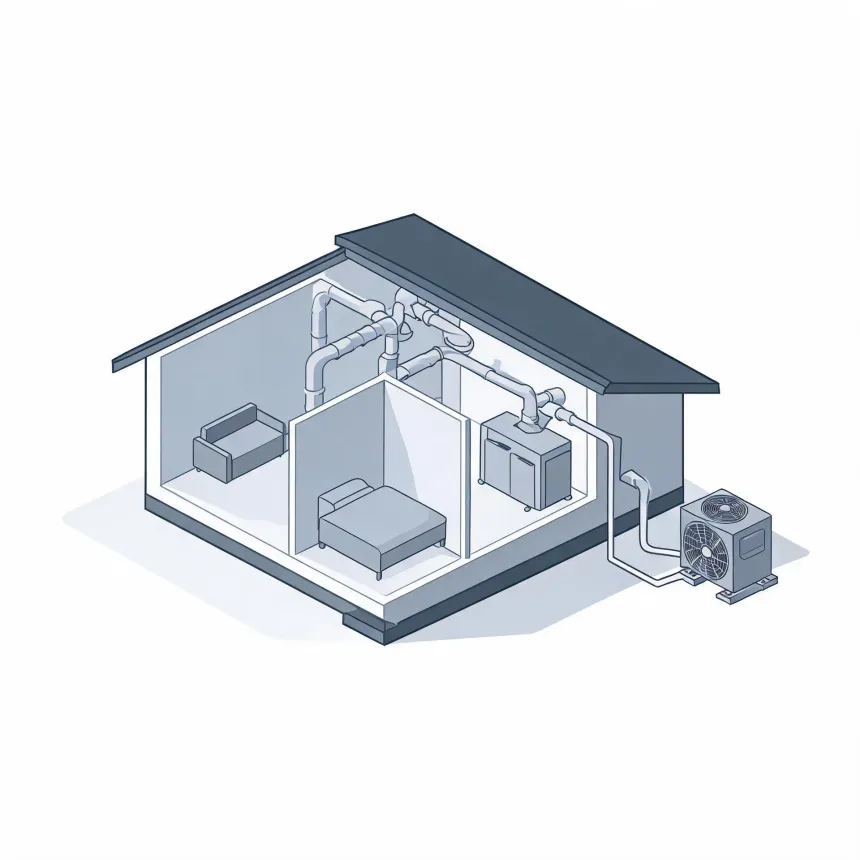
Your heat pump runs almost year round here, cooling from April through October and switching over for the four months when nights average 47°F. That switch happens over and over, and the reversing valve is what carries the load. When it sticks, the system keeps cooling when you asked for heat, or the other way around.
Kenner has logged 38 damaging wind events over the past ten years, and nearly half of Louisiana households lost power for a day or more in 2024. A hard shutoff during a storm is rough on the compressor, and when the power comes back, that is when a weak start capacitor gives out. If your outdoor unit hums but the fan does not turn, or it trips off soon after a storm, that is what is happening.
- 4 months
- November through February, your system heats
- 7 months
- April through October, it cools
- 47°F
- the average winter night it heats against
- 90°F
- the average summer afternoon it cools against
NOAA nClimDiv, 1991–2020 normals
Louisiana requires HVAC contractors to hold a state license.
The Louisiana State Licensing Board for Contractors tests and records the contractor, not the job itself. So the license tells you the person or company has met the state's standard, but it does not mean the board reviewed this particular repair before the work starts.
A heat pump repair almost always means opening the refrigerant side of the system, and that work falls under a separate rule that applies no matter what state you're in. Any technician handling refrigerant has to hold EPA Section 608 certification. In Jefferson Parish, that federal certification and the state contractor license are the two things standing behind the person working on your heat pump.
Source: Louisiana State Licensing Board for Contractors
- Why is my heat pump blowing cold air?
- In heating mode, a heat pump puts out air that feels cool next to your skin even when it is working right, because the air coming out is warmer than the room but still cooler than your body. If the air is actually cold, or the system is set to heat and nothing warm is coming out at all, that points to a problem such as low refrigerant or a reversing valve stuck in the wrong position. A contractor can check the valve and the refrigerant charge to find out which it is.
- Why is there ice on my heat pump?
- Heat pumps go through a normal defrost cycle in cold weather, so a thin layer of frost that clears on its own is not a problem. A thick coating of ice that stays, especially covering the coil or the fan, usually means airflow is blocked or the system is low on refrigerant. Check that the outdoor unit has space around it and nothing is stacked against the coil. If the ice keeps building back after defrost, a contractor needs to look at the refrigerant level and the defrost controls.
- Why is my heat pump running but not cooling?
- If the unit is running but the air is not cold, the most common causes are a dirty filter blocking airflow, a coil that has frozen over, or a refrigerant leak. A clogged filter starves the system of air and can freeze the coil, which then stops cooling until it thaws. Check the filter first and replace it if it is dirty. If the filter is clean and the air still is not cooling, a contractor will need to check the refrigerant charge and the coil, since opening the refrigerant side requires EPA certification.