Mini Split Installation in Denham Springs, LA
A new system here will heat from November through March and cool from April through October every year. Tell us about the house, and a licensed contractor who covers Livingston Parish will get in touch.
Tell us about the job
It takes about a minute.
A mini-split here runs almost year round
Denham Springs asks a mini-split to work twelve months a year. Summer afternoons average 91°F from April through October, seven months of cooling. Winter nights average 42°F from November through March, so the same unit switches to heat for the other five. There is barely a break between seasons.
A new unit installed today has to meet the federal minimum for split-system heat pumps, 14.3 SEER2 for cooling and 7.5 HSPF2 for heating. With Livingston Parish seeing 59 damaging wind events over the past ten years and most homes here heating with electricity, it also has to be installed to hold up through storms and keep working when the power is what everyone is counting on.
- 5 months
- November through March, your system heats
- 7 months
- April through October, it cools
- 42°F
- the average winter night it heats against
- 91°F
- the average summer afternoon it cools against
NOAA nClimDiv, 1991–2020 normals
Louisiana requires HVAC contractors to hold a state license.
The Louisiana State Licensing Board for Contractors tested the contractor and keeps them on record. That license belongs to the contractor, not to this one job, so it tells you the person or company met the state's standard, not that this particular installation was checked by anyone.
That check comes from the local building office instead. A mini-split installation in most cities and parishes needs a permit before the work starts and an inspection after it is done, and that inspection is what confirms the refrigerant lines, wiring and mounting were done right on your home.
Source: Louisiana State Licensing Board for Contractors
- Is a mini split worth it?
- For most homes it comes down to what you're heating or cooling and how. A mini split puts heat in or pulls it out of one room or a few rooms without ductwork, so it works well for additions, garages turned into living space, or a house that's hard to heat and cool evenly. Here you need cooling seven months a year and heat the other five, so the equipment runs almost constantly, which is exactly the kind of use a heat pump is built for. A contractor can look at your house and tell you whether a mini split covers what you need or whether you'd be better off pairing it with what you already have.
- How many rooms can a mini split cover?
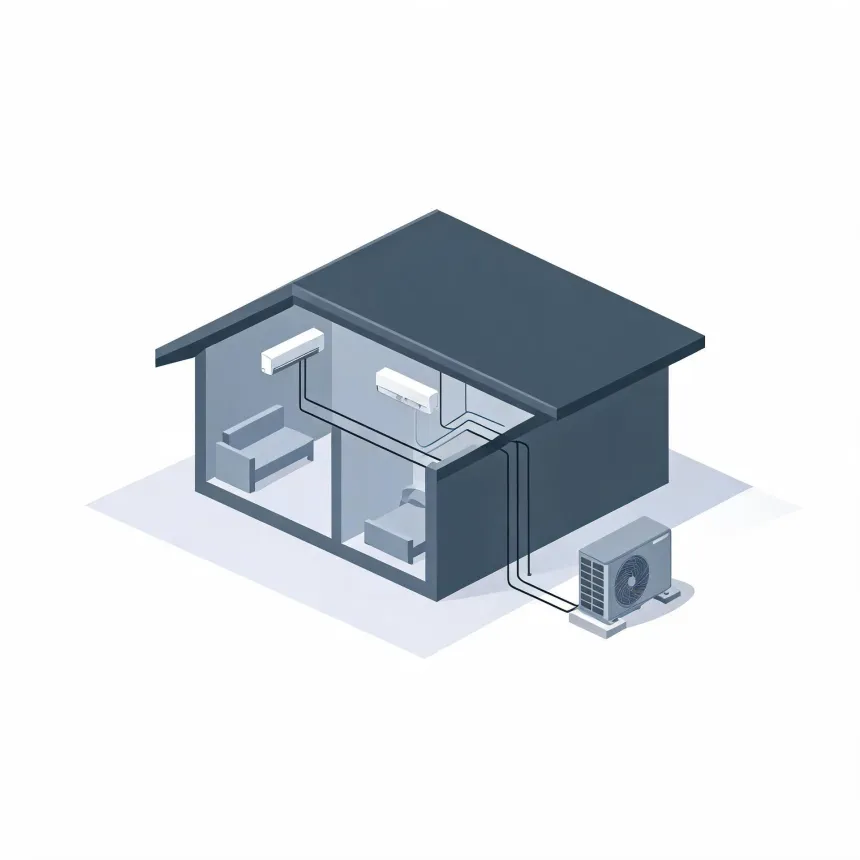
- A single outdoor unit can run one indoor head or several, depending on the system. A single-zone system handles one room. A multi-zone system splits its capacity across several indoor heads, each with its own thermostat, so you can cool a bedroom while leaving the living room alone. How many rooms one outdoor unit can carry depends on the size of the rooms and the capacity of the equipment, so a contractor will size it room by room rather than guess at a number.
- Can a mini split heat a whole house?
- It can, if it's sized and placed to reach every room. A mini split is a heat pump, so it makes heat rather than burning fuel for it, and multi-zone systems can put a head in each main room of the house. Whether one system heats your whole house or just part of it depends on the layout, how open the rooms are to each other, and how cold it gets. Winter lows here average 42°F, which a properly sized heat pump handles fine, but a contractor needs to walk the house to say whether a mini split alone is enough or whether it should work alongside another heat source.