Mini Split Installation in Baton Rouge, LA
A new system here will heat from November through March and cool from April through October every year. Tell us about the house, and a licensed contractor who covers East Baton Rouge Parish will get in touch.
Tell us about the job
It takes about a minute.
A mini-split here runs almost all year
Baton Rouge asks for cooling from April through October, seven months of afternoons that average 91°F. Heat only runs November through March, and even then winter nights average 42°F. The compressor is what carries most of the load over a year here, not the heat strip.
A new unit installed today has to meet 14.3 SEER2 for cooling and 7.5 HSPF2 for heating. Those are federal minimums for any split-system heat pump, ductless included. With the cooling season running twice as long as the heating one, that cooling number is the one doing the work in this parish. Wind events are common here too, more than winter storms, and a mini-split that loses power comes back on by itself once it's restored.
- 5 months
- November through March, your system heats
- 7 months
- April through October, it cools
- 42°F
- the average winter night it heats against
- 91°F
- the average summer afternoon it cools against
NOAA nClimDiv, 1991–2020 normals
Louisiana requires HVAC contractors to hold a state license.
The state tests contractors before they get that license, and the Louisiana State Licensing Board for Contractors keeps a record of who holds one. The license belongs to the contractor, not to any one job, so it tells you this person or company has been checked once, not that this particular installation was reviewed on its own.
For a mini-split, that license is what stands behind the work overall. Beyond that, most cities and counties in Louisiana require a permit for this kind of installation and an inspection once it is done, which checks the work itself rather than the contractor doing it.
Source: Louisiana State Licensing Board for Contractors
- Is a mini split worth it?
- For most homes, yes, especially if you're heating with electric resistance or cooling a room that ductwork never reaches well. A mini split moves heat instead of generating it, so it uses less electricity than baseboard heat or a window unit to do the same job. With almost two thirds of homes here heating with electricity, that difference shows up on the bill all winter. It also gives you a heat pump that handles both your summer afternoons and your winter nights from one outdoor unit, and it keeps working through the kind of wind events this area sees regularly since there's no furnace or air handler tied to ductwork that can be damaged.
- How many rooms can a mini split cover?
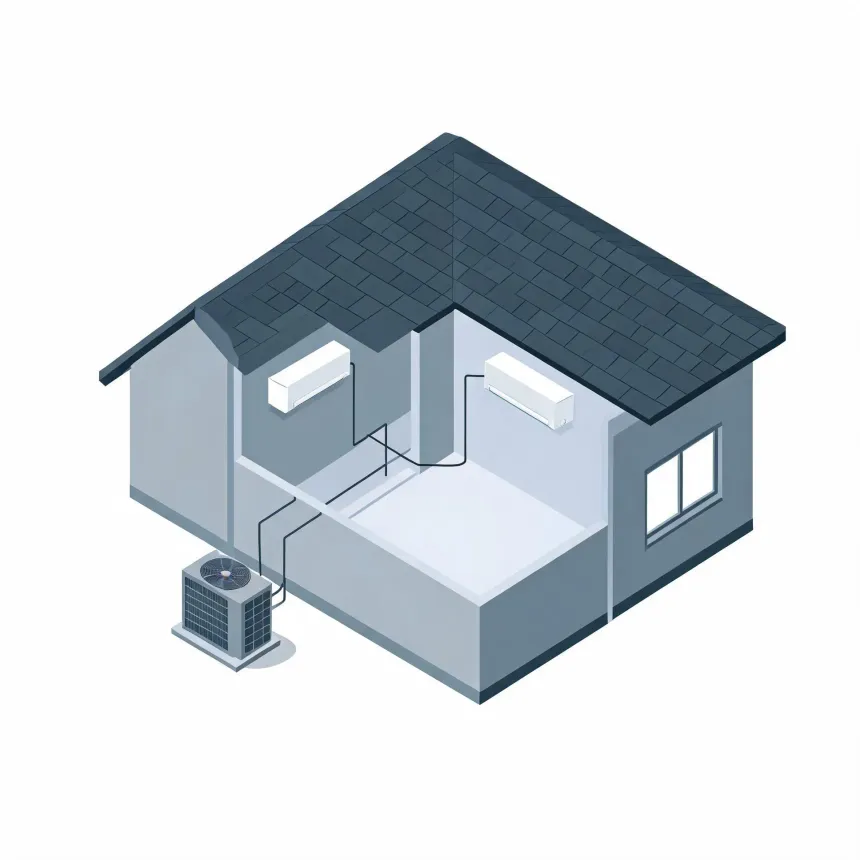
- A single outdoor unit can run one indoor head or several, depending on the system. Each indoor head is sized for the room it's in, so a contractor picks the number of zones based on your square footage and layout, not a fixed rule. One head heats and cools one room well. If you want several rooms covered, you're looking at a multi-zone system, and the contractor will size each head and the outdoor unit together so the whole thing balances.
- Can a mini split heat a whole house?
- Yes, if it's sized and laid out for that from the start. A multi-zone mini split with enough indoor heads placed in the right rooms can carry the whole house through your winter lows, which average 42°F here. What it can't do is heat a whole house well with just one or two heads meant for a couple of rooms. That's a sizing and placement question, and it's why a contractor needs to walk the house before quoting a whole-home system rather than a single room.