Mini Split Installation in Ruston, LA
A new system here will heat from November through March and cool from May through September every year. Tell us about the house, and a licensed contractor who covers Lincoln Parish will get in touch.
Tell us about the job
It takes about a minute.
Ruston asks a mini-split to run most of the year
A mini-split in Ruston works ten months out of the year, heating from November through March and cooling from May through September. Winter nights average 37°F and summer afternoons average 92°F, so the system has to handle both ends with only a short break between them.
Any new mini-split has to meet the federal minimum for a split-system heat pump, 14.3 SEER2 for cooling and 7.5 HSPF2 for heating, since the standard treats ductless systems the same as any other split system. Louisiana also sees its share of power loss in storms, with 49% of households going at least 24 hours without power in 2024, so a unit sized and installed correctly matters here.
- 5 months
- November through March, your system heats
- 5 months
- May through September, it cools
- 37°F
- the average winter night it heats against
- 92°F
- the average summer afternoon it cools against
NOAA nClimDiv, 1991–2020 normals
Louisiana requires HVAC contractors to hold a state license.
The Louisiana State Licensing Board for Contractors tests contractors before they can hold this license, and it keeps a record of who holds one. The license belongs to the contractor, not to any single job, so it tells you the person or company has met the state's standard, not that this particular installation was checked as it happened.
That check comes from the local building office. A mini-split installation typically needs a permit and an inspection once the work is done, and that inspection is what confirms this specific job was done right, separate from whatever the contractor's license already tells you about them.
Source: Louisiana State Licensing Board for Contractors
- Is a mini split worth it?
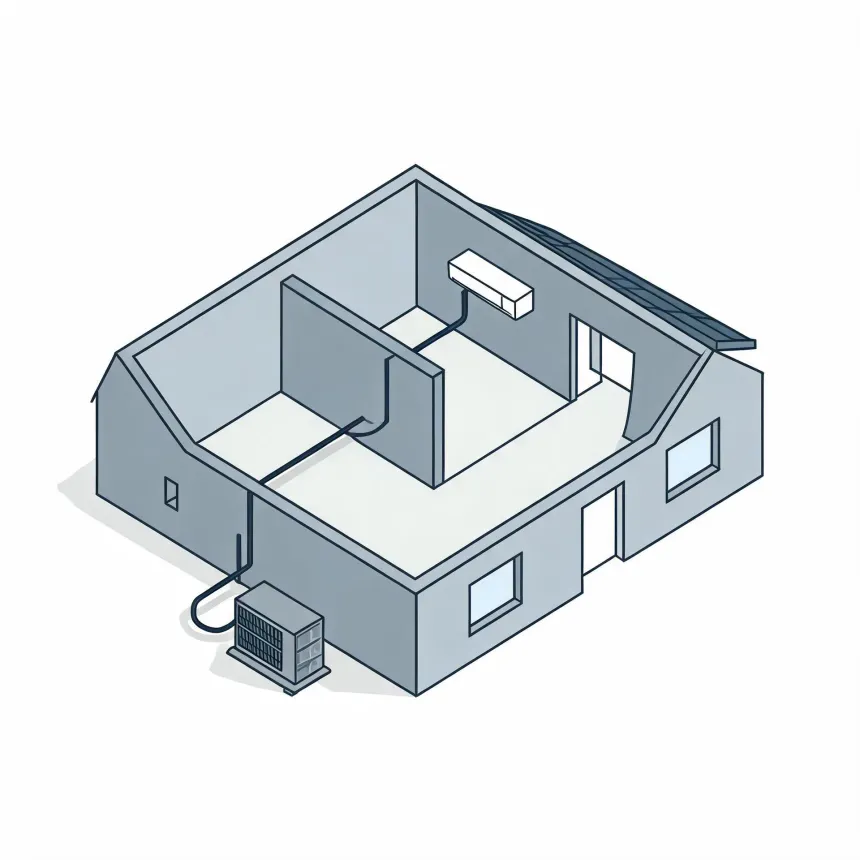
- For most homes here, yes. Ruston needs heat five months a year and cooling five months a year, so a system that does both from one unit gets used most of the year. A mini split also keeps working room by room if part of your home needs less attention than the rest, and it skips the ductwork a central system depends on, so there's nothing in the attic or crawlspace losing air before it reaches the room.
- How many rooms can a mini split cover?
- That depends on how many indoor heads you install. A single-zone system heats and cools one room or open area. A multi-zone system connects several indoor heads, sometimes five or more, to one outdoor unit, so it can cover multiple rooms at once, each with its own thermostat. A contractor sizes the system to the rooms you actually want conditioned.
- Can a mini split heat a whole house?
- It can, if enough zones are installed to reach every room. A multi-zone mini split with an indoor head in each room works as a whole-house heating system, and since winter lows here average 37°F, a heat pump rated for the split-system minimums handles that without trouble. Whether it makes sense for your whole house instead of just part of it depends on the layout, which a contractor can walk through with you.