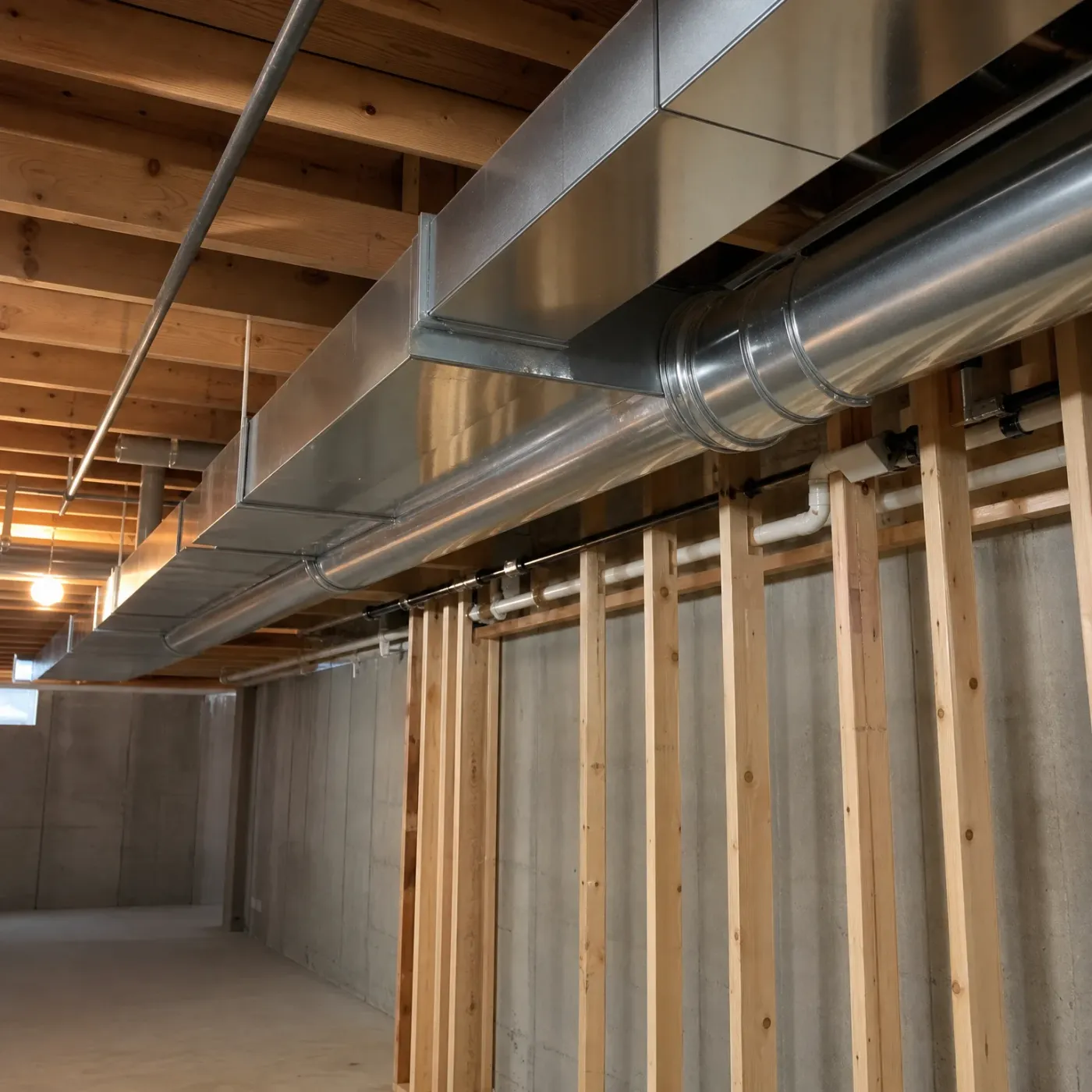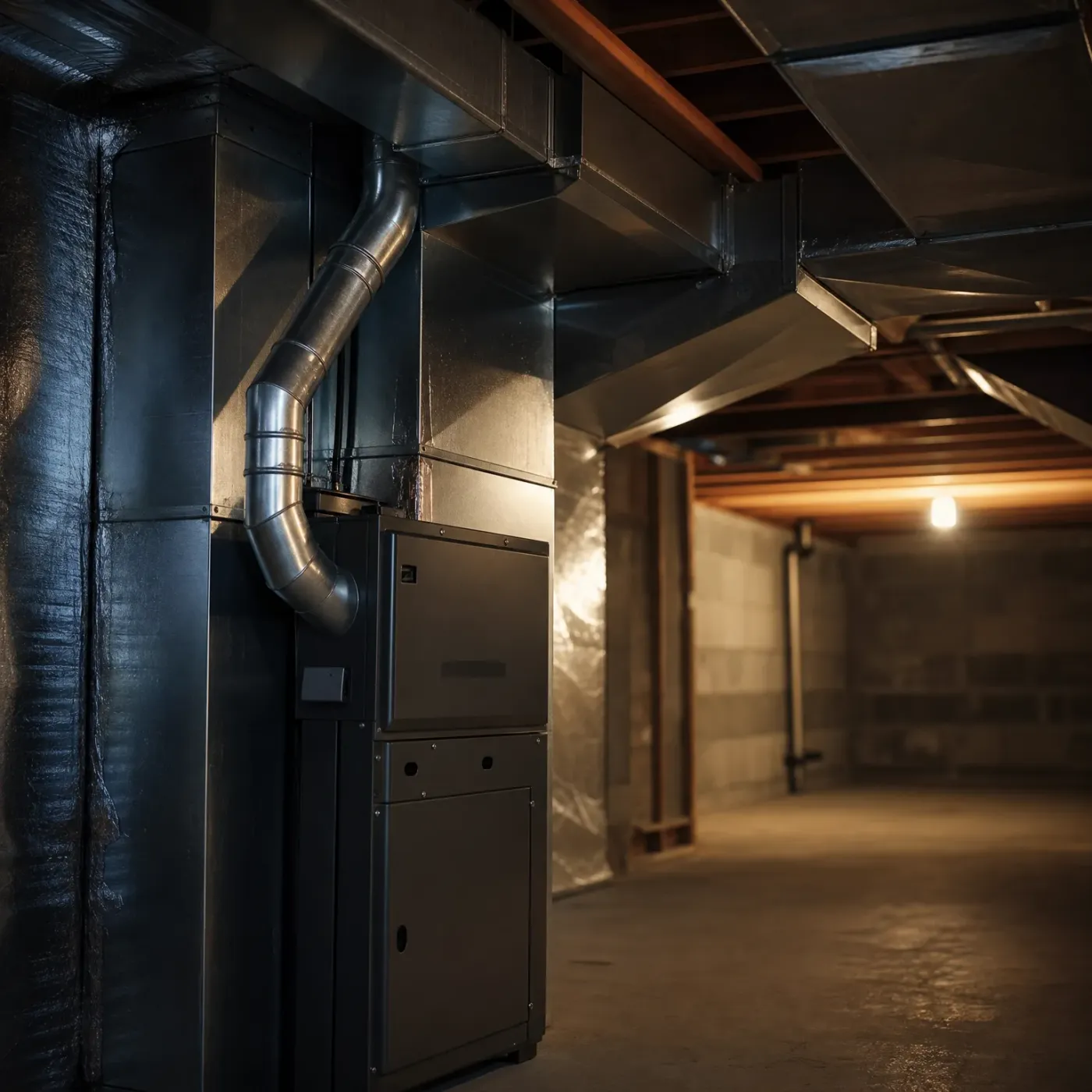

Basement interior with a furnace unit, insulated rectangular ductwork and a flexible metal pipe along the ceiling, with a bare lightbulb and concrete block walls in the background.

Finding a pro stops being your job

Signs your ducts need cleaning in Kenner, LA

You want to know if the dust, the musty smell, or the uneven air in your Kenner house actually means your ducts need cleaning, or if something else is going on. This page walks through the real signs to check for, room by room and vent by vent, before you decide. Once you fill out the form, you can stop chasing it down yourself.

Let a pro reach out

The clearest sign is dust that comes back fast, a day or two after you've wiped it down, along with a musty smell when the air handler kicks on or visible dust blowing out of the vents themselves. You might also notice one or two rooms never feel as cool or warm as the rest of the house, even though the thermostat says otherwise. This happens because the ductwork has built up a layer of dust, pet hair, and in humid places like Kenner, sometimes mold, especially if the ducts run through a crawlspace or attic that holds moisture. The long, muggy summers here give mold more chances to take hold inside ducts than it would somewhere drier. None of this means the ducts are the only possible cause. A dirty filter or a failing blower can look the same from where you're standing. But if you've changed the filter and the dust keeps coming, or the smell doesn't go away, the ducts themselves are worth a real look.

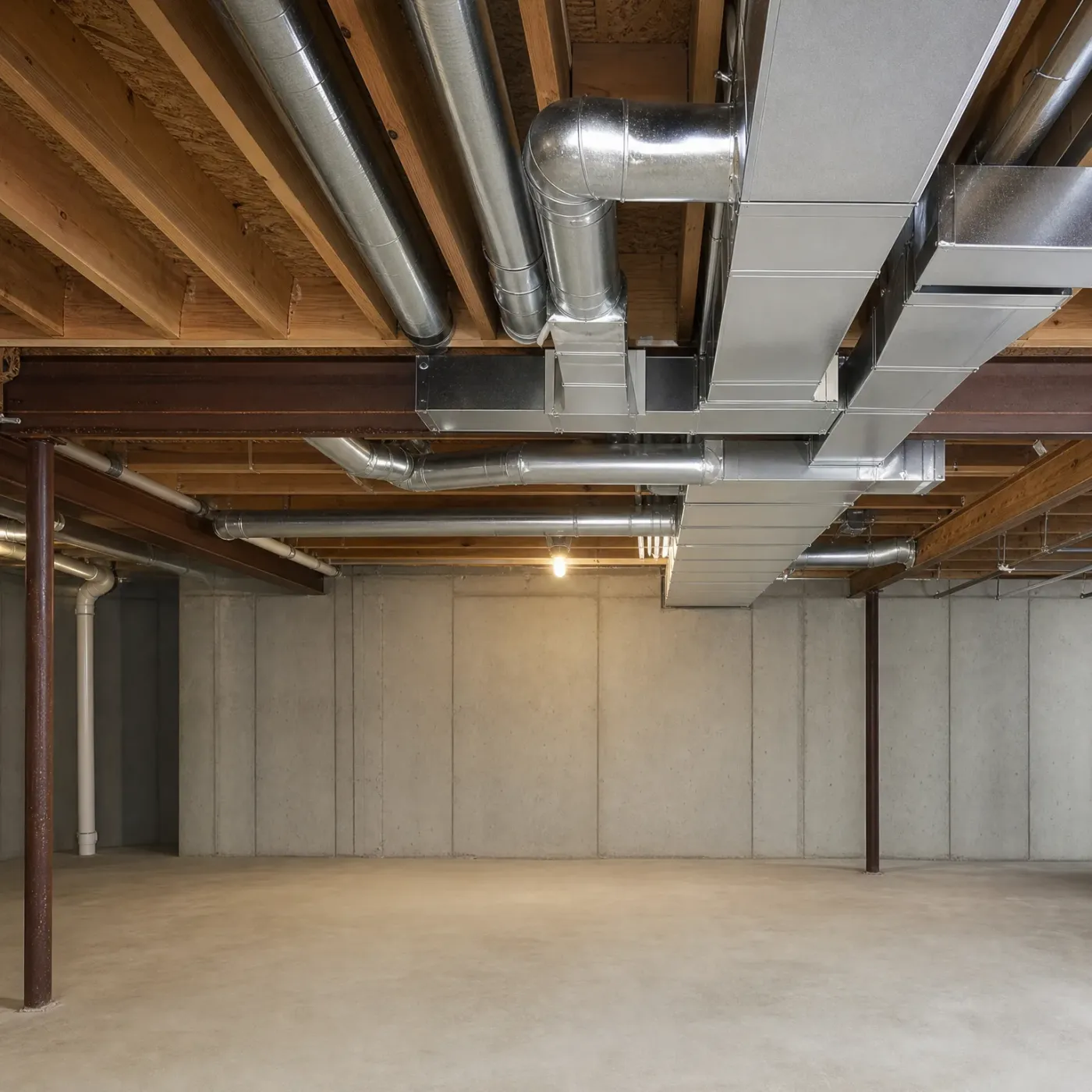
An empty unfinished basement with concrete floor and walls, exposed wood joists, steel beams and support posts, galvanized ductwork and pipes, and a single bare bulb light.
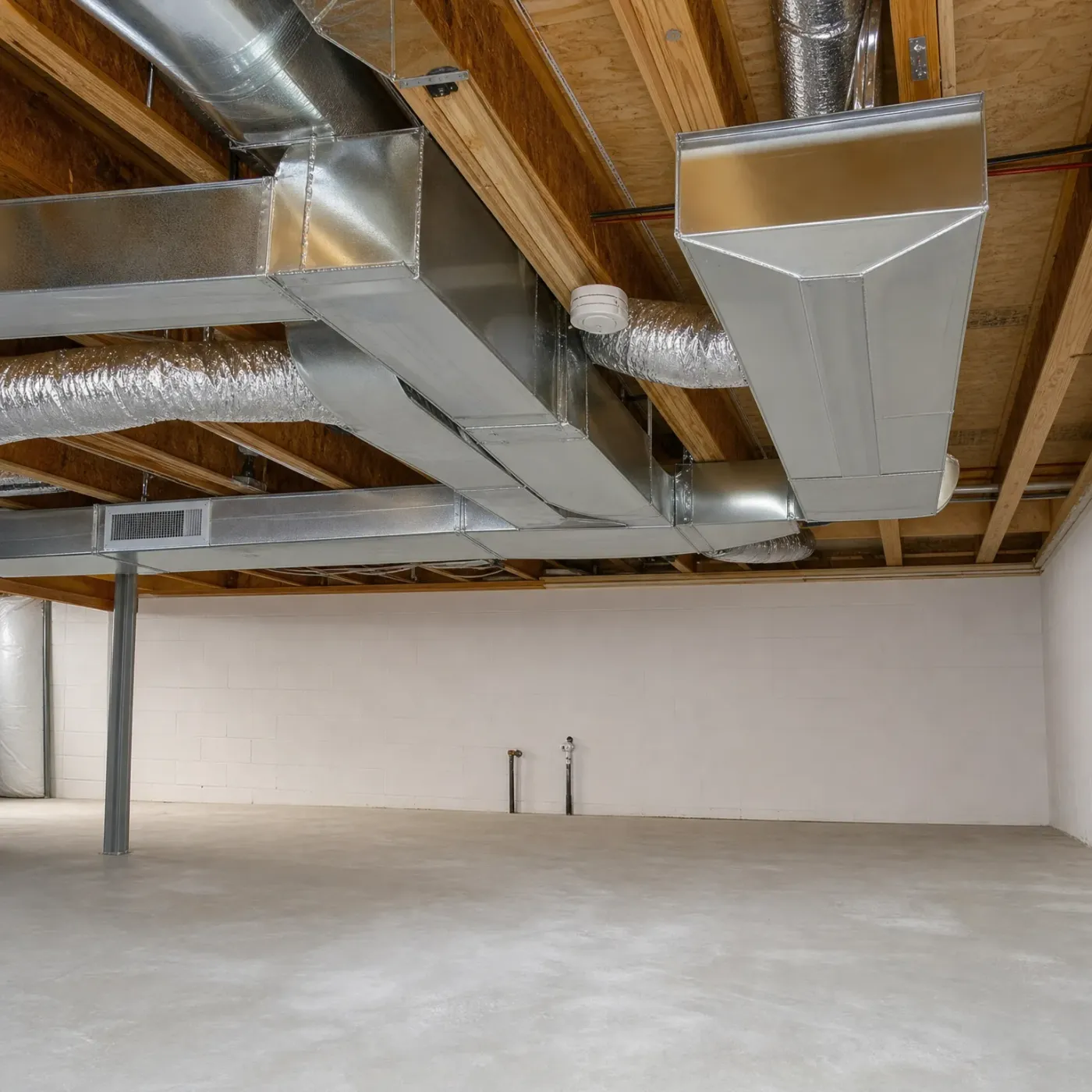
Clean metal duct runs and open joists with no staining, just ductwork doing its job out of sight.
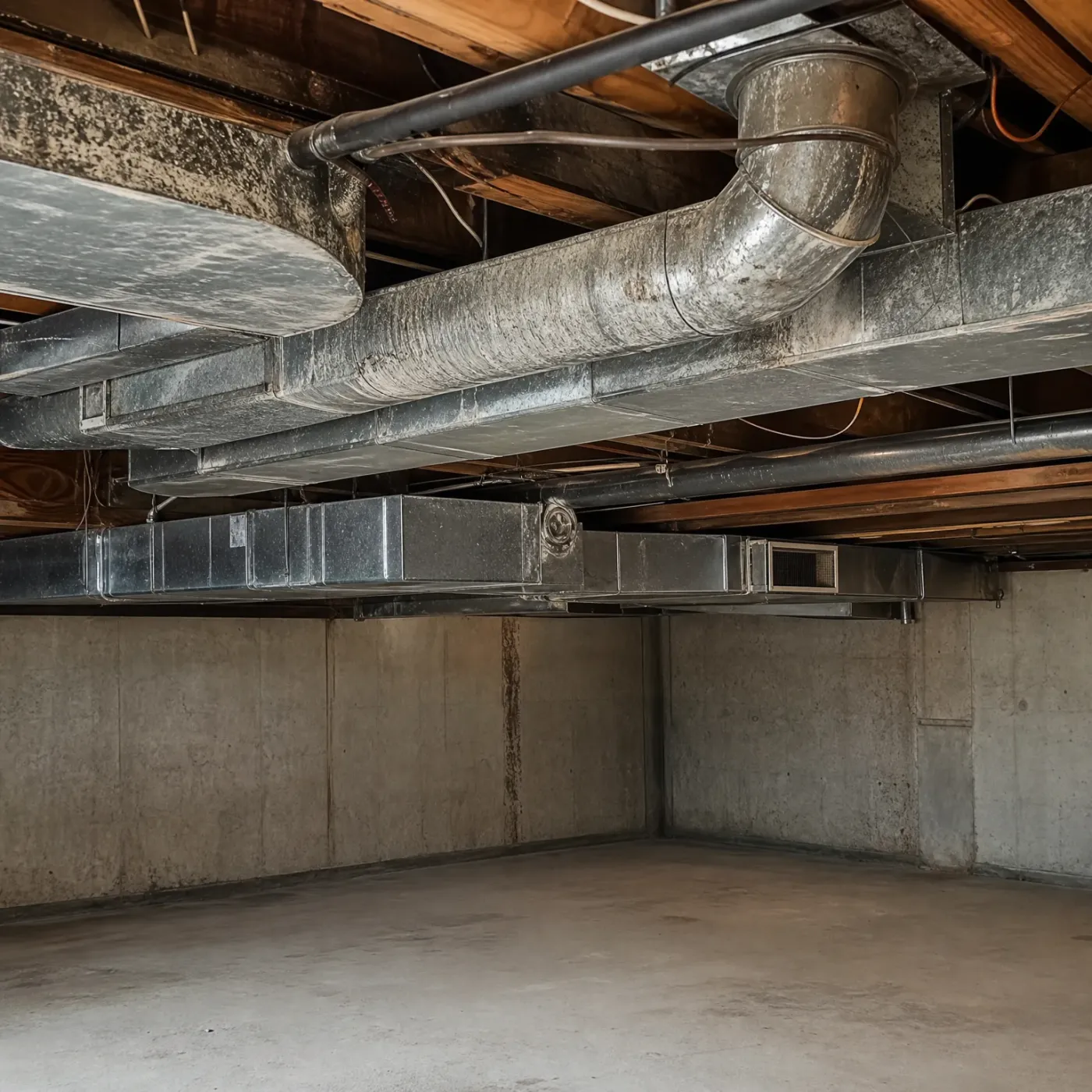
Empty basement with bare concrete walls and floor, with galvanized sheet-metal HVAC ducts, a round duct elbow, and pipes running along the wooden joists of the ceiling.
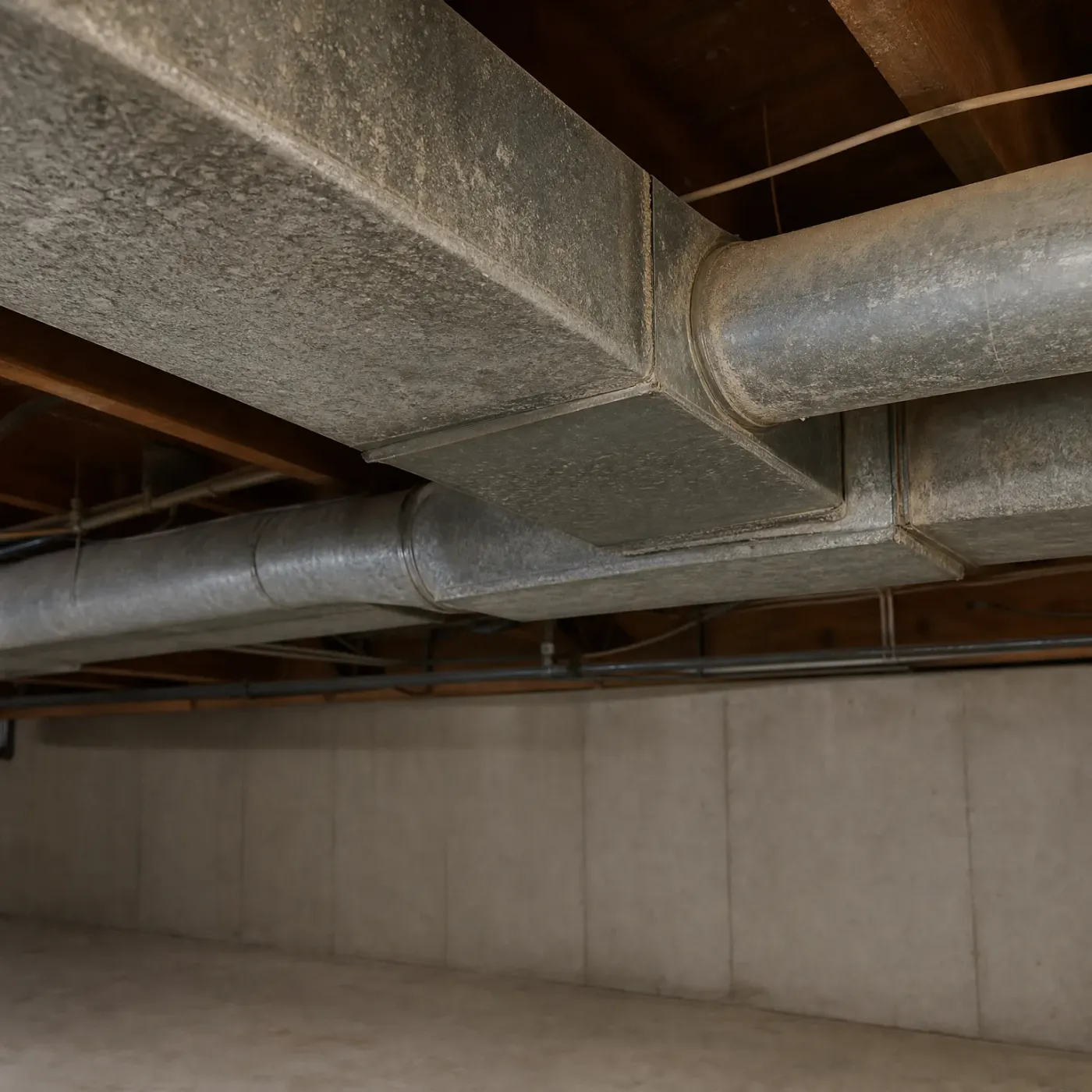
Dark staining across joists and duct surfaces like this usually means moisture has been sitting there a while.

Air moves through the system in a loop, and the return side is where most of the buildup starts. Every room's return pulls air back toward the air handler, and anything fine enough to pass the grille settles along the way, especially in the flex runs right near the unit where airflow slows down. If the ductwork has gaps at the joints, it is pulling in air from the attic or crawlspace along with whatever dust is riding in it, and that keeps feeding the problem even after a cleaning if the joints never get sealed. Humidity in this part of Louisiana stays high most of the year, so that dust has something damp to stick to instead of just blowing through to the filter. That is usually what is behind a musty smell that shows up when the system first kicks on and fades after a few minutes. A whistle or rattle at a vent is worth checking too. It often means loose insulation or a flex duct that has come loose and is feeding debris straight into the air, not just dirt sitting in the line.

What's actually happening inside the duct

  • Return registers pull air back into the system, and a sock of dust across the grille means fine particles are settling before they ever reach the filter.
  • A duct system with gaps at the joints pulls in attic or crawlspace air, so cleaning without sealing those joints just repeats the problem in a few months.
  • The flex duct runs closest to the air handler collect the most debris, because that is where airflow is weakest and dust has time to settle.
  • A musty smell that shows up only when the system first kicks on, then fades, usually means moisture sitting in the duct liner rather than dust alone.
  • Humidity here stays high most of the year, and that moisture gives any dust or debris in the ducts something to cling to instead of blowing through.
  • A vent that rattles or whistles when the system runs often has loose insulation or a disconnected flex duct feeding debris into the airstream, not just dirt buildup.
Galvanized rectangular and round sheet-metal ductwork running beneath a wood-joist ceiling in a basement with concrete walls and floor, with pipes and wiring alongside.
Before you get your ductwork cleaning
Empty basement with bare concrete floor, painted block walls, and an exposed wood-joist ceiling with sheet-metal and insulated flexible ductwork and a steel support column.
After you get your ductwork cleaning
Empty unfinished basement with concrete walls and floor, exposed wood joists, metal HVAC ducts and pipes overhead, and a steel support column near a framed wall.

Ducts in good shape

Bare concrete floor, steel columns, and metal duct runs overhead with no staining on the joists. The galvanized pipes look the same color as the day they went in. Air moves through clean, and nothing in the basement tells you otherwise.


Empty basement with bare concrete walls and floor, a steel support column, and galvanized sheet-metal ductwork and pipes running along the exposed wood joist ceiling.

Ducts that need attention

The same kind of basement, but the duct runs and the joists around them carry dark staining that branches out with the pipes. That staining means moisture or dust has been collecting at those joints for a while, not just this week. It's worth a look wherever your ducts run through unfinished space like this.

A man in a gray knit sweater stands smiling and looking off to the side beside a white marble kitchen island, with a dining table, pendant light, and open shelving in the background.
A smiling man with short dark hair and stubble in a gray sweater sits at a stone-topped counter with a white ceramic mug, in a room with a framed picture, a plant, and shelves holding bowls.
A smiling man in a dark navy sweater sits at a wooden kitchen counter with a light ceramic mug, with white tile backsplash, open shelving and a window with potted plants behind him.
A smiling man with dark hair and a beard, wearing a dark green knit sweater, stands at a kitchen counter with a ceramic mug, with an open living room, sofa, armchair and large windows behind him.
Unfinished basement with exposed wood joists, galvanized rectangular and round ductwork, piping, stud framing against concrete walls, and a bare hanging light bulb.

Let someone else find the pro

The pro who gets in touch is licensed in Louisiana and works in Jefferson Parish.

Once you send the form, finding a pro is off your list.

Find a licensed pro

No fee to send it, and nothing to sign.

A bearded man in a navy t-shirt sits on a beige sofa, laughing while looking toward a laptop screen visible in the lower foreground, with a houseplant, shelves, and a framed picture behind him.
A man with graying hair and a beard in a plaid flannel shirt stands indoors looking out a frosted window at snow-covered trees, with a ceramic mug on the sill.

Power here costs 12.18 cents per kilowatt-hour

At 12.18 cents per kilowatt-hour, running your air handler longer than it needs to doesn't hit hard per hour, but clogged ducts make it run longer anyway. Most homes here cool with electricity, so a system working against dust buildup just adds that time onto every bill, all summer.

EIA-861 2025

How humidity feeds duct buildup

Kenner's air carries a lot of moisture most of the year, and that moisture doesn't stop at your windows. Every time your air handler cycles, damp air moves through the ductwork, and any dust sitting in there picks up that moisture instead of drying out. Wet dust clings to the inside of the duct walls rather than blowing through, so it builds up layer by layer instead of getting pulled into the filter. Over time that buildup gives mold and mildew something to grow on, which is where the musty smell comes from. In a drier climate the same dust might just blow through and settle at the vent. Here, it tends to stay put.

Why one dirty return matters

A duct system is one connected loop, so what happens at a single return register tells you something about the whole run behind it. Dust sitting heavy on a return grille usually means the air moving past it is already carrying more particles than the filter was built to catch. That same air has to pass through every duct section before it gets back to the air handler, so if one return looks bad, the ducts feeding it usually aren't clean either. Checking returns first, before pulling a vent cover or crawling into a joist space, gives you a quick read on whether the rest of the system is worth a closer look.

Why does your Kenner house get dusty so fast anyway?

  • Half the homes here were built by 1975

    Half the homes in Jefferson Parish were built in 1975 or earlier, so a lot of duct runs out there are original to the house.

  • Heat runs November through February

    Cooling runs April through October here, seven months of the air handler pulling dust through the same ducts over and over.

  • Cooling runs April through October

    Heat only runs November through February, so the four months of warm air moving are the only break your ducts get from humid air.

ACS 2020-2024 · NOAA nClimDiv 1991-2020

What These Signs Add Up To

  • Dust that resettles within a day or two of cleaning, along with a musty smell at startup, points to buildup inside the ducts themselves.
  • Dark staining on joists or duct surfaces usually means moisture has been sitting there, not just passing through.
  • A room that never cools evenly despite a working system often traces back to a blocked or dusty duct run feeding it.
  • A heavy coat of dust across a return grille means fine particles are settling before the filter ever catches them.
  • Gaps at the duct joints let attic or crawlspace air into the system, so sealing those matters as much as the cleaning itself.
  • A local contractor who works on Kenner duct systems all summer knows which of these signs show up most in this area and checks for all of them before recommending anything.

None of these signs show up on their own for no reason. Dust that resettles fast, a musty smell at startup, staining on the joists, a room that won't cool right, a dirty return grille: each one points back to buildup moving through the system, and in a house with Kenner's humidity working on it all summer, that buildup tends to show up in more than one of these places at once. If you've checked a few boxes on this list, the duct system is telling you something, not just the thermostat.

Gaps at the joints change what cleaning alone can fix. A system pulling in attic or crawlspace air keeps feeding itself new dust no matter how often it gets cleaned out, so a contractor looking at your ducts should be checking the seams, not just running a vacuum through the runs.

This is where it helps that you're not calling around to five companies and comparing quotes over the phone. The contractor who gets matched to your request works on duct systems around Kenner all summer, through the same humidity and the same cooling months you deal with. They've seen which of these signs shows up most in houses like yours, and what's usually behind it, before they ever walk in. One contractor, already familiar with the kind of system you have, looking at the actual ducts in your house instead of guessing from a list.

A single-story house with horizontal siding and large windows lit from within at dusk, beside a lawn, low path lights and a dark gravel driveway, with pine trees and a distant waterway under an orange and blue sky.

Ductwork Cleaning

One request and it's handed off

Duct and vent cleaningDucts or ventsJefferson Parish, LA
Step 1 of 2

What ZIP code is the job in?

  • A pale ceramic vase holding leafy green branches sits on a wooden side table beside a linen-covered chair with a throw blanket, below a wood-framed window.
    • Get matched with someone who does this kind of work in Jefferson Parish.
    • Get matched with a Jefferson Parish pro who cleans ducts.
  • A large woven basket with rope handles holding a draped cream fringed blanket stands in a room corner on a wood floor, with sunlight from a nearby curtained window and a dark wood cabinet at right.
    • Send the form and the duct cleaning stops sitting on your list.
    • Send the request and finding a pro stops being your problem.
  • A leafy green plant in a woven basket sits in a sunlit corner beside a beige sofa with a knit throw, sheer curtains, a window, and a wooden coffee table.
    • Skip searching for someone who cleans ducts in Jefferson Parish.
    • Explain the job once and skip repeating it on every call.
  • A ceramic vase holding olive branches and a wooden bowl sit on a wooden windowsill beside a white-framed window, with a framed picture leaning against the grey wall.
    • Your duct cleaning request goes to one local pro.
    • Your request goes to one pro, not a list of companies.