A gray outdoor heat pump unit with a circular fan grille sits on a concrete pad beside a dark wood-clad house, next to a gravel bed with ornamental grasses and a stepping-stone path.

Hand off the heat pump problem

Why your heat pump bill is high in Louisiana summers

Your heat pump is running nonstop against the humidity and your bill still jumped. This page gets into what pushes a heat pump bill up in a Louisiana summer, from a stuck reversing valve to a dirty coil, and what's worth checking before you assume it's just the heat. When you're ready, skip the search for a contractor and send the form. One repair visit, no calling around.

Hand it off

A high summer bill usually means your heat pump is running longer than it should to pull the same heat out of the air. In a Louisiana summer the air it's working against is heavy with moisture, and a heat pump has to move more of that air across the coil to get the same cooling effect a drier climate would give it for less. If the coil is dirty or the airflow is choked down somewhere, the system can't shed that heat the way it's built to, so it just keeps running. A reversing valve that's not fully switching does the same thing, forcing the unit to work harder for less result. None of this is the thermostat's fault and it isn't about keeping the house too cold. It's the equipment working past what it should have to, and that extra runtime is what shows up on the bill. Worth having someone check before the next one comes in even higher.

A smiling man in a dark navy sweater sits on a light sofa in a living room, with a glass bowl of popcorn on a wooden coffee table and bookshelves behind him.
A smiling man in a dark green sweater sits on a tan leather sofa in a dimly lit living room, with a bowl of popcorn in the foreground and a kitchen area blurred behind him.
A smiling middle-aged man in a dark shirt sits on a gray sofa in a living room, with a bowl of popcorn on a side table and shelves, a window and kitchen area behind him.
A smiling bearded man in a dark gray t-shirt sits on a gray couch in a living room, with a large glass bowl of popcorn on a wooden table in the foreground.

Why humidity costs more to move

A heat pump cools your house by pulling heat out of the air that passes over its indoor coil, and it pulls moisture out at the same time. Air that's heavy with water holds more heat in it, so the coil has to do more work to get the same drop in temperature. On a muggy Louisiana afternoon the unit can run longer just to keep up with the moisture load, even if the thermostat reading barely moves. That extra runtime shows up on the bill before it shows up as a comfort problem.


A dirty coil makes it worse

The outdoor coil gives off the heat your heat pump pulls from inside the house, and it needs air moving freely across its fins to do that. When the coil is coated with pollen, grass clippings or dust, less air gets through, and the system can't shed heat as fast. It ends up running longer to move the same amount of heat outside. A coil that looks fine from a few feet away can still be clogged enough to matter, and it's one of the first things worth having checked when a bill jumps for no clear reason.

An outdoor air conditioning condenser unit with a top fan grille sits on a concrete pad beside a house with horizontal siding and a concrete step.
Before you get your heat pump repair
A gray outdoor heat pump unit with a large fan grille sits on a concrete pad beside a house with horizontal lap siding, next to a green shrub, mulch bed, and lawn.
After you get your heat pump repair
A gray outdoor condenser unit on a concrete pad beside a white horizontal-siding house, with refrigerant lines and conduit running to a wall-mounted disconnect box, bare soil in front and a green shrub at left.

Running normally

The outdoor unit cycles on, runs long enough to pull the heat and moisture out of the air, then shuts off. The coil inside stays clean enough to transfer heat the way it was built to. Your thermostat holds its setting without the system fighting to get there.

An outdoor air conditioner condenser unit on a concrete pad beside a house with horizontal lap siding, with a shrub to the left, bare dirt in front, and conduit and a metal disconnect box on the wall.

Running against something

The outdoor unit runs long past when it should cut off, and the house still doesn't feel right. A dirty coil, a low charge, or a stuck reversing valve makes it work harder for the same result. That extra runtime is what shows up on the bill.

A closed silver laptop and a ceramic mug of dark coffee sit on a wooden table in front of two chair backs, with a kitchen counter, tiled backsplash, wooden cutting boards, a vase of greenery and a potted plant by a window behind.

What that long runtime does to your bill, and to the unit

Every extra hour your outdoor unit runs is an hour pulling electricity, and in a Louisiana summer that hour comes more often than it should. You'll see it first on the bill. Then you'll start hearing it: the unit cycling on again a few minutes after it shut off, or not shutting off at all during the hottest part of the afternoon. A reversing valve that's not switching fully, or a coil caked with dirt, makes the system work harder for the same few degrees of cooling, and harder work costs more every single day it goes uncorrected.

Left alone, that strain doesn't stay on the electric bill. A compressor that runs long and hot wears faster than one that cycles the way it was designed to. Rather than spend the evening calling around, checking licenses, and explaining the same problem to three different contractors, you can send one form and let someone else do the finding. You still get the repair; you just stop doing the legwork to get there.

A living room corner with a beige upholstered armchair holding navy and striped cushions, a small round wooden side table with a carved bowl and a potted green plant, a framed landscape picture on a pale wall, built-in shelving, and a curtained window.
  1. Thermostat calls for cooling and the reversing valve sets flow direction.

  2. The outdoor unit's compressor starts pulling in refrigerant gas.

  3. Refrigerant carries heat from inside air to the outdoor coil.

  4. The outdoor fan blows across the coil to release that heat.

Why does my heat pump run so long before it shuts off?

You watch the outdoor unit kick on and it just keeps running, ten minutes, twenty, longer than you remember it running last summer. You're not sure if that's the system doing its job or a sign something's wrong, and the bill arriving higher doesn't help you tell the difference.

A long runtime is normal in Louisiana humidity, unless it never shuts off at all

A heat pump is built to run in long stretches when the air outside is heavy with moisture, because pulling that moisture out takes time on top of pulling the heat out. A cycle that runs fifteen or twenty minutes and then shuts off, with the thermostat holding its setting in between, is the system doing what it was designed to do. What's not normal is a unit that runs for hours without shutting off, or one that runs constantly and the house still doesn't cool down. That points to something stopping the system from moving heat the way it should, a dirty coil, a stuck reversing valve, or refrigerant low on charge, and it's worth having checked rather than waited out.

A dimly lit bedroom at dusk with a made bed, a table lamp on a nightstand, and a condensation-covered sash window with a dark curtain.

It's past eleven and you're still on top of the sheets. The window unit in the hall is losing to whatever's happening with the central system, and the air in the bedroom sits thick against your skin. You've kicked the sheet down to the foot of the bed and it's damp anyway. The window shows that gray fog at the edges, the kind that means it's wetter outside than in, except tonight you're not sure that's true. The vent over the dresser is barely moving air. You can hear the outdoor unit running, the same low drone it's had going for an hour now, and you lie there doing the math on what that hour is costing before you've even seen the bill.

Send one request and you're done looking

You've read enough now to know this isn't just the humidity doing what humidity does. A reversing valve that won't fully seat, a coil caked with enough grime to slow the heat transfer down, a refrigerant charge that's drifted low, any of these will make your heat pump run long and still leave you with a bill that doesn't match what you're getting. Figuring out which one it is means getting under the cabinet and checking pressures, not guessing from the thermostat. You could spend an afternoon calling around, telling each one what the outdoor unit sounds like and how long it's been running hot, then sit with quotes that don't line up because nobody looked at the same thing. Or you can send this once and let a licensed contractor who works on heat pumps in this kind of heat take it from here. Your part ends with the form. The rest of the summer doesn't have to run the way this one has.

A system that's low on refrigerant still runs, still blows cold air at the vent, and still pulls your power bill up every day you leave it running that way.

A system with the right charge moves the heat it's built to move in the time it's built to take, and the compressor isn't straining to make up for what's missing.

Power costs 12.52 cents per kilowatt-hour statewide

At 12.52 cents a kilowatt-hour, Louisiana power is cheap next to most of the country. That's why a heat pump running long against the humidity doesn't look alarming on the bill right away. By the time it does, the unit has likely been overworking for a while.

EIA-861 2025 statewide residential average

A gray outdoor condenser unit on a concrete pad beside a beige vinyl-sided house, with a wall-mounted disconnect box, flexible conduit, mulch bed, shrubs and a concrete walkway in front.
The coil's clean, the disconnect box and lines sit neat against the siding, and the unit cycles off once it's pulled the heat and moisture it needs to.
An outdoor air conditioning condenser unit on a concrete pad beside a house with horizontal siding above a brick foundation, with a flexible conduit running to a wall-mounted disconnect box.
Dust and grime built up on the coil like this make the unit work harder for the same result, and that extra work is what shows up on your bill.
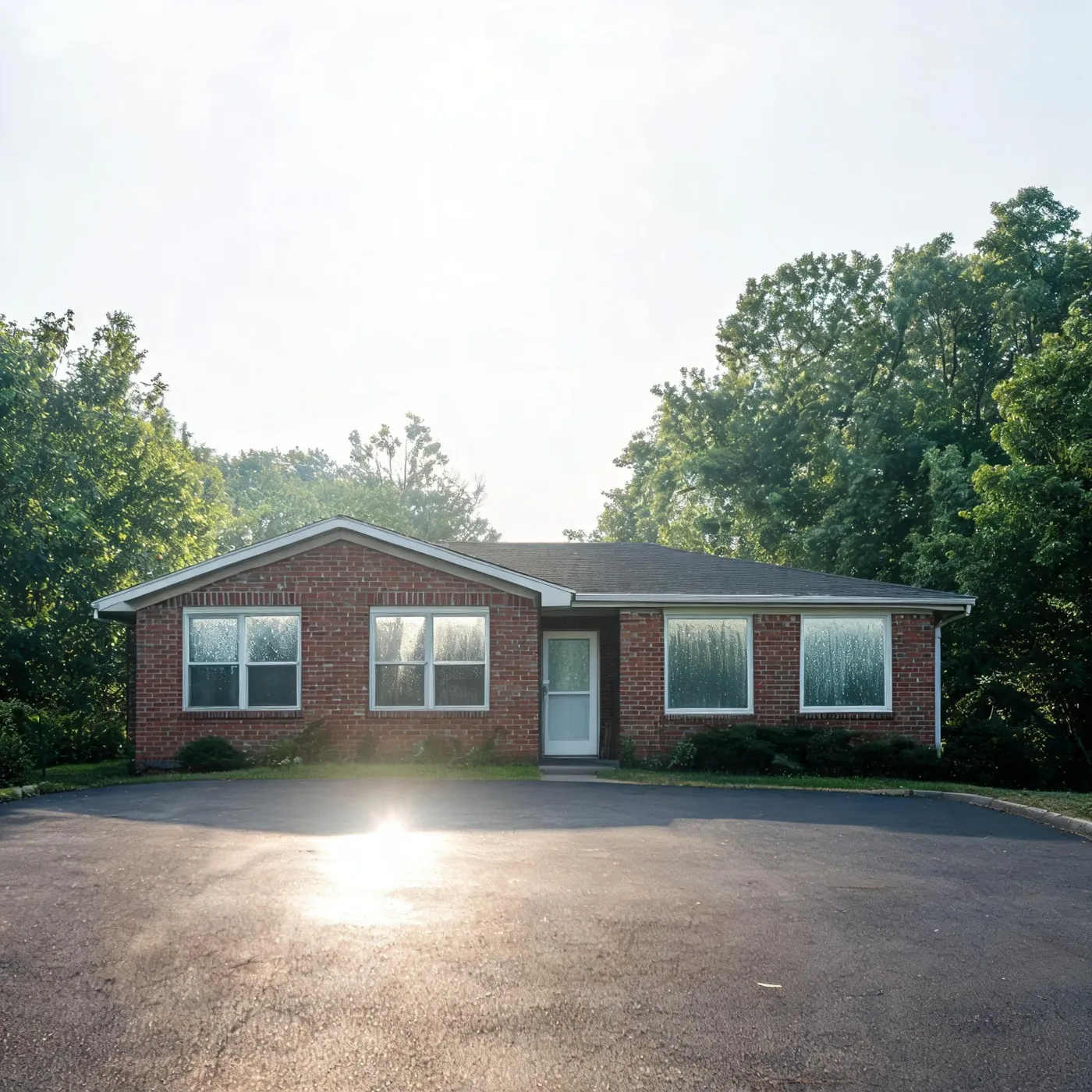
A single-story red brick ranch house with white-framed windows and a white storm door, fronted by a large asphalt parking area and backed by leafy green trees under a bright hazy sky.

NOAA's summer averages for Louisiana put the dew point at 73°F across June, July and August. That's thick, sticky air, the kind that sits on your skin the second you step outside. Your heat pump has to wring that moisture out before it can cool the house, and at 73°F there's a lot of it to pull. That's why the outdoor unit runs long into the evening instead of cycling off like it would on a drier night. You paid for all that runtime whether the house ever felt fully cool or not.

NASA POWER T2MDEW county cells weighted by homes

A woman with dark hair in a bun reclines on a sofa with her eyes closed, wrapped in a cream fleece blanket, a closed blue hardcover book resting in front of her, with a lit lamp and a vase of dried flowers in the background.
A smiling bearded man in a navy sweater sits at a candlelit dinner table with a glass of red wine, a bowl of salad, and plates of food in the foreground.

What a high bill is telling you

  • A high bill in a Louisiana summer usually means the heat pump is running long against moisture, not a system that's simply undersized.
  • A stuck reversing valve, a dirty coil, or a low refrigerant charge all show up the same way: longer runtimes and a bill that climbs before anything sounds wrong.
  • The unit can still blow cold air at the vent while losing money every day it runs that way.
  • Checking the coil, the charge, and the valve now costs less than paying for the extra runtime all summer.
  • Finding a contractor on your own means searching, calling around, and explaining the same problem more than once before you get an answer.

Your heat pump isn't wearing out just because it's running long. It's running long because something inside it is making the job of pulling heat and moisture out of the air harder than it should be. The reversing valve, the coil, the refrigerant charge, any one of them can be off while the unit keeps blowing cold air at the vent and keeps cycling on and off like normal. You won't hear a bad noise or see a warning light. You'll see it on the bill first, in the extra hours the outdoor unit ran that it shouldn't have needed to.

That's the whole answer. The heavy, wet air outside your house this time of year makes the unit work harder than it would somewhere dry, and if one part of the system has slipped out of the shape it's supposed to run in, that extra work turns into extra dollars every single day until someone fixes it.

Finding who fixes it is its own job. Searching for a contractor who works on heat pumps, calling a few of them, explaining the same runtime and the same bill jump to each one, then sitting with two or three quotes trying to guess which number is fair. That's hours you don't have most evenings. Send the form once and that search is off your plate. Someone licensed to look at the valve, the coil and the charge gets in touch, and you stop being the one who has to track down help while the bill keeps climbing.

A gray outdoor condenser unit on a concrete pad beside a house with horizontal lap siding, bordered by mulch, shrubs and a mowed lawn.

Finding a pro stops being your job

RepairHeat PumpLouisiana
Step 1 of 2

What ZIP code is the job in?