Heat Pump Repair in Alexandria, LA
Homes here need heat from November through March and cooling from April through October. If your system quits, tell us what it's doing and a licensed contractor who covers Rapides Parish will get in touch.
Tell us about the job
It takes about a minute.
Your heat pump runs almost every month in Alexandria
Nearly 12 months out of the year, your heat pump is either pulling heat into the house or pushing it out. Summer afternoons averaging 92°F mean the compressor works hard for seven months straight, and winter nights near 41°F keep it running the other five. There is not much of a break in between.
That much runtime wears on the compressor and the outdoor fan motor before their time, and homeowners usually notice it as a system that runs longer to reach the temperature they set, or air coming from the vents that is not as warm or cool as it should be. Rapides Parish also sees its share of damaging wind, which can knock the outdoor unit around or cut power to it. Most heat pumps come back on by themselves once power is restored, but a unit that took a hit from flying debris may not start cleanly on its own.
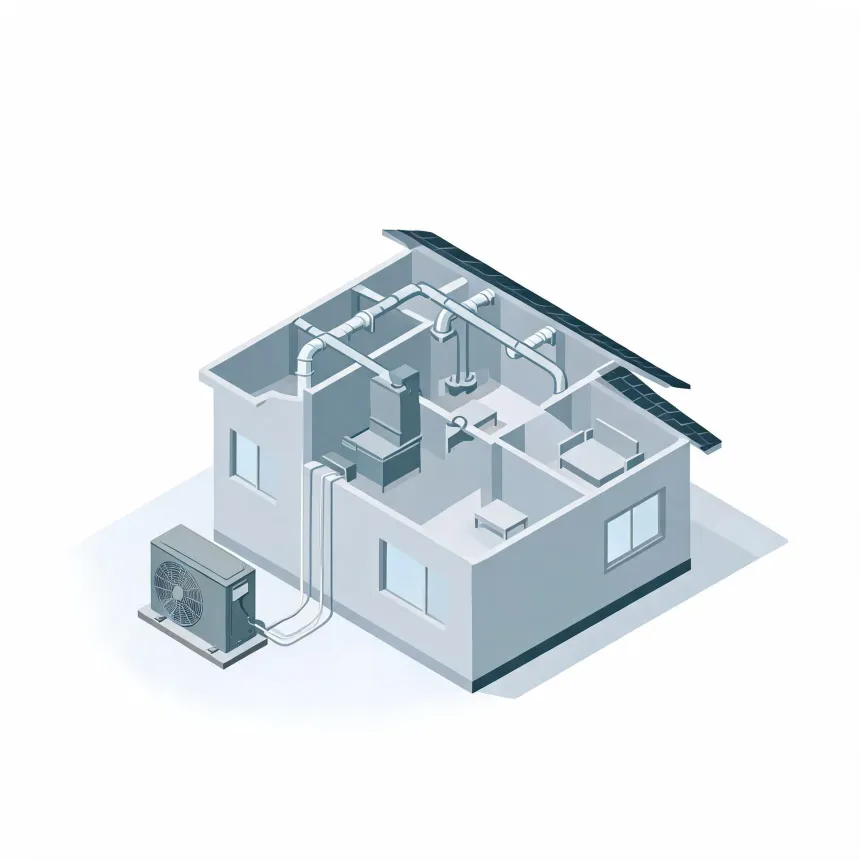
- 5 months
- November through March, your system heats
- 7 months
- April through October, it cools
- 41°F
- the average winter night it heats against
- 92°F
- the average summer afternoon it cools against
NOAA nClimDiv, 1991–2020 normals
Louisiana requires HVAC contractors to hold a state license.
The Louisiana State Licensing Board for Contractors is the body that tests and records HVAC contractors in this state. Passing that test and holding that license is what puts a contractor on the board's record. The license belongs to the contractor, not to any single job, so it stands behind every repair that contractor takes on, including this one.
A heat pump repair means opening the refrigerant side of the system, and federal law requires whoever does that to hold EPA Section 608 certification, no matter what state the work happens in. That certification is separate from the state license. One says the contractor was tested and is on record with the state. The other says the individual working on the refrigerant lines is qualified to handle it.
Source: Louisiana State Licensing Board for Contractors
- Why is my heat pump blowing cold air?
- In heating mode, air from the vents is warm compared to your room but still cooler than skin temperature, so it can feel cold even when the system is working right. If the air is actually cold with no warmth to it at all, the problem is usually the reversing valve stuck in cooling mode, a refrigerant leak, or the compressor not running. Check your thermostat is set to heat and not fan only, since a fan set to run constantly will blow room-temperature air between cycles. If the thermostat is set right and the air still has no warmth, the system needs a contractor to check the refrigerant charge and the reversing valve.
- Why is there ice on my heat pump?
- Some frost on the outdoor unit in winter is normal. Your heat pump runs a defrost cycle on its own, reversing briefly to melt that frost, then switches back to heating. Ice becomes a problem when it builds up thick, covers the coil fully, or stays even after the unit should have defrosted, which usually points to low refrigerant, a failed defrost control, or a fan that has stopped turning. If the outdoor unit is coated in ice and the defrost cycle is not clearing it, the system needs a contractor to find out why.
- Why is my heat pump running but not cooling?
- If the unit is running but the air is not cool, the most common causes are a dirty filter blocking airflow, a frozen indoor coil, low refrigerant from a leak, or a failing compressor. With afternoons here reaching 92°F in summer, a system that is not cooling can let the house heat up fast, so this is worth checking the same day. Start with the filter, since a clogged one is the easiest thing to rule out yourself. If the filter is clean and the air is still not cooling, a contractor will need to check the refrigerant charge and the compressor, and anyone opening the refrigerant side of the system is required to hold EPA Section 608 certification.