
HVAC Installation in Opelousas, LA
A new system here will heat from November through March and cool from April through October every year. Tell us about the house, and a licensed contractor who covers St. Landry Parish will get in touch.
Tell us about the job
It takes about a minute.

A system that works almost every month of the year
In Opelousas, cooling season runs April through October, seven months of afternoons averaging 91°F. Heating only takes over from November through March, and even then winter nights average 43°F. That leaves almost no month where the system gets to rest, so a new install has to hold up under near constant use, not just handle a few weeks of extreme weather.
Most homes here heat with electricity, and the power does not always stay on. Nearly half of Louisiana households lost power for at least a day in 2024, and this parish has logged 52 damaging wind events over the past ten years. A new system should be matched to your house and installed so it comes back on correctly once the power does.
- 5 months
- November through March, your system heats
- 7 months
- April through October, it cools
- 43°F
- the average winter night it heats against
- 91°F
- the average summer afternoon it cools against
NOAA nClimDiv, 1991–2020 normals
Louisiana requires HVAC contractors to hold a state license.
The Louisiana State Licensing Board for Contractors tests and records the people it licenses, and the license belongs to the contractor, not to any single job. That means the person or company signing up to install your system has already had to prove they know the trade before the state put their name on file, not just paid to register a business.
For an installation, that license is what stands behind the work itself. Alongside it, most cities and parishes in Louisiana require a permit for replacing a furnace, air conditioner or heat pump, and an inspection once the job is finished. That inspection is a separate check, done by the local building office rather than the state board, and it is what confirms the new system was put in correctly at your address.
Source: Louisiana State Licensing Board for Contractors
- When should I replace my HVAC system?
- Replace it when repairs get more frequent, the unit is old, or a technician finds a crack or failure that affects safety. A furnace or air conditioner that breaks down every cooling or heating season is costing you more in repair calls than a new system would. Homes here run the air conditioner from April through October and the furnace from November through March, so the equipment works most of the year and wears accordingly. If a contractor tells you the cost to fix it is close to the cost to replace it, replacement is usually the better move.
- Should I replace my furnace and air conditioner at the same time?
- If both are old, yes, and here is why. A furnace and air conditioner installed together are matched to work as one system, and pairing a new unit with a much older one can mean the older half fails soon after and the new half never runs at its best. If only one has failed and the other is still in good shape, replacing just that one is reasonable. A contractor can look at the age and condition of both and tell you whether pairing them makes sense for your house.
- What happens during an HVAC installation?
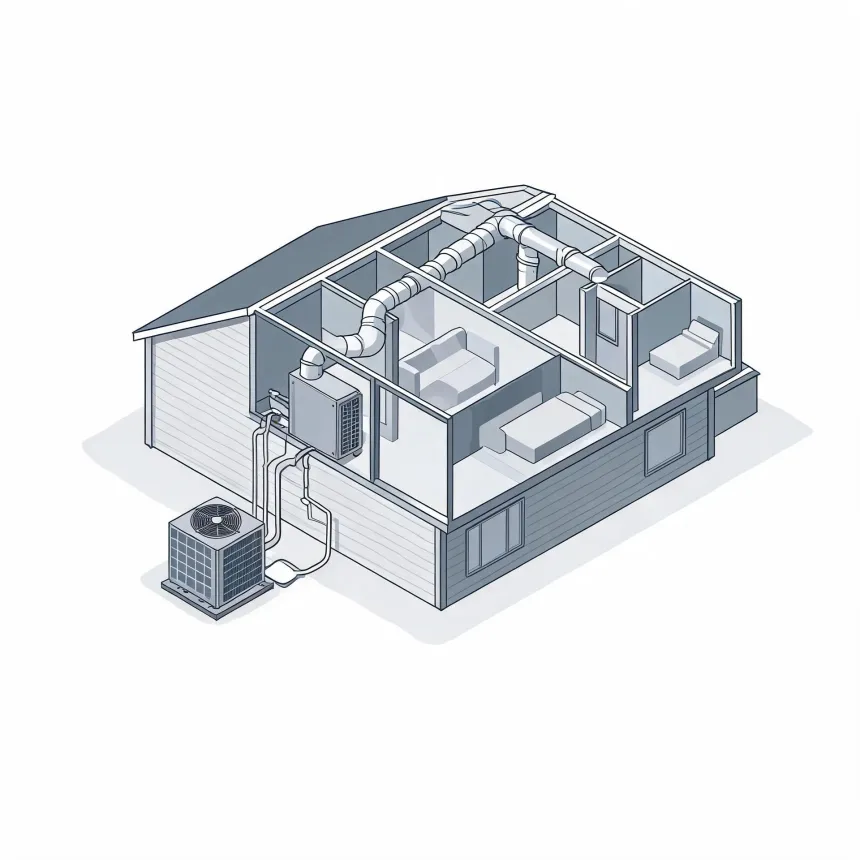
- A contractor removes the old furnace and air conditioner or heat pump, then sets the new equipment in place and connects it to the ducts, refrigerant lines, gas or electric supply, and thermostat. Once everything is connected, the system gets tested and the airflow and refrigerant charge are checked against the manufacturer's specs. In most cities and counties this work needs a permit from the local building office, and an inspector checks it before the job is considered done. A licensed contractor handles the permit as part of the job.