Is duct cleaning worth it in Lafayette, LA

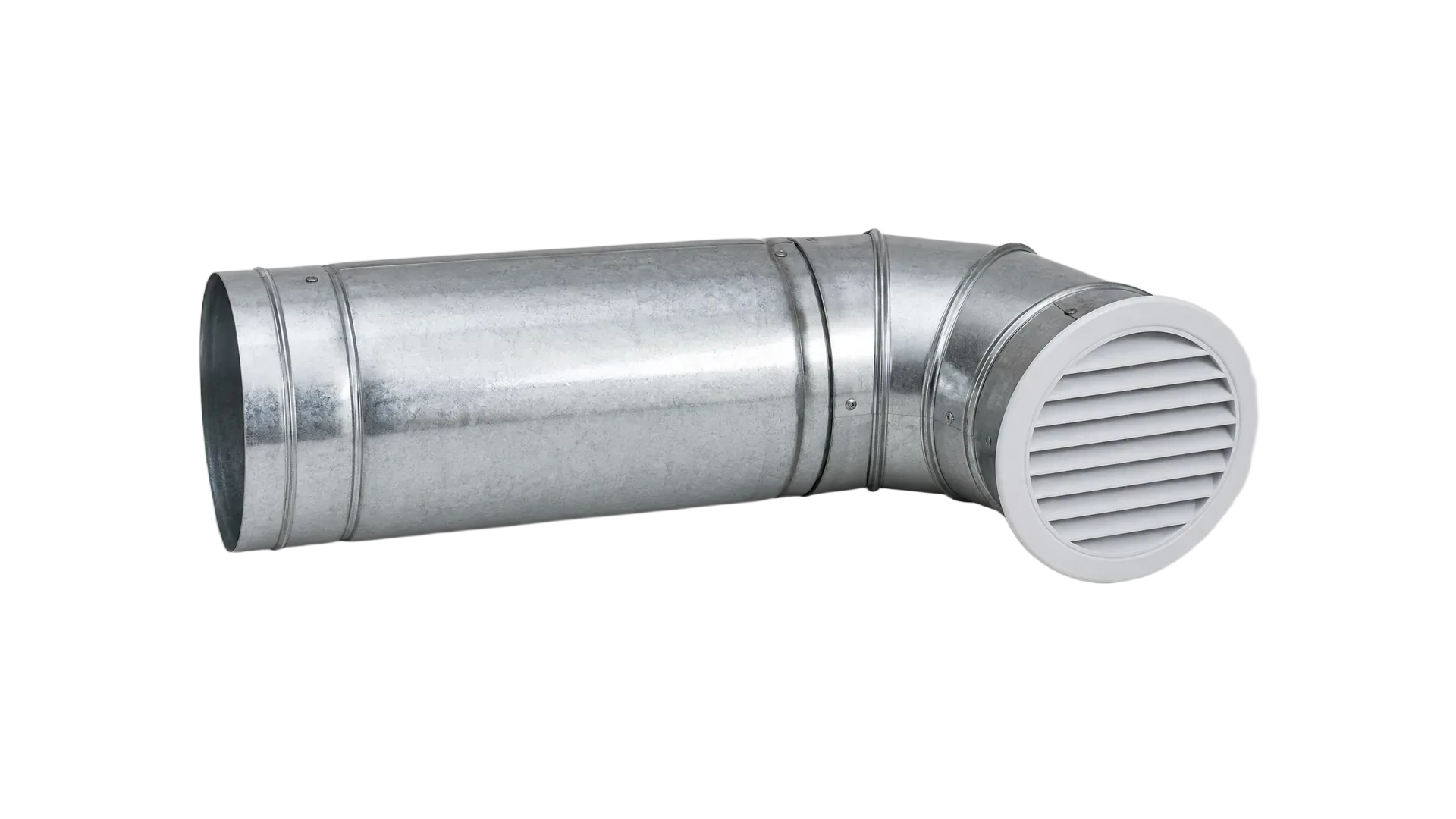
A galvanized steel round duct with a 90-degree elbow and a white louvered vent cover on one end, shown against a plain gray background.
Answer a few questions

Is duct cleaning worth it in Lafayette, LA?

You keep the AC running most of the year here, and you've started wondering what's moving through those ducts along with the cool air. Maybe you saw dust coming out of a vent, or it's just been years since anyone looked at the system. You want to know if paying someone to clean the ductwork actually does anything, or if it's money spent on nothing.

Yes, if there's a real reason for it, like visible dust, a musty smell, or someone in the house with allergies.

Duct cleaning is worth it when there's a reason behind it, not just as a routine every few years. Your AC runs for months on end in Lafayette, pulling humid air through the system constantly, and that moisture is what lets dust and mold build up inside the ducts in the first place. If you can see dust kicking out of the vents, smell something musty when the air kicks on, or someone in the house deals with allergies that seem to track indoors, cleaning the ducts can cut down on what's circulating through the house. Without one of those signs, it's not something that needs to happen on a schedule. The humidity here makes it worth checking on, but it doesn't mean every duct system needs cleaning just because of the climate.

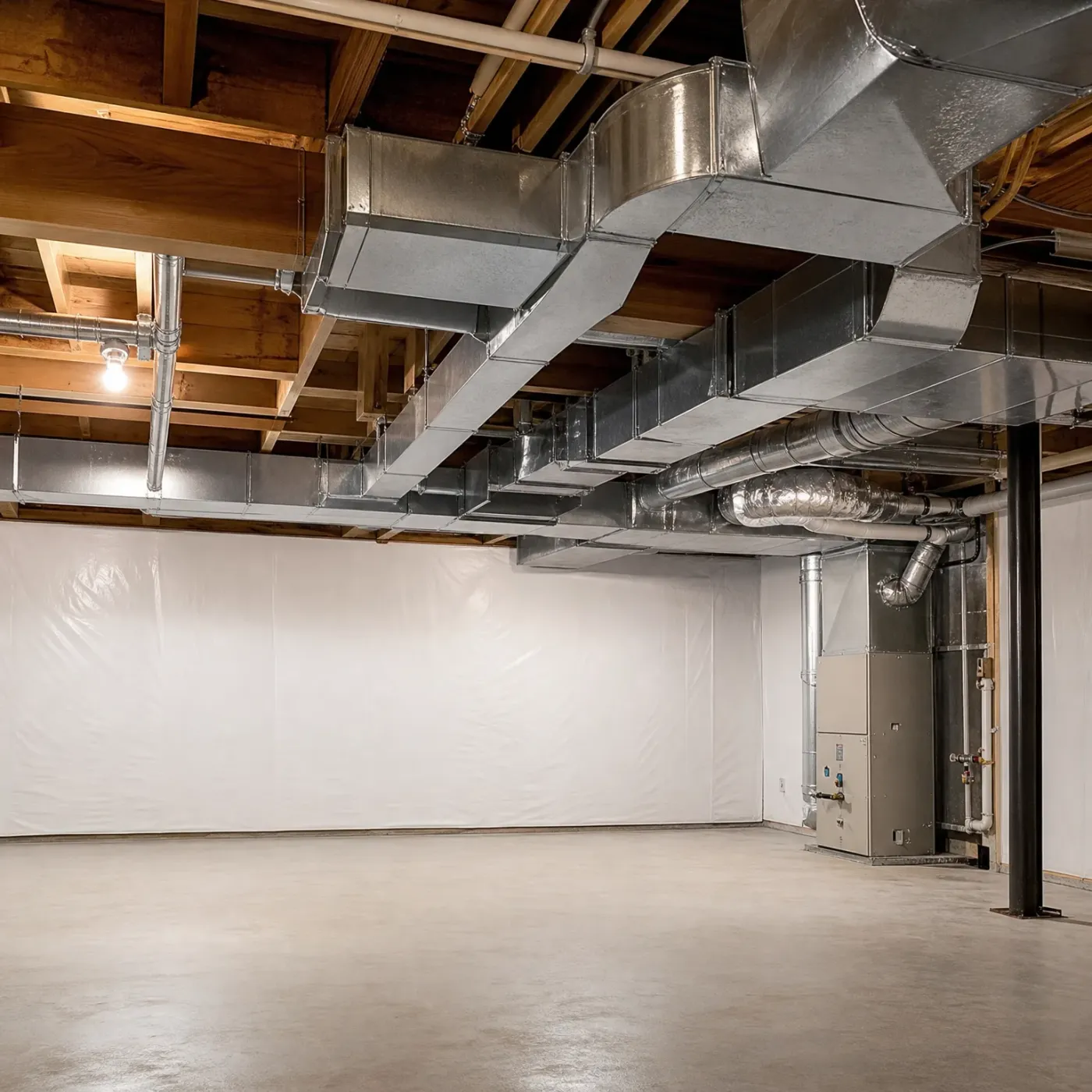
Empty basement with bare concrete floor, white plastic sheeting over one wall, exposed wood joists, galvanized sheet-metal ductwork and pipes overhead, and a furnace unit with a steel support column at right.

Ducts running clean

Air moves through the system without pushing dust back into the rooms. Registers stay close to free of buildup, and the furnace and coil don't have to work through a layer of grit. In a house that runs its AC most of the year, that matters more than it would somewhere the system sits idle half the time.
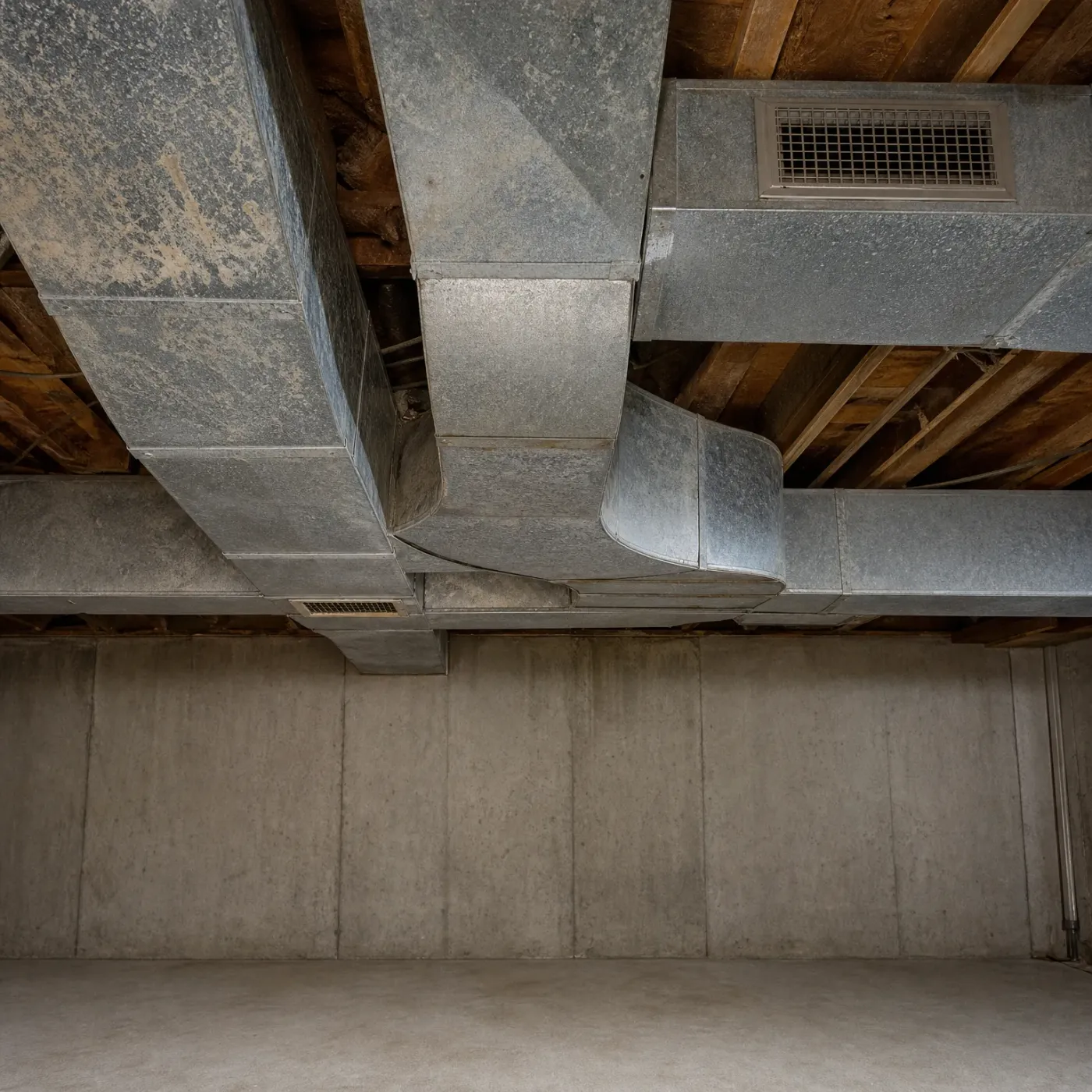

Galvanized sheet metal HVAC ducts with vent grilles run along a wooden floor joist ceiling above bare concrete walls and floor in an unfinished basement.

Ducts due for a look

Dust collects along the seams and turns at the joints, and some of it rides the airflow back into the house every time the system cycles. If nobody's looked at this ductwork in years, or you're seeing dust at the vents, that's what's likely building up inside the metal.

Should You Clean Your Ducts Now

Worth it

  • Years of dust and pet hair built up in the ducts gets pulled out instead of recirculated through the house every time the AC kicks on.
  • If a vent cover comes off and you see a thick gray coat on the inside, that same material has been moving through the air you breathe.
  • A system that ran for years with a dirty filter, or went without a filter change for a stretch, usually has more built up inside the ducts than one that didn't.
  • Cleaning makes the most sense right before a bigger job, like a coil replacement, so the new equipment isn't pulling air through the same dirty ducts.
  • Someone who's lived in the house a long time and never had the ducts looked at has more reason to check than someone who moved in recently.

Skip it for now

  • If the filter gets changed on schedule and nobody in the house has new allergy or breathing complaints, the ducts are probably doing fine.
  • A newer duct system, or one installed in the last several years, hasn't had the time to build up what an older one has.
  • Cleaning won't fix a duct that's leaking air into the attic or crawlspace. That's a sealing job, not a cleaning job.
  • If a vent inspection doesn't turn up visible dust or debris, there's nothing to gain from paying to clean ducts that are already clear.
  • Running the AC most of the year in Lafayette doesn't by itself mean the ducts are dirty. That depends on the filter and the house, not the thermostat.
A smiling woman with long brown hair in a cream sweater sits at a stone counter with a glass of red wine, with a dimly lit living room, beamed ceiling and glass doors behind her.
A woman with shoulder-length dark wavy hair in a beige sweater laughs while looking off to the side, seated at a white marble counter with a glass of red wine, in a dimly lit home interior with a kitchen and sofa in the background.
A smiling woman with long dark hair in a black sweater sits at a white marble counter with a glass of red wine, in a dimly lit kitchen and living area with pendant lights, a potted plant, and flowers.
A smiling woman with long brown hair in a light knit sweater sits at a stone-topped counter with a glass of white wine, with a dimly lit living room, sofa, fireplace and round mirror behind her.

What's actually coming out of your vents

Pull a vent cover off and look inside. If you see a gray coat of dust on the metal, or hair and lint caught at the edges, that's what's mixing with the air every time the system runs. Some houses show it faster than others. You might notice a musty smell when the AC first kicks on, or dust that seems to resettle on furniture within a day or two of cleaning. Registers near the floor often collect the most, especially in rooms that get more traffic. None of this means the ductwork is damaged, but it means the air moving through your house is picking up more than cool air on the way to the room. Left alone, it just keeps circulating.

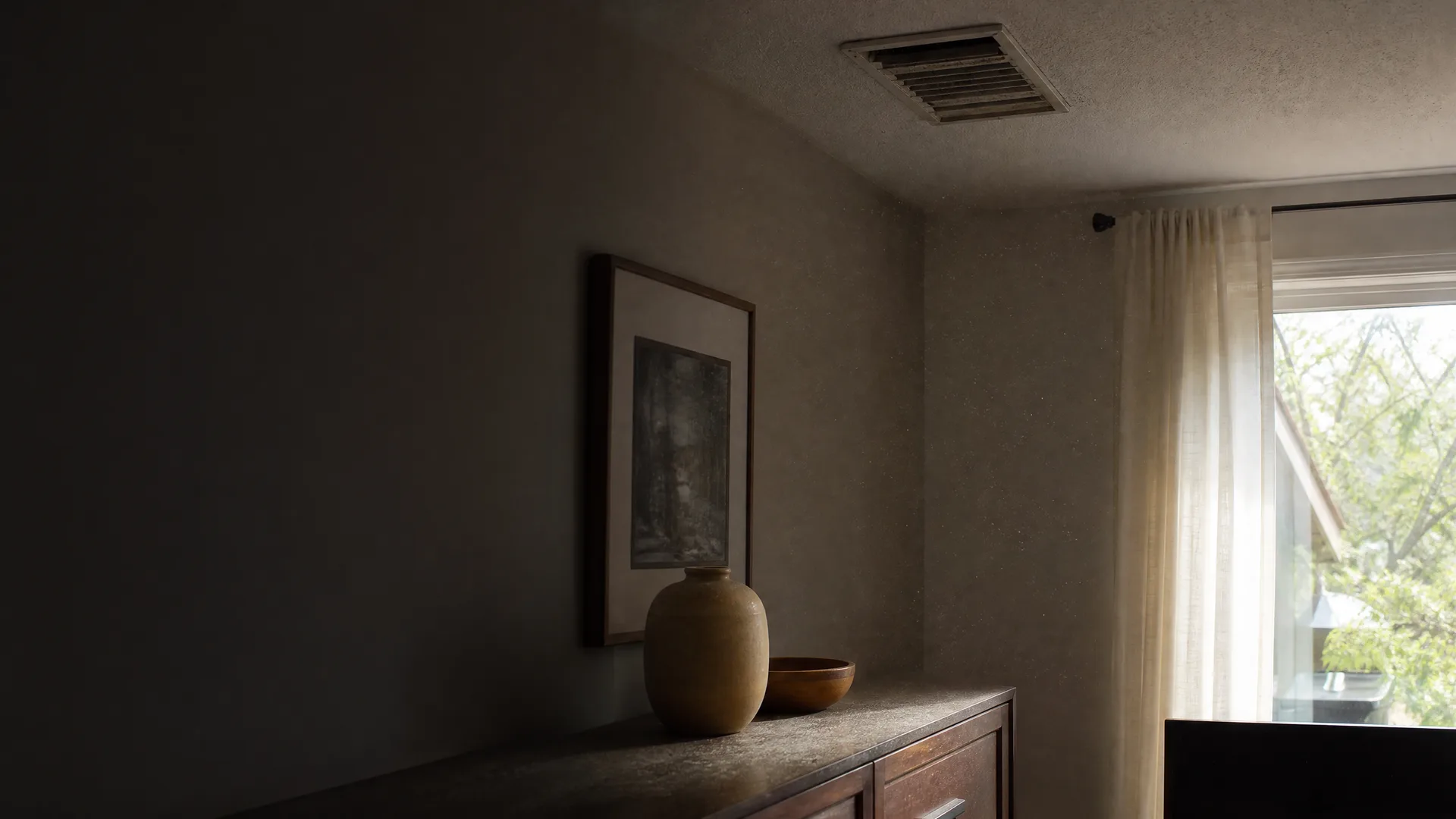
Dim room corner with a framed picture on a textured wall above a counter holding a tall ceramic vase and a shallow wooden bowl, with a sheer curtain beside a window and a ceiling air vent overhead.

You're dusting the shelf under the ceiling vent again, the same shelf you wiped down last weekend. It's a mild March afternoon, windows closed, AC running low against the Lafayette humidity creeping back in. You look up at the grille and catch it this time, a gray ring around the slats, a little darker at the edges where the air pushes out hardest. The shelf has a fine film on it already, an hour after you cleaned it. You run a finger along the vent cover and it comes back coated. You've seen it before and let it go. This time you just stand there looking at it, cloth in hand, wondering how long it's actually been.

So how old are these ducts, and how much do they run?

  • Half the homes here were built by 1988

    Half the homes in Lafayette Parish were built in 1988 or earlier, so half the duct systems here have had decades to collect dust nobody's looked at.

  • Heat runs November through March

    Heat runs November through March, about five months, so return air sits mostly idle before the AC season picks the work back up.

  • Cooling runs April through October

    Cooling runs April through October, about seven months, pushing air through those same ducts day after day for most of the year.

ACS 2020-2024 · NOAA nClimDiv 1991-2020

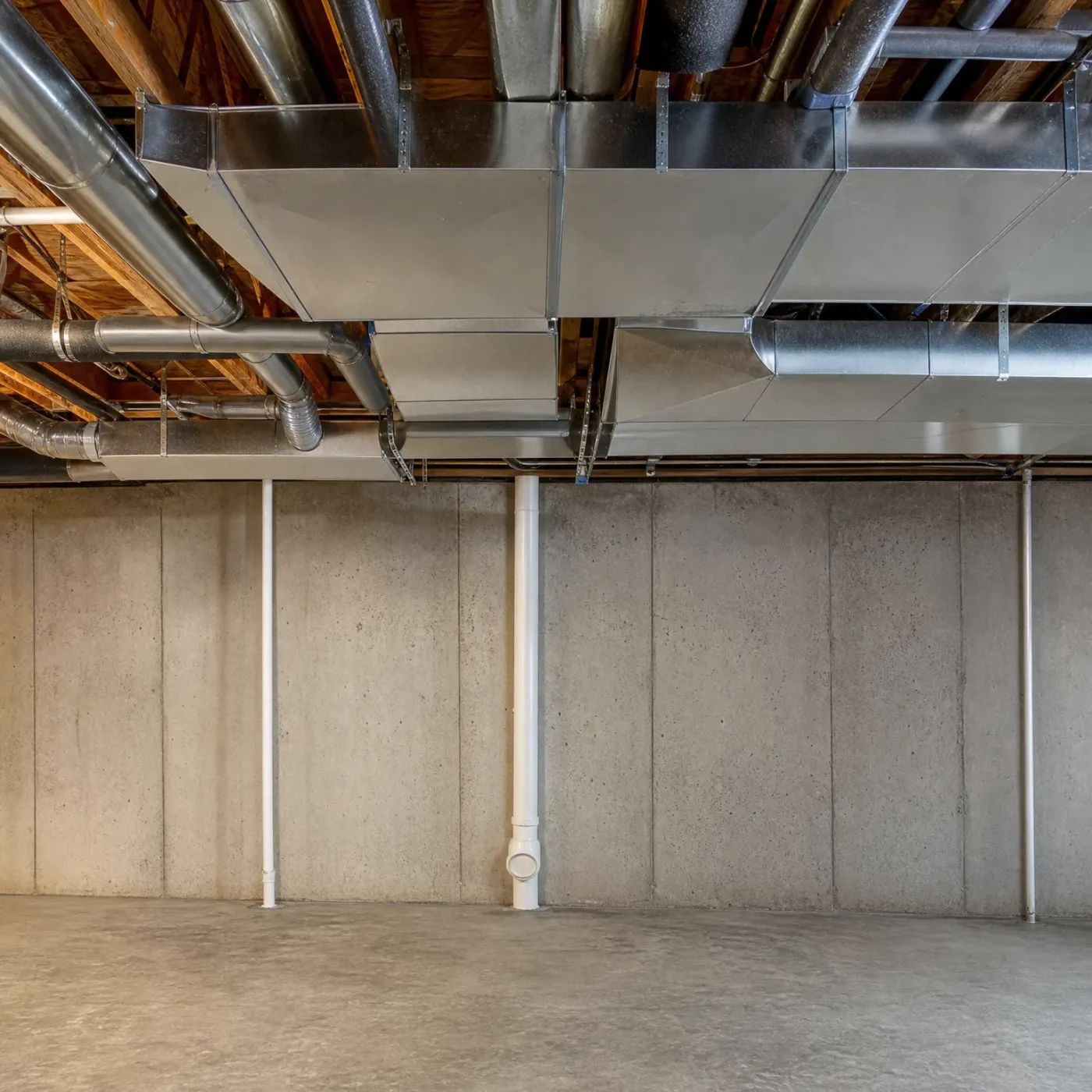
Unfinished basement with poured concrete walls, a bare concrete floor, white PVC pipes running down the wall, and exposed sheet-metal HVAC ductwork beneath wood floor joists.

Ducts holding up fine

This is what a clean run looks like. Sheet metal trunks and round pipe carry air to every room without leaking it into the basement first. No dust ring at the seams, no soft sag in the metal, nothing hanging loose off the joists.

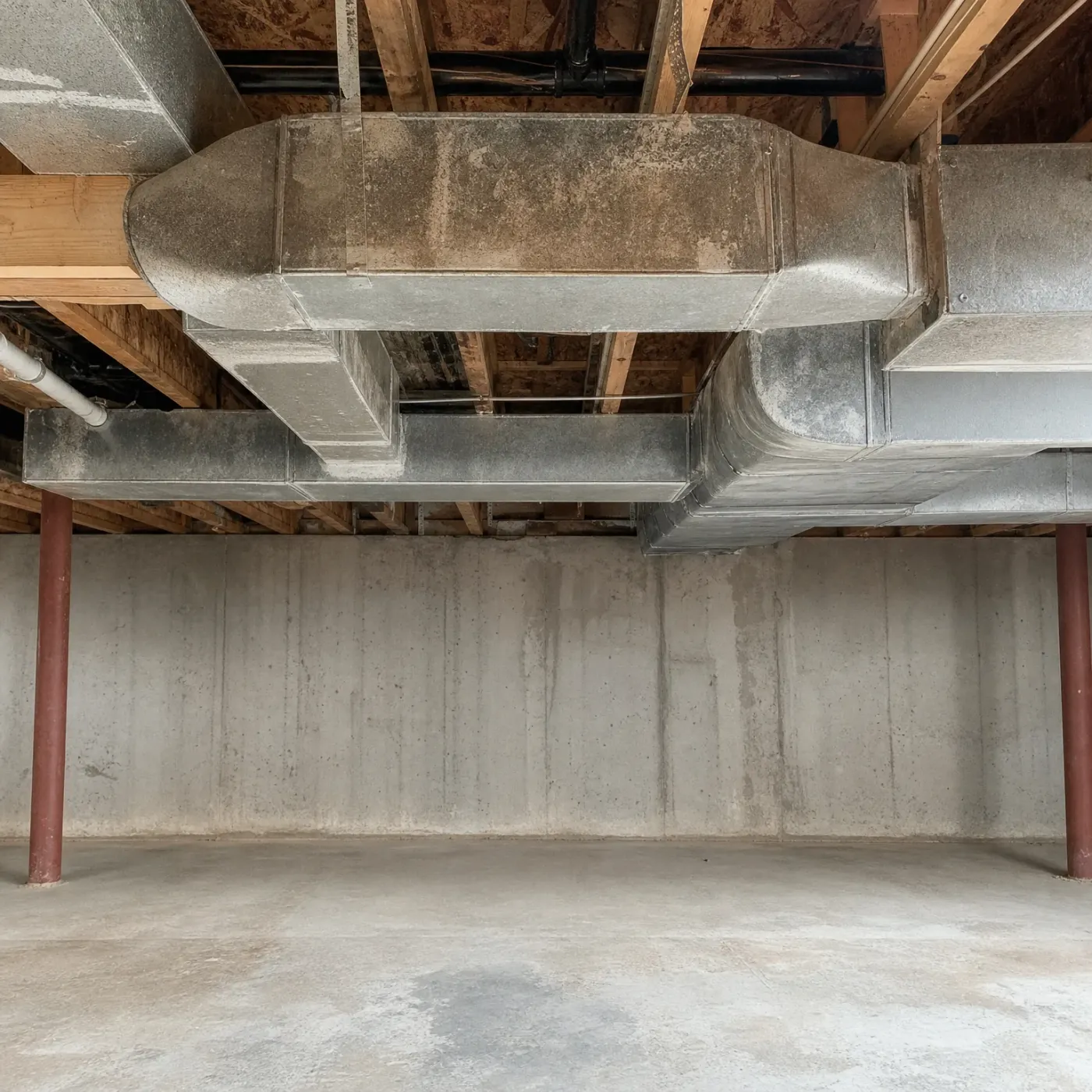
Unfinished basement with bare concrete walls and floor, galvanized sheet-metal HVAC ducts running beneath wooden floor joists, and two red steel support columns.

Ducts under strain

Same kind of system, different shape. The metal runs lower and tighter between the joists, more joints, more places for a seam to work loose or a connection to pull apart. Every foot of duct here is a foot where dust can settle and a leak can start.

A smiling man with curly graying hair and a dark knit sweater sits at a candlelit dinner table with a glass of red wine, a water glass and a bowl of salad in the foreground, in a dimly lit room with a lamp, framed picture and window behind him.
A woman in a cream knit sweater reclines on a gray sofa with her eyes closed and a slight smile, covered by a fleece blanket with a closed book on her lap, a lit table lamp and potted plants behind her.

No calling every shop in Lafayette Parish

The pro who gets in touch is licensed in Louisiana and works in Lafayette Parish.

It costs nothing to send, and you don't have to hire anyone.

Why the coil pays for the cleaning

The evaporator coil sits behind the filter, and the filter only catches so much. Fine dust gets past it and settles on the coil fins over years of a system running April through October. That layer acts like a blanket. The coil can't pull heat out of the air as well, so the system runs longer to reach the same temperature on the thermostat. A coil caked with dust also drains slower, and water can back up where it shouldn't. Clean ducts mean less of that fine dust reaches the coil in the first place, which is a different benefit than just cleaner air in the rooms.

What a blocked return does to the furnace

Dust doesn't only coat the coil. It builds up in the return duct and at the blower itself, and a blower working against that resistance pulls more amps to move the same amount of air. Over a few winters of mild use here, that's a smaller effect than on the AC side, but it still means the furnace pushes less air per cycle than it did new. A return that's been cleaned out gives the blower a clear path. It's one reason a duct cleaning tends to matter more here for cooling performance than for heating, given how much more the AC runs.

Power here costs 11.87 cents per kilowatt-hour

At 11.87 cents a kilowatt-hour, that coil losing airflow to months of dust costs you more every time the AC has to run longer to catch up. Clean ducts mean the system moves air the way it was built to, so you're not paying extra to push it through buildup.

EIA-861 2025

How a duct cleaning actually works

  • A duct cleaning works a system of brushes and a vacuum collector, pulling debris toward one end instead of pushing it further into the house.
  • The technician seals each register first, so the vacuum draws air inward through the ductwork rather than losing suction out the open vents.
  • A negative air machine holds the whole system under vacuum while rotary brushes or air whips knock buildup loose from the metal.
  • Every supply and return run gets cleaned, along with the plenum and the coil area, since skipping one run leaves a source of dust to re-spread.
  • Before and after photos from inside the ducts show the difference, since you can't see past the first few feet through a register yourself.
  • The furnace and coil get a once-over at the same time, since loose dust near the blower can drift right back into a freshly cleaned run.

A duct cleaning isn't someone running a shop vac up to a few registers. The system goes under negative pressure first. A technician hooks a vacuum collector to the trunk line, usually near the furnace, and seals off every register and return in the house so the only air moving is air pulled toward that collector. With the system sealed and under vacuum, brushes or air whips go into each run and knock loose whatever has built up on the metal over years of the AC cycling on and off. That buildup gets pulled straight into the collector instead of drifting down the line into a room you already cleaned. Each supply run and return gets this treatment one at a time, along with the plenum and the area around the coil, because dust sitting in one branch will work its way back into the others once the blower kicks on again. A good job covers the whole system, not just the runs that are easy to reach. Since you can't see more than a few feet past a register with a flashlight, ask for before and after photos from inside the ductwork. That's the only real way to know the far end of a run got the same attention as the near end. The furnace and coil usually get checked too, since loose dust stirred up near the blower can settle right back into ducts that were just cleared out.

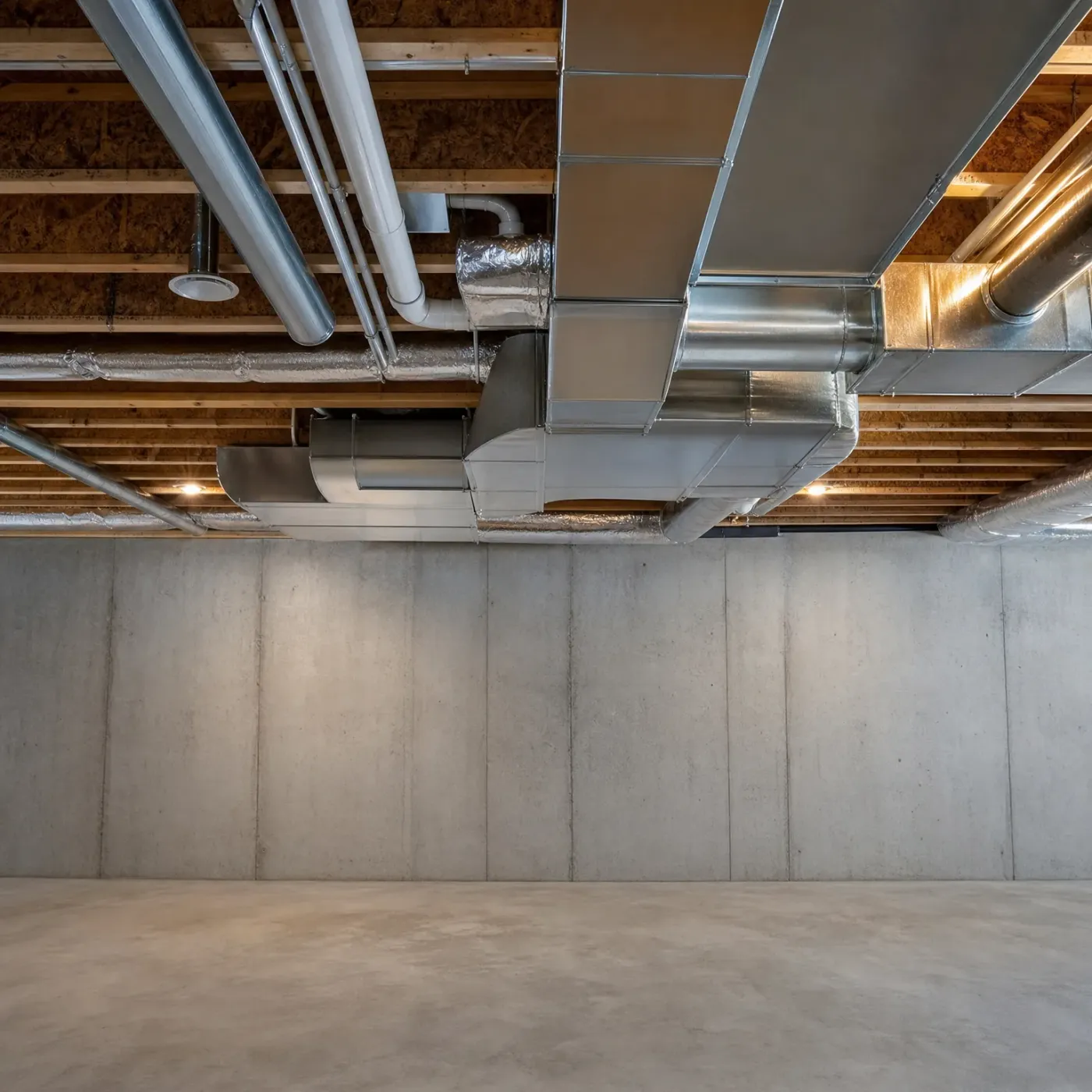
Basement ceiling with galvanized sheet metal ductwork, round pipes and rectangular plenums running between wooden joists above a bare concrete foundation wall and floor.
Before you get your ductwork cleaning
Empty basement room with bare concrete walls and floor, and an exposed wood-joist ceiling carrying sheet-metal ductwork, insulated pipes, and recessed lights.
After you get your ductwork cleaning
  1. Technician seals every register but one to control airflow

  2. A vacuum collector attaches and draws air through the sealed system

  3. Brushes run through the trunk lines to knock loose debris

  4. Agitation tools work each branch line room by room

If your ducts have gone years without a look, cleaning them is worth doing, and what comes out when the brushes run through will likely tell you so. Your AC is working through those same ducts most of the year here, and a clean run means it moves air the way it was built to instead of fighting a layer of dust the whole time. Finding someone for this isn't like calling around for a quote on a new unit. A technician who works on duct systems in Lafayette Parish all year has seen what decades of buildup in a 1980s house looks like and what a newer system tends to show instead, so the visit isn't a guessing exercise. You're matched with one contractor, local to this area, rather than left fielding calls from several companies trying to win the job. That's one less thing to sort out before anyone even opens a vent cover.

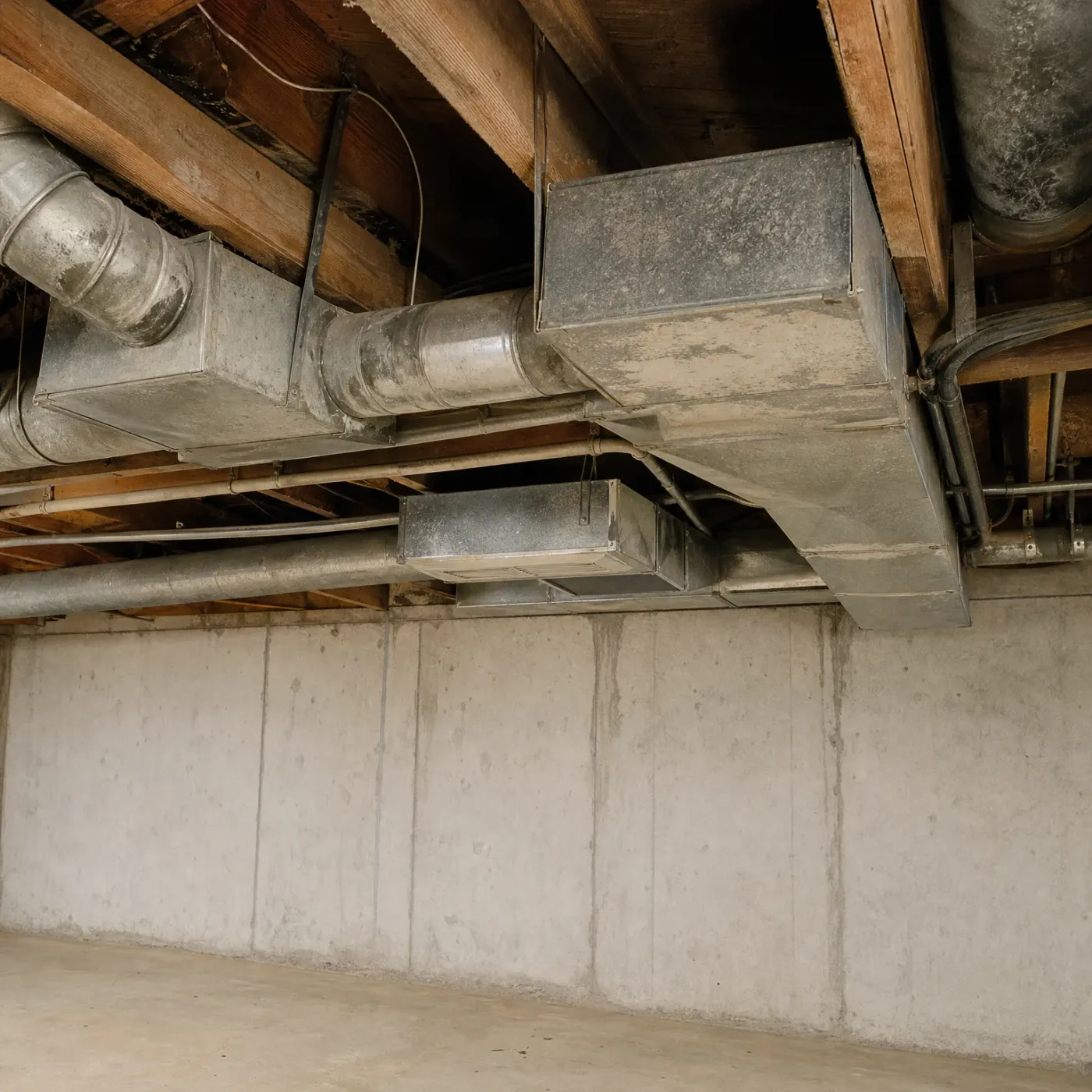
Dimly lit unfinished interior ceiling with galvanized rectangular and round sheet-metal ducts, a wall vent grille, exposed wood framing and joists.

One form, no calling around

A licensed pro who works in Lafayette Parish gets your request.

Duct and vent cleaningDucts or ventsLafayette Parish, LA
Step 1 of 2

What ZIP code is the job in?