Cool metal, warm air
Where humid air hits a cold supply duct or coil, moisture beads on the surface. That film of water is what lets mold take hold and spread along the ductwork.

A musty smell when the air handler kicks on, dark spots around the supply vents, or a mold test that comes back positive all point to the same thing: mold growing inside the ducts themselves. It takes hold where warm, humid air meets a cool surface and stays wet, and with Slidell summers running muggy for months at a stretch, the inside of a duct that's sweating condensation is exactly that kind of spot. Once mold has a foothold on the duct walls or the coil, running the system just blows more spores through the house instead of clearing them out. Cleaning the ducts removes what's already growing, but if the moisture that fed it is still there, whether that's a duct sweating in a hot attic or a coil staying wet too long, it comes back. Getting both looked at is how it stays gone.




Where humid air hits a cold supply duct or coil, moisture beads on the surface. That film of water is what lets mold take hold and spread along the ductwork.
A local contractor who services ducts in this area year-round looks at the whole system, not just the vent you noticed, and tells you what's actually growing in there.
Half the homes here were built by 1995
Your AC runs about seven months a year here, April through October, and every one of those months the ducts are carrying cold air through a hot, humid house.
Heat runs November through March
Heat only runs about five months here, November through March, so the ducts spend most of the year handling moist air rather than drying out.
Cooling runs April through October
Half the homes in St. Tammany Parish were built in 1995 or earlier, so if yours is one of them, it's worth finding out when the ducts were last cleaned or replaced.
ACS 2020-2024 · NOAA nClimDiv 1991-2020
The system keeps cooling even with mold inside the ducts. Nothing shuts off, nothing warns you. But every time the blower comes on, air moves across that growth and carries spores into the rooms you sit in. The smell gets stronger over months, not days, and a mold test will keep coming back positive because the source is still sitting in the duct run, feeding on the same moisture that built it.

A contractor who works on duct systems around Slidell every summer opens the runs, cleans the growth out, and checks where moisture is getting in, whether that's a leaky duct joint or a coil that isn't draining right. One visit, one company, instead of you calling around and explaining the smell three or four times to three or four different outfits. The musty smell and the dark spots at the vents go away because the mold does.
Moist air meets a cold duct or coil surface
Condensation beads on the metal or coil fins
Mold spores already in the air settle in
Mold colonizes the wet surface and spreads inside the duct
You walk into a room, the air handler kicks on, and there's a smell you can't place, something between wet cardboard and old basement, even though your house doesn't have one. Check the supply vents in a bedroom or hallway and you might see faint dark speckling on the grille or just inside it. Dust that collects near the vents looks darker than it should. Someone in the house sneezes more at home than anywhere else, or a cough that never fully clears up. None of this shows up near the return vents the same way, because the growth is riding the cold air out from the supply side. Left alone, it keeps feeding on the condensation your AC produces every one of the seven months it runs, and everyone breathing that air is breathing it too.

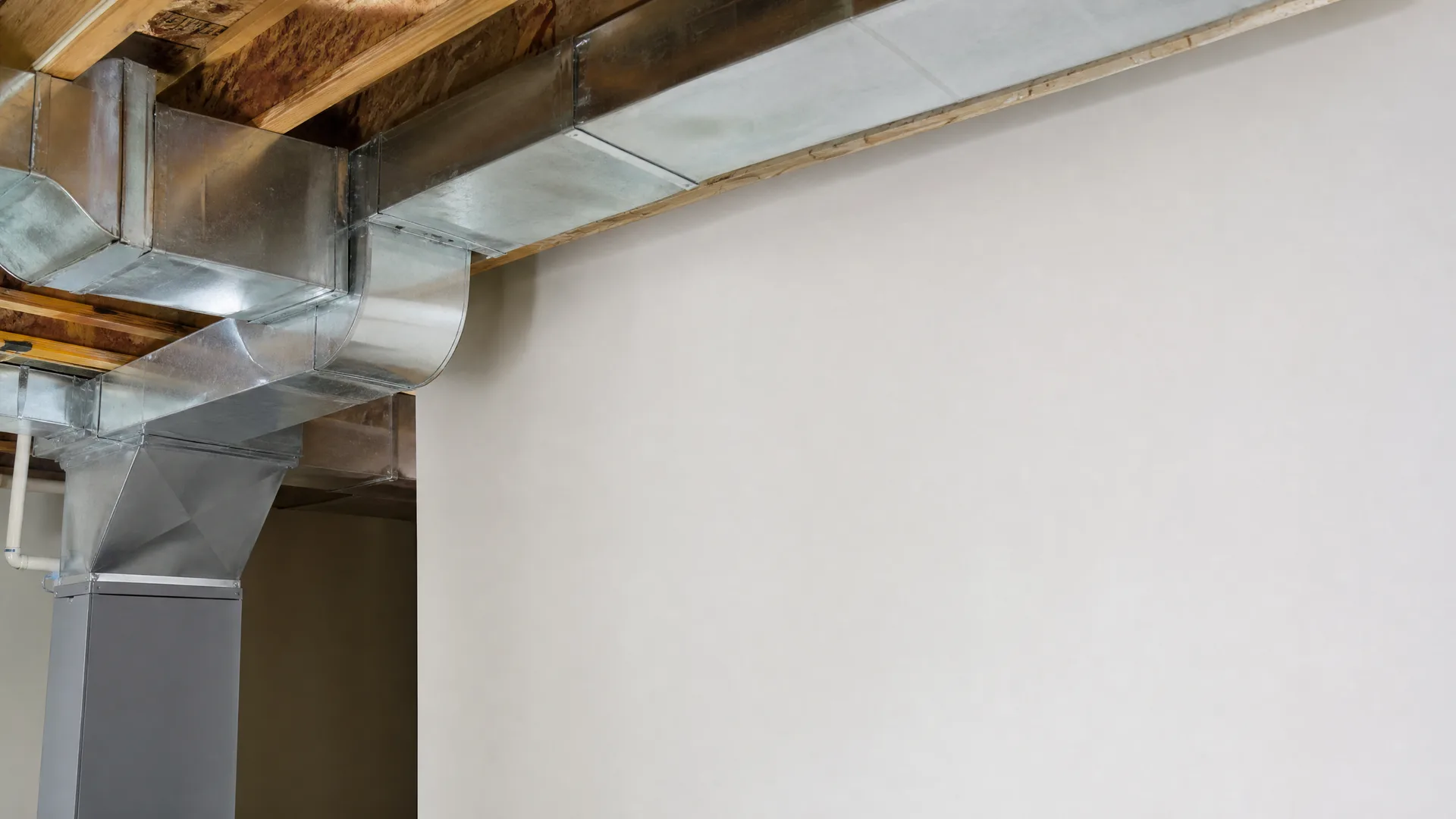
Here the supply and return runs are clean sheet metal, carrying air from the furnace to every room without anything growing on the walls inside. Air moves through dry, and nothing gets left behind on the metal.

Runs like this carry more than air once mold takes hold inside. Every time the blower starts, spores move through the same ducts and out the vents into the rooms below, and the smell is usually the first sign something's wrong.
At 12.80 cents per kilowatt-hour, running the blower more than it needs to still won't wreck your bill, so there's no cost reason to put off getting the ducts looked at. What costs you is mold spores riding that air into every room for months before anyone deals with it.
EIA-861 2025


You already know the smell and you already know the AC isn't going to shut itself off because of it. What's left is the part that eats up a weekend: finding someone who actually services ductwork in St. Tammany Parish, not just coils and filters, calling two or three of them, explaining the musty smell and the dark spots around the vents each time, then sitting with quotes trying to guess which one knows what they're looking at. A contractor who works this parish every summer has seen what seven months of humid air moving through cold ducts does, and knows where growth usually starts and what it takes to actually clear it out. Sending the request once means telling the story once, to someone set up to deal with it, instead of running that same conversation on repeat while the blower keeps moving air through the house.
You clean the ducts once and leave the rest of the house alone. Mold stops growing in the ductwork, but anything already loose in the house, bedding, carpet, the inside of the supply vents themselves, still has what settled there.
A contractor who cleans the ducts can tell you what's worth doing beyond that and what isn't. Most of what needs attention is inside the ductwork itself, which is exactly what the cleaning reaches.


A can of coil cleaner and a shop vac from the hardware store aren't going to reach past the first foot or two of ductwork, and that's the problem. Most of the growth that's actually making your house smell is further in, on duct walls and coil fins you can't see or touch through a vent cover. Before you spend a Saturday on this, it helps to know what the equipment actually does and what a shop vac can't.
A contractor doing this runs a brush or whip down the duct run while a negative air machine pulls everything loose out through the system, so growth on the walls ten or twenty feet in actually comes out instead of getting stirred up and resettling further down the line. A shop vac through a supply register has nowhere near that suction and no way to agitate what's stuck to the metal. It'll pull dust off the first foot or so and push the rest around. If the coil itself has growth on it, that's a sealed compartment behind the air handler, not something a vent cover gets you into. What you clean yourself is the register covers. The ductwork is a different job.


The smell, the dark spots at the vents, the test that comes back positive: all of it points to the same place, the inside of the ductwork, not the filter and not something wrong with the AC itself. It gets there because the system runs the way it has to here. Seven months of cold air moving through hot, humid ducts gives mold exactly the surface it needs, and that's true whether the house is new or old, well sealed or not. Cleaning fixes the ductwork. It takes the growth off the metal walls where the air actually travels, which is the part a shop vac and a can of coil cleaner never reach past the first foot or two. It won't do anything for what's already settled on the carpet or the bedding nearby, and nobody should expect it to. That's a separate job, if it's a job at all. What it does solve is the part that keeps feeding the house air that smells like wet cardboard. A contractor who works on ductwork in St. Tammany Parish every season has seen where this starts and where it tends to hide, the junctions, the spots near the drain lines, the runs that stay cold longest. You get one contractor for this, not a handful calling back at once, not the same explanation given over and over to different voices. Just someone local, who does this work on this kind of system, looking at your ducts and telling you what's actually in them.





The pro who reaches out is licensed in Louisiana.
You only hire the pro if you want to.