Get matched with a pro who works on ducts in Orleans Parish.
A musty smell out of your vents usually means moisture sitting somewhere in the duct system. New Orleans air carries a lot of humidity most of the year, and that moisture settles in ductwork, around the coil, in the drain pan, wherever air moves slow and stays damp. Once mold or mildew takes hold in there, every time the system runs it pushes that smell through the house.
The smell tells you something is growing in a system you can't see into. You can wipe down a vent cover, but the duct run behind it, the coil, the pan underneath, none of that is reachable without the right tools and someone who knows where moisture collects in a system like yours.
That's where a local contractor matters more than it might seem. Someone who services ductwork and coils in this parish all year, in this humidity, has seen where the moisture sits in homes like yours and what it takes to clear it out. New Orleans summers don't let up, and a system working against that kind of moisture load needs someone who already knows the pattern, not someone guessing at it for the first time.
When you put in a request here, it goes to one contractor, licensed and working in the New Orleans area, not a handful of companies competing for your callback. That contractor reaches out to you directly about what's going on with your vents and your ductwork specifically, not a general rundown of what duct cleaning involves. You get someone who already understands what humidity like this does to a duct system and can look at yours with that in mind.
The smell didn't start on its own, and it won't clear on its own either. The next step is getting someone into the house who can trace it back to where it's coming from.
Why do my vents smell musty in New Orleans?
You turn on the AC and that stale, swampy smell drifts out of the vents. It's not strong enough to be mold you can see, but it's there every time the system runs, and it makes you wonder what's sitting inside your ductwork that you can't get to. You want to know if this is something to worry about or just a normal part of living here.
Moisture is building up faster than your system can dry it out
Your air conditioner pulls humidity out of the air as it cools, and that water is supposed to drain away through the condensate line. With the air this heavy outside most of the year, the system runs long hours, and if the drain pan or the coil never fully dries between cycles, you get a damp spot where mold and bacteria grow. The smell is that growth, not dust or dirt. It can also mean the ductwork itself has a leak letting humid attic or crawlspace air mix in. Either way, the smell is a sign of standing moisture somewhere in the system, and it tends to get worse through a long New Orleans summer unless something changes.
Why does this smell keep coming back here?
Half the homes here were built by 1960
Half the homes in Orleans Parish were built in 1960 or earlier, and ductwork that old has had decades to collect the dust and moisture that feed a musty smell.
Heat runs November through March
Cooling runs April through October here, seven months of the coil sweating and that moisture sitting in the ducts between cleanings.
Cooling runs April through October
Heat only runs November through March, so for five months the ducts stay damp with nothing drying them out the way a furnace blast would.
ACS 2020-2024 · NOAA nClimDiv 1991-2020
Where the smell actually starts
Warm, humid air moving across a cold evaporator coil leaves condensation on its surface every time the system cycles.
A clogged or tilted drain pan keeps that condensation sitting instead of draining out, which is where mold gets its start.
Flex duct insulation absorbs moisture from the air inside it, and that liner stays damp long after the coil dries off.
Return ducts pull in dust and skin cells that settle on wet surfaces and become food for mold and bacteria.
A dirty filter slows airflow across the coil, so the coil stays colder and wetter longer during each cooling cycle.
Supply vents in closets or under cabinets get less air movement, so any moisture there lingers instead of drying out between cycles.
The coil is where this starts. Warm, humid air crosses it, the air cools, and water comes out of it the same way it beads on a cold glass. That water is supposed to drip into the drain pan below and run out through the condensate line. When the pan sits level and the line is clear, this happens every cycle without a trace left behind. Problems start when the pan tilts, or the line clogs with the same dust and debris that settle everywhere else in the system. Water backs up, sits, and mold takes hold on whatever surface stays wet. From there the smell has a way of spreading. Flex duct is lined with insulation that holds onto moisture, so even after the coil itself dries between cycles, the duct wall nearby can stay damp. Return ducts make it worse by pulling household dust and skin cells into that same damp space, which is exactly what mold and bacteria feed on. A dirty filter adds to the problem from another angle. It slows the air moving across the coil, so the coil runs colder and stays wet longer each time the system cycles. And not every vent dries out at the same rate. One tucked in a closet or under a cabinet gets less airflow than one out in the open, so moisture that would evaporate elsewhere just sits there.
Running the AC with the smell already there just pushes that same moist air through your house every time the system cycles. The smell is a sign the duct system needs a look, not something the thermostat will fix.
A cleaning clears out what's built up in the ducts and around the coil so air isn't picking up mold and moisture on its way to your rooms. A local contractor who works on this kind of duct system can tell you what it'll take for yours.
Power here costs 12.78 cents per kilowatt-hour
At 12.78 cents a kilowatt-hour, running the AC longer to chase a musty smell doesn't cost much here, which is part of the problem. A system with moisture sitting in the ducts keeps cycling on cheap power without anyone noticing the real issue until the smell gets worse.
EIA-861 2025
Before you get your ductwork cleaningAfter you get your ductwork cleaning
Get matched with a duct system pro in Orleans Parish
The pro who gets in touch is licensed in Louisiana and works in Orleans Parish.
Your request goes to an Orleans Parish pro who takes ductwork jobs.
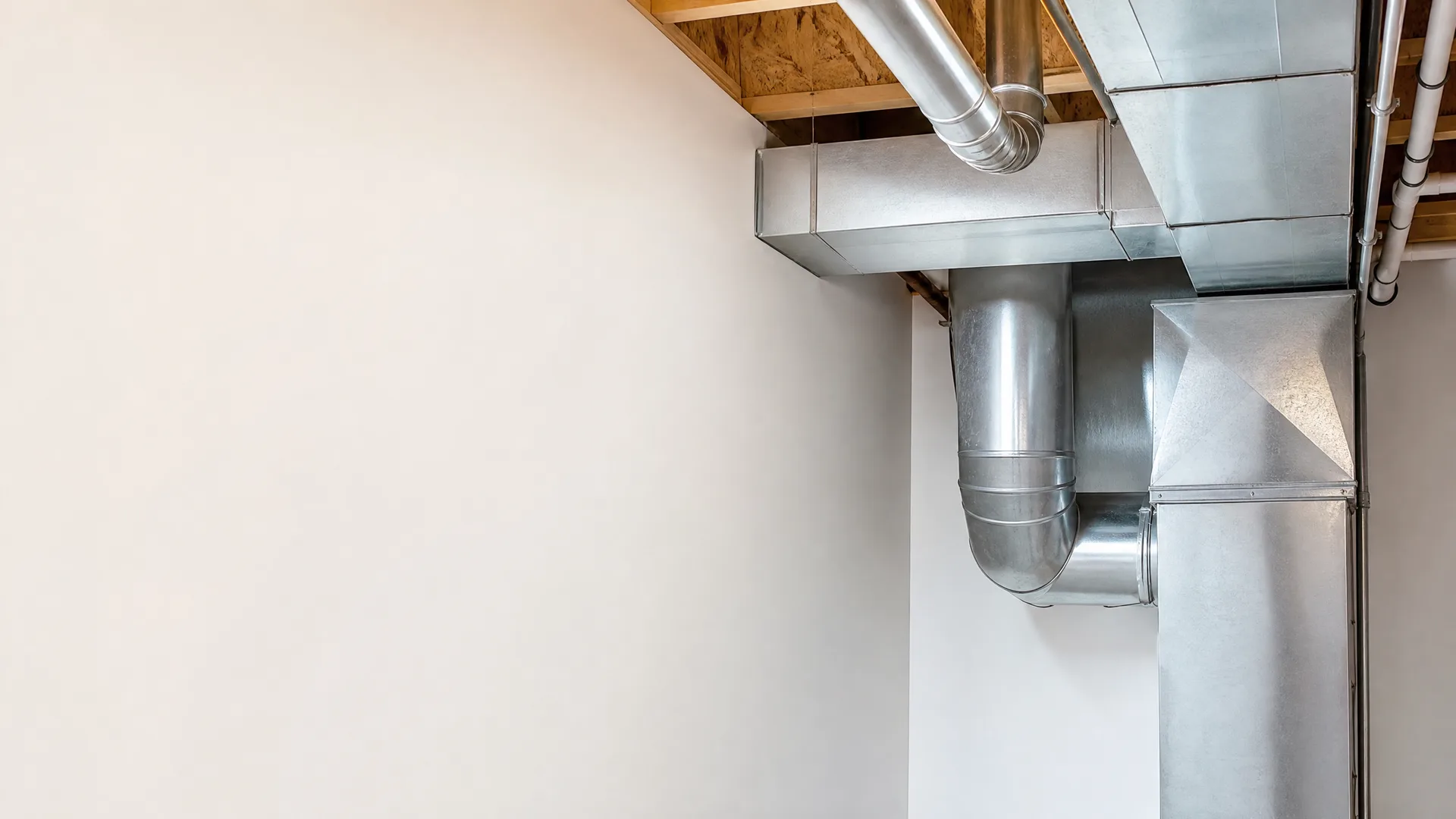
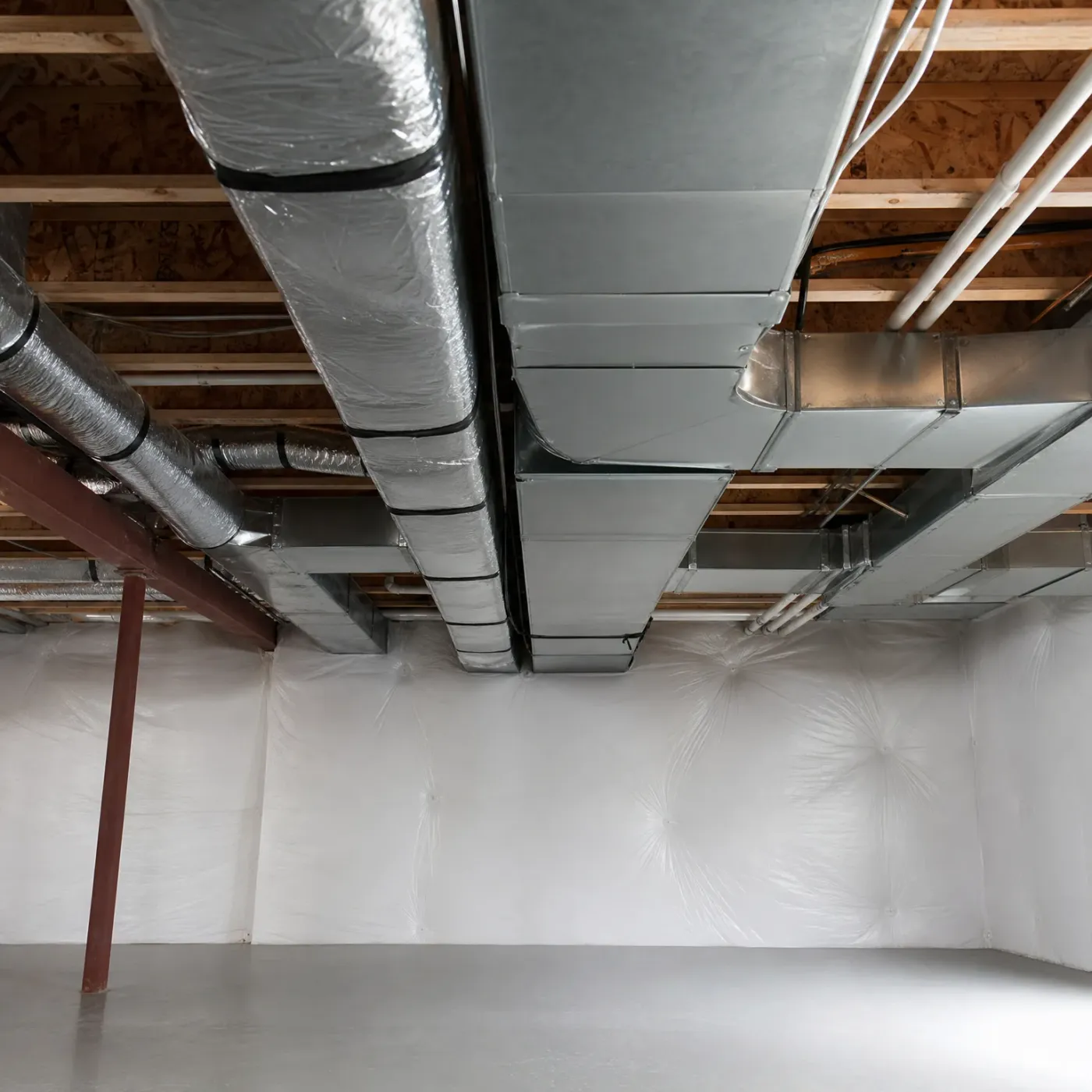
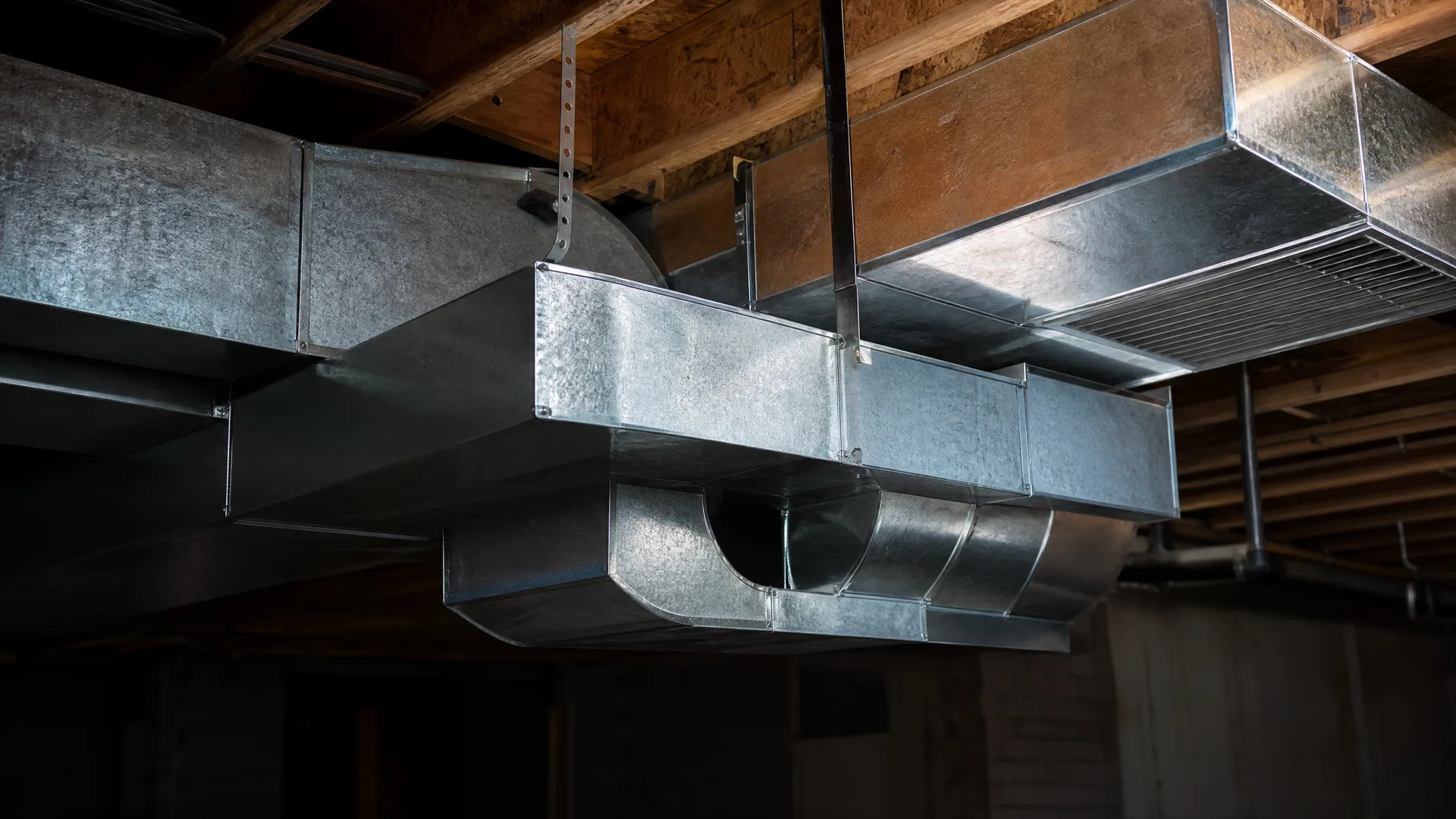
Dry, well-sealed ductwork lets air move freely past the joists and pipes without picking up moisture along the way.
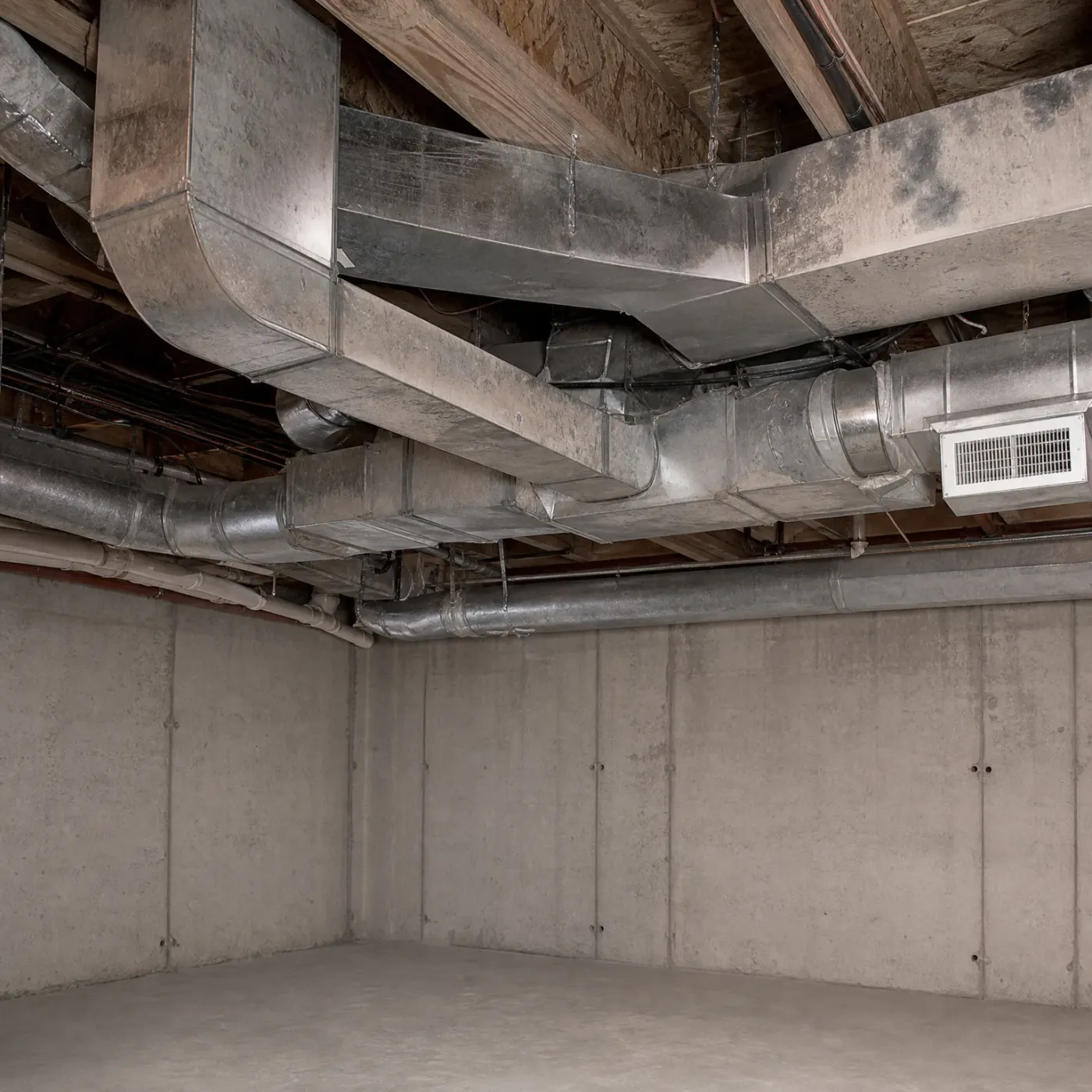
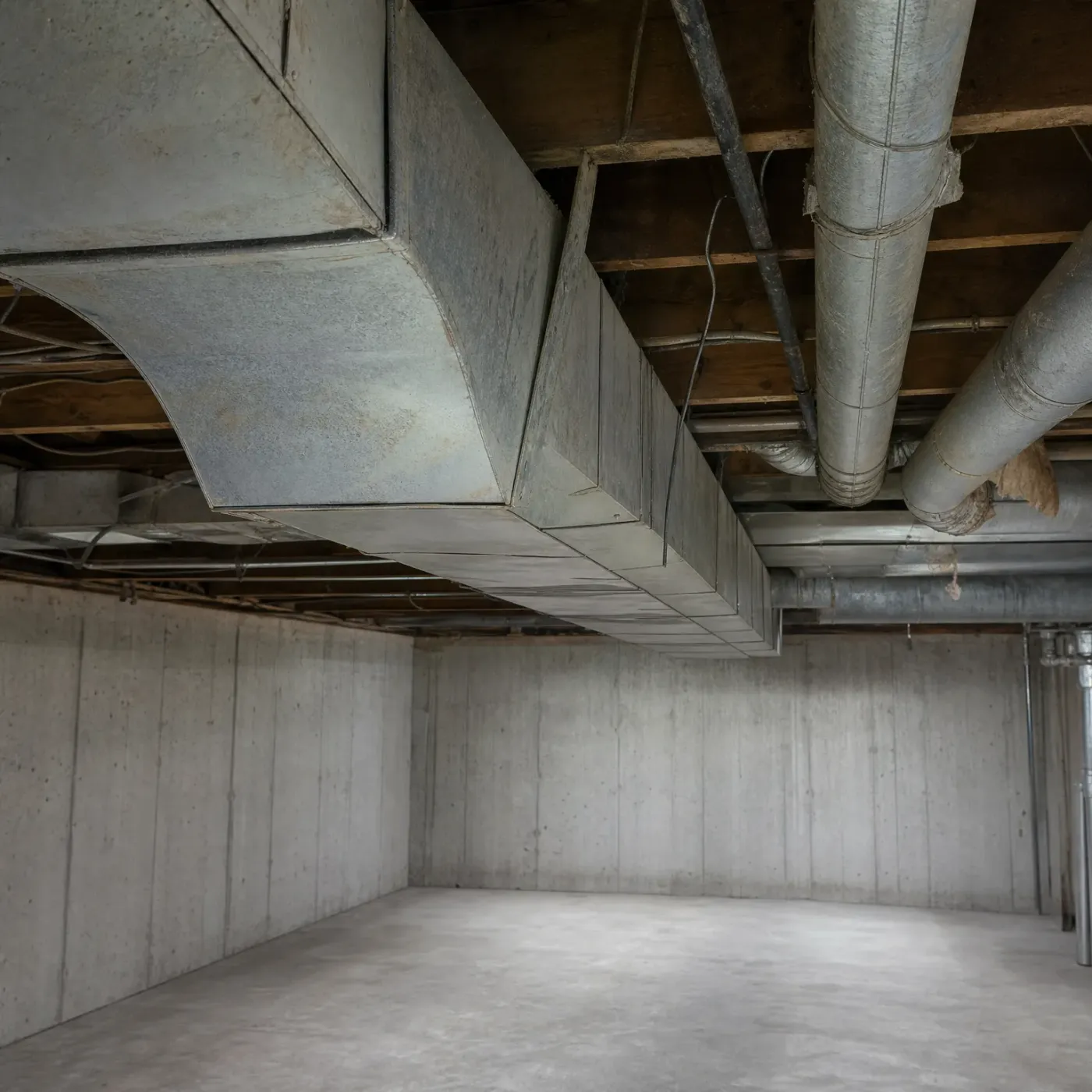
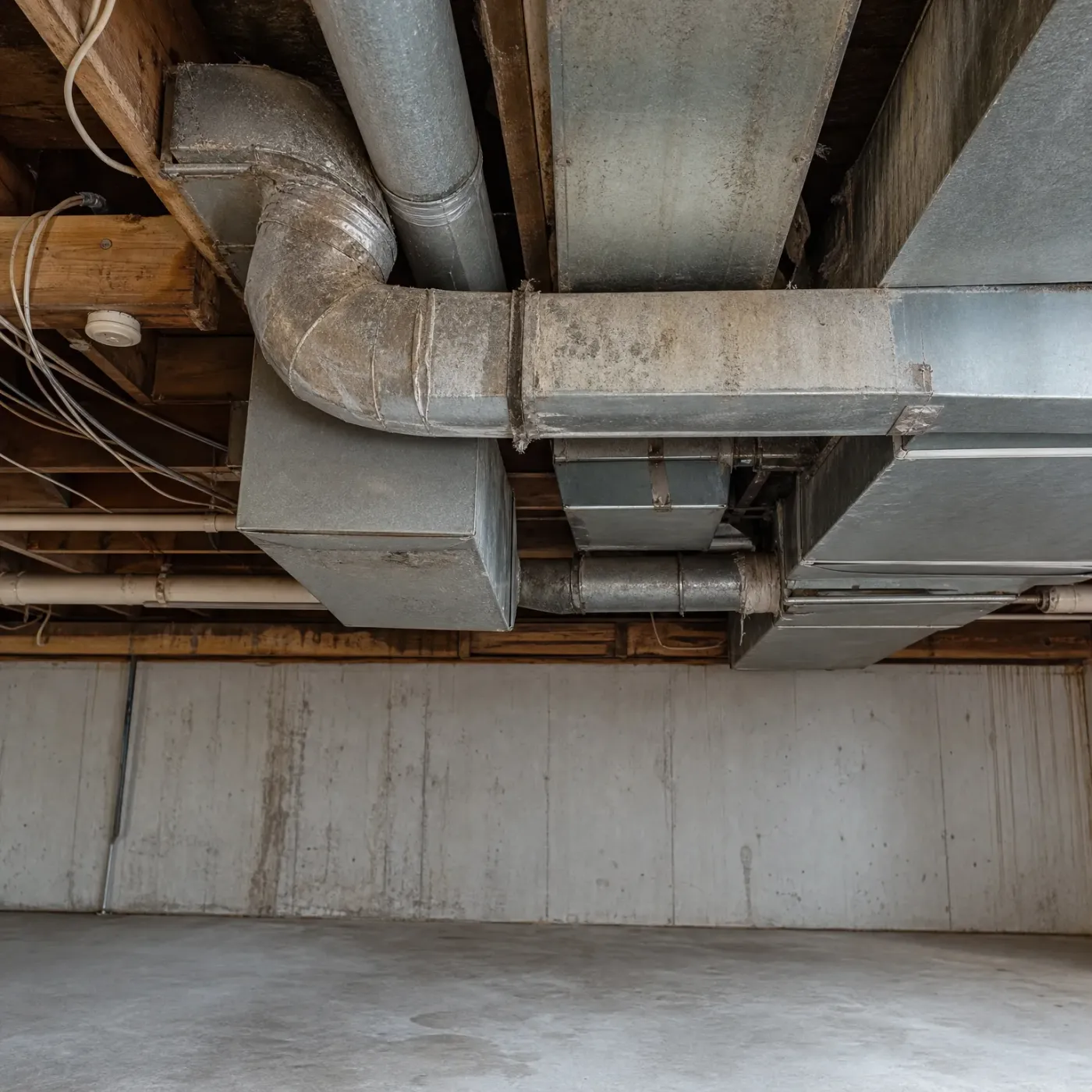
Ducts sagging or sweating against a damp basement ceiling give mold a place to grow and a path straight to your vents.
Ignore the Smell or Clear It Out
Musty smell ignored
Moisture already sitting in the ducts keeps feeding whatever mold has started growing on the coil or in the drain pan.
Every cycle pushes that same stale air through your bedrooms and living room instead of clearing it out.
Flex duct that's gone soft or pulled loose at a joint keeps pulling in attic or crawlspace air along with the smell.
A clogged drain pan stays clogged on its own, so the water that should drain out keeps sitting and growing mold.
The smell tends to get stronger as summer goes on, not weaker, since the system keeps running on the same cycle.
Dust and debris already built up in the ducts keep circulating every time the blower kicks on.
Ductwork gets cleaned
Clearing out what's built up in the ducts removes the material mold has been feeding on.
A contractor can check the drain pan and clear a clog before it backs up and sits again.
Loose or sagging duct connections get found and can be resealed so outside air stops getting pulled in.
Air moving through clean, dry ductwork doesn't pick up the same moisture and dust on its way to your vents.
A local contractor who works on this equipment all summer knows which parts of a system here tend to hold moisture.
One contractor means one visit to walk through the system, not several companies calling about the same job.
What it means for your house
Mold inside ductwork doesn't stay put. Every time the system cycles, it pushes spores out through every room the ducts feed, not just near the unit. If the smell is strongest in one bedroom or along one hallway, that's usually where a duct run has standing moisture or a bad seal. Anyone in the house with allergies or asthma tends to notice it first, even before the smell is obvious to everyone else.
What waiting on it risks
A drain pan that stays wet or a coil that stays damp doesn't dry out on its own once mold has a foothold. Left alone, it spreads further into the duct lining and insulation, which makes the smell stronger and the cleaning bigger. In a raised or shotgun house with ductwork run through a crawlspace or attic, that moisture also sits against wood framing longer than you'd want, especially with how long cooling season runs here.
Is that smell a sign something's growing in there
You notice it most when the AC first kicks on, a damp, closed-up smell that fades after a few minutes then comes back the next cycle. Some rooms carry it worse than others. You might see a faint ring of dust around the vent covers, or the air just feels heavier than it should once it's been running a while. None of this means the ductwork is ruined. It means moisture has been sitting somewhere long enough to start smelling like it, and every cycle since then has been carrying that air through the rooms you spend the most time in, your bedroom, the living room, wherever the strongest vents are.
Ductwork moving dry air
This is what duct runs should look like under your house. The metal trunk lines and flex runs stay dry and sealed, so air moves through the joists and past the pipes without picking up moisture on the way to your vents. Nothing here feeds mold.
Ductwork holding moisture
Here the same kind of duct run sits low against a damp foundation wall, close to wiring and framing that trap humidity. Metal ductwork sweating in a space like this gives mold a surface to grow on and a straight path to every room it feeds.
A musty smell from your vents means moisture is sitting somewhere in the duct system, and cleaning is what clears it out. That's the whole answer. What varies is where the moisture is coming from and how bad it's gotten, and that's worth a look from someone who works on duct systems around Orleans Parish every cooling season and knows where flex duct sags, where drain pans clog, and where a coil stays wet longer than it should. You'll be matched with one licensed local contractor for your situation, not a handful of companies competing for your callback. They'll look at your ducts, tell you what's actually growing in there, and clean it out so the air moving through your house doesn't carry that smell anymore. Nothing about the muggy air here changes once the ducts are clean. What changes is whether moisture has somewhere to sit and grow between now and the next time the AC cycles on.