

Louisiana HVAC Pros

Why your vents smell musty in Louisiana

Once you send the form, finding a pro is off your list.

Hand it off

Why do my vents smell musty in Louisiana?

You walk by a vent and catch that damp, musty smell, and it's not just in one room. It fades sometimes and comes back, especially after the AC has been running a while. You keep your filter changed and nothing looks wrong where you can see it, so it's not obvious where the smell is coming from or whether it means something is actually growing in there.

The smell means moisture is sitting in your ductwork, usually on the evaporator coil or in the duct runs themselves

Your AC pulls humid air across a cold coil to cool it, and that coil stays wet for a while after the system shuts off. In Louisiana, the air going into your ducts is already carrying a lot of moisture most of the year, so that dampness doesn't dry out the way it would somewhere drier. Dust and skin cells settle on the wet coil and duct walls, and mold starts feeding on it. That's the musty smell. It's often worse right when the AC kicks on, because that first rush of air passes over the dampest part of the coil. A dirty filter makes it worse by slowing airflow and giving the coil more time to stay wet, but even a clean filter won't stop it once mold has taken hold inside the ducts.

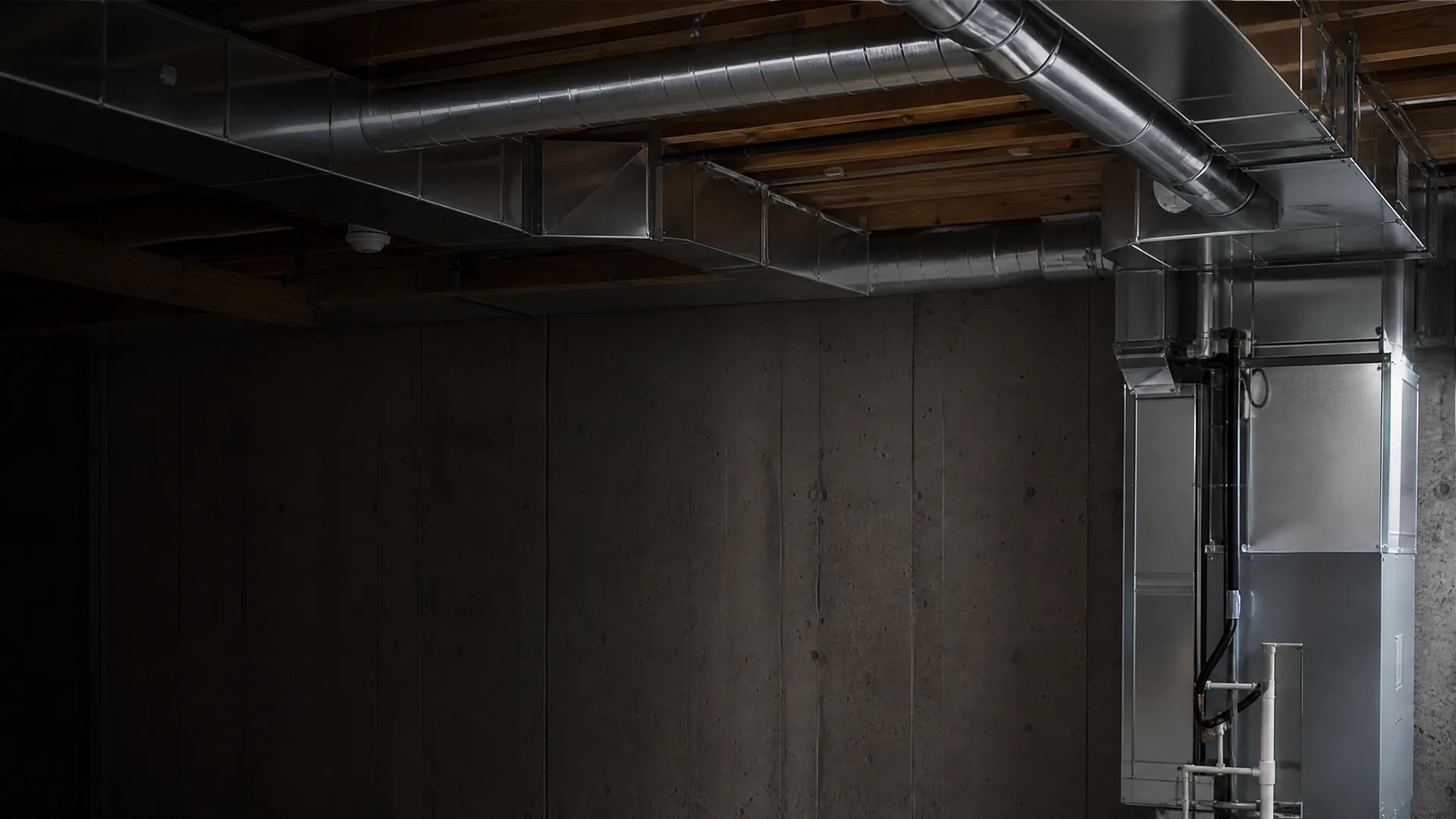
A basement with a gray furnace on a concrete pad connected to large sheet-metal ducts running along an exposed wood joist ceiling, with PVC pipes and plastic sheeting on the walls.

Ducts running clean

Air moves through the system without picking up anything extra. The coil drains the way it should, condensate goes where it's supposed to go, and the metal and flex runs overhead stay dry. Air reaches the register the same way it left the unit, with nothing added along the way.


Galvanized sheet metal HVAC ductwork with a vent grille running along a wooden joist ceiling above a bare concrete wall.

Ducts holding moisture

A duct run sitting over a damp crawlspace or crowded against wiring and joists picks up moisture it shouldn't. That moisture sits in the insulation and the seams, and mold starts growing where you can't see it. Every time the AC kicks on, that smell rides the air straight into the room.

A smiling man in a dark green shirt over a white t-shirt sits at a kitchen counter with a dark mug, looking off to the side, with shelves, plants and a bright living area behind him.
A man in a gray long-sleeve waffle-knit shirt smiles and looks off to the side in a kitchen with open shelving, a refrigerator, a wooden sideboard with a potted plant, and a glass door to the right.
A man in a dark green ribbed sweater stands smiling and looking off to the side beside a stone kitchen counter with a ceramic mug, with a dining table, pendant lights, and large windows in the background.
A bearded man in a gray long-sleeve shirt stands smiling and looking off-camera beside a kitchen counter with a white mug, with a living room, fireplace and wall-mounted television behind him.

The coil inside your air handler is cold, and Louisiana air is heavy with moisture, so water collects on that coil every time the AC runs. That's by design. The problem is where the water goes after. It's supposed to run down a condensate drain line and out of the house, but that line sits wet almost nonstop through a Louisiana summer, and algae builds a film on the inside of it faster than it would somewhere drier. Once that film narrows the line, water backs up instead of draining clean. It sits in the drain pan, in the bottom of the coil, in whatever corner stays dark and wet, and that's exactly where mold and bacteria take hold. The blower doesn't know the difference. It pulls air across that coil and pushes it out through the ducts on every single cycle, carrying the smell with it. Damp insulation on the flex duct or a metal run that never fully dries holds onto that smell even after the line clears for a while.

Where the smell actually starts

  • Warm, humid air meets the cold evaporator coil and drops its moisture there, which is normal, but that water has to go somewhere.
  • A condensate drain line carries that water out of the house, and in Louisiana's humidity that line runs almost constantly all summer.
  • Algae and biofilm build up inside that drain line faster here than in drier climates, and a partial clog lets water sit instead of draining.
  • Standing water in the drain pan or a slow line gives mold and bacteria a steady, dark place to grow right where the air handler pulls air through.
  • The blower then pushes air across that growth and through the ducts on every cycle, which is why the smell seems to travel through the whole house.
  • Flex duct insulation and sheet metal runs that stay damp from a slow coil drain hold that musty smell long after the water itself clears.
Unfinished basement with galvanized sheet-metal rectangular and round ductwork running along a wood-joist ceiling, two steel support columns, a small window, and a furnace unit against the far right wall.
Air moves through metal and flex runs that stay dry, with no standing water for mold to grow in.
An unfinished basement with bare concrete walls and floor, showing exposed wooden floor joists, pipes, wiring, and metal HVAC ducts with a vent grille overhead.
Moisture collects on duct walls and joists, and mold takes hold in the dark before you ever smell it.
A bearded man in a navy T-shirt sits on a light-colored couch indoors, smiling while looking down at a laptop screen in the foreground, with a framed picture and a potted plant blurred behind him.
A bearded man in a plaid flannel shirt stands indoors looking out a window at snow-covered conifers, with a ceramic mug on the wooden sill and wooden cabinets behind him.

Stop chasing a duct system pro

Your request goes to one pro, not a list of companies.

You're not committing to anything by asking.

What This Costs Your Household

  • Mold growing in your ducts sheds spores that move through every room the system reaches, not just where the smell is strongest.
  • A system left to run dirty circulates that smell into bedding, curtains, and closets, so the house carries it even with the AC off.
  • Mold feeding on duct insulation and dust buildup can mean the coil loses efficiency, so the system runs longer to cool the same rooms.
  • What starts as a smell in one or two rooms spreads as mold works along the duct runs toward every register in the house.
  • Anyone in the house with allergies or breathing trouble usually notices the air quality drop before anyone else does.
  • Standing water or wet insulation inside the ducts can soften and sag the metal or flex runs over time.

Musty ducts don't stay contained to the room where you first noticed the smell. The system pulls air from every room and pushes it back out through the same ducts, so whatever is growing in there rides along with it. Spores land on bedding, soak into curtains, settle into closets. You can run the AC all day and the house still smells like it did with the windows shut. In Louisiana, the coil already works hard pulling moisture out of muggy air. Add mold and dust buildup on top of that, and the coil doesn't transfer heat as well, so the system runs longer to get a room down to temperature. That shows up as rooms that take longer to cool and a system that cycles more than it used to. If anyone in the house has allergies or asthma, they're usually the first to notice something's off, often before the smell is strong enough for everyone else to catch. Left alone, the mold doesn't stay put either. It works along the duct runs, room by room, until most of the house carries some version of that smell. And where there's been standing water or insulation that's stayed wet, the ducts themselves can start to sag or soften, which is a bigger repair than cleaning alone fixes. None of this happens overnight, but none of it reverses on its own either.

Basement ceiling with galvanized sheet metal rectangular ducts and round pipes running between wooden joists above a bare concrete wall and floor.
Before you get your ductwork cleaning
Unfinished basement with bare concrete walls and floor, showing exposed wood floor joists overhead with sheet-metal rectangular ductwork, insulated flexible ducts, and pipes.
After you get your ductwork cleaning

Why cleaning solves this for good

Cleaning pulls out the dust, debris, and mold sitting on the duct walls where that water vapor has been landing all summer. A contractor working the job runs a brush or air whip through each run, then vacuums the whole system down to bare metal, so there's nothing left for moisture to cling to the next time the coil sweats. The registers, the plenum, the long flex runs under the house, all of it gets cleared out at once. That's different from changing a filter, which only ever caught what passed through it and never touched what was already growing upstream.

A local contractor who knows this duct problem

Someone who services ductwork in Louisiana sees this same musty-vent call all summer, every summer, because the humidity here does this to duct systems whether the house is new or forty years old. They know which runs tend to hold moisture longest and what a coil drain pan is supposed to look like versus one that's been backing up for weeks. Send one request and it goes to one licensed contractor working near you, not a handful of companies competing for the job. Once that's sent, you're not the one tracking down who's available or who actually does this kind of cleaning.

Power costs 12.52 cents per kilowatt-hour statewide

At 12.52 cents a kilowatt-hour, running the AC harder to fight that musty smell doesn't hit your bill the way it would elsewhere. That's not a reason to let dirty ducts sit, since the mold and smell stay put until someone cleans them out.

EIA-861 2025 statewide residential average

That musty smell is moisture and mold sitting in your ducts, and it doesn't clear up on its own. Changing the filter again won't touch it, because the problem is on the duct walls, not in the air you're breathing right now. A contractor who works AC systems in Louisiana all summer has seen this exact complaint more times than almost anything else, and knows where the water collects and what a cleaning needs to cover to actually get rid of it. You'll get matched with one licensed local contractor for this, not a handful of companies calling you back at once, so you can just deal with the one call and get it scheduled. Catching this now, while it's still just a smell, means it stays a simple cleaning instead of something that spreads further into the house. The vents will run clean again, the way they did before any of this started.

Unfinished basement with poured concrete walls, exposed wooden joists, and galvanized sheet-metal supply ducts and round pipes running along the ceiling to a furnace unit at right.

Send one request and you're done looking

The pro who reaches out is licensed in Louisiana.

Duct and vent cleaningDucts or ventsLouisiana
Step 1 of 2

What ZIP code is the job in?