A local pro who cleans dryer vents gets in touch with you.
A bird in your dryer vent doesn't stay quiet about it. You hear scratching behind the wall, or the dryer takes two cycles to do what one used to do, or the lint trap is clean but the clothes still come out damp. Spring is when it usually starts. A bird finds the warm air coming out of that hood and decides it's a good place to build, and once there's a nest in there, the vent can't do its job. In Louisiana, with summers as muggy as they are, a blocked vent means the dryer is pushing hot, wet air into a line that has nowhere to send it. That's wasted heat sitting in your laundry room instead of going outside where it belongs.
A nest doesn't come out with a vacuum from one end. Whatever is built up in there, feathers, grass, sometimes an actual bird, is usually packed in past where you can reach, and pulling on it from the dryer side can push it in deeper. It takes the kind of brushes and vacuum setup made for duct work, run from the vent hood through to the dryer, to get the line actually clear and moving air again.
This is where a local contractor earns the call. Someone who clears vents in Louisiana homes all through the spring knows which vent hoods in this area invite birds in the first place, and what it takes to get one clear without damaging the duct behind it. That's a different job than someone passing through once and guessing.
When you ask for help here, you're matched with one contractor who covers your area and does this kind of work regularly, not a list of companies competing for your number. They'll reach out to you directly about what your vent needs.
A bird gets into a dryer vent because the hood flap is broken, stuck open, or missing, and the duct behind it is warm and dry and looks like a good place for a nest. In Louisiana this tends to show up in spring, when birds are building and your dryer is running most days. Once there's a nest in there, lint and feathers pack in around it, and the vent can no longer push air outside the way it should. Your dryer still runs, but it takes longer to dry a load, the outside of the machine runs hotter than it used to, and the vent hood may not flap at all when the dryer is on. Left alone, the blockage gets worse, not better, since every load adds more lint to what's already stuck. A clogged vent is also a known cause of dryer fires, so a nest in there is not something to wait out until next season.
Power costs 12.52 cents per kilowatt-hour statewide
At 12.52 cents a kilowatt-hour, running a blocked dryer twice to dry one load costs you real money, not just time. A vent packed with nesting material makes the dryer work harder and run longer to push air through, and that extra cycle shows up on your bill every time it happens.
EIA-861 2025 statewide residential average
Clearing it out yourself
You can pull the vent hood off and clear what you can reach with a shop vac or a stiff brush. That handles a nest built right at the opening. It doesn't help if the nesting material is further back in the duct, or if the duct runs a long way before it reaches outside, which is common with dryers vented through a roof instead of a nearby wall. You also won't see whether the hood flap still closes right once you put it back, and a flap that sticks open is what let the bird in the first time.
Having a contractor clear it
A contractor who works on vents year-round brings a rod and brush system built to reach the full length of the duct, not just the first few feet. That matters in Louisiana because a lot of nesting material plus humid air is a good way to grow mold inside the duct where you can't see it. A contractor local to your area has likely pulled nests out of this same setup before and knows what a damaged flap looks like, so the hood gets checked and fixed, not just the duct cleared.
A local pro for your dryer vent cleaning
Your dryer vent cleaning request goes to one local pro.
Your dryer vent cleaning request goes to a local pro who does this work.
No charge to send it. You decide if you hire them.
How do birds get into a dryer vent in the first place?
It seems like such a sealed-up system, just a metal duct running from the dryer to a hood outside, so it's worth knowing exactly how a bird manages to get past that and set up inside it. Once you know the point of entry, you know what has to be fixed so it doesn't happen again.
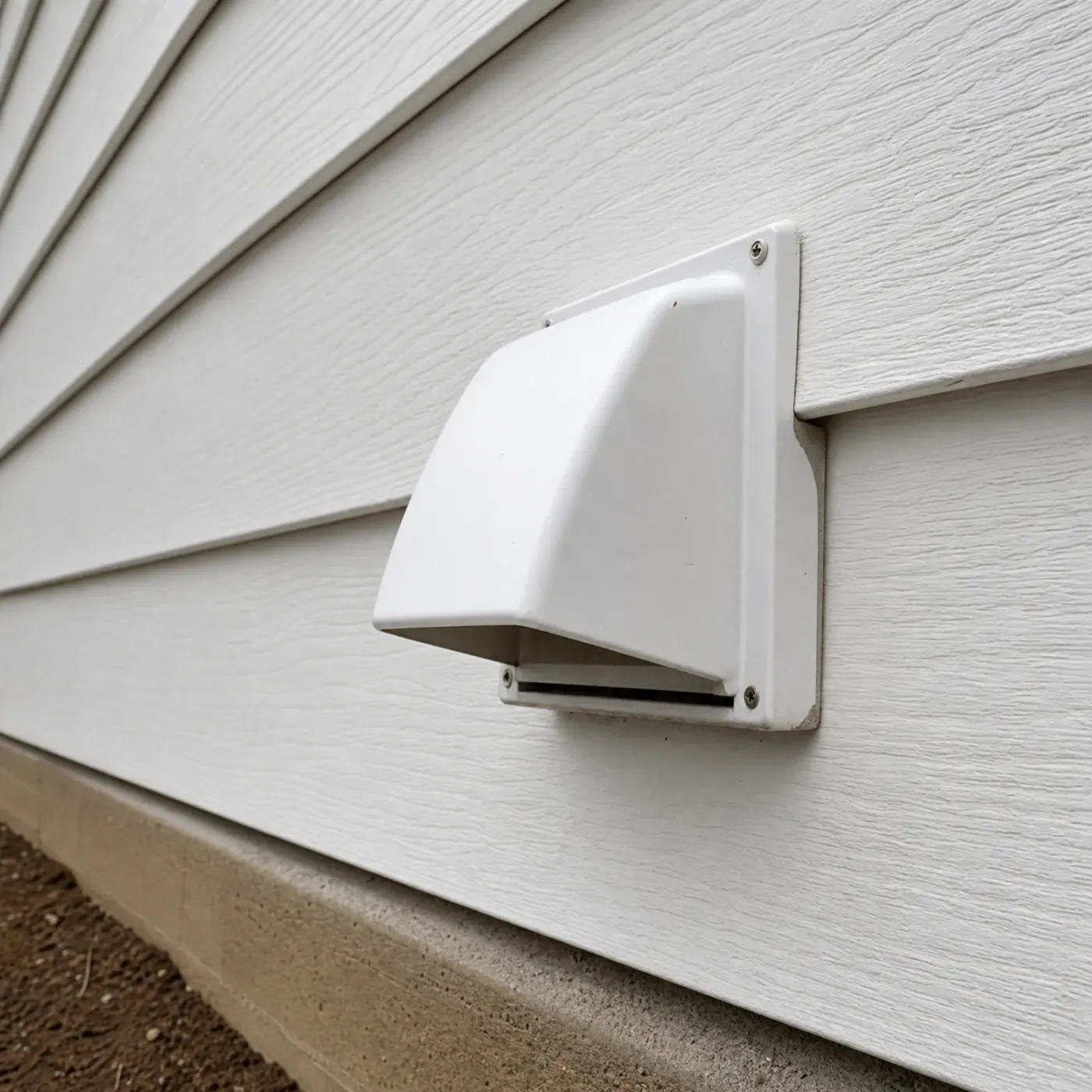
A bird gets in through the vent hood flap when it's broken, stuck, or missing
The vent hood outside your house has a flap that's supposed to swing open when the dryer's running and close the rest of the time. When that flap is bent, rusted stuck, or has fallen off altogether, the duct behind it sits open all day. A bird looking for a nesting spot finds a dark, dry tube out of the weather and goes in headfirst. Once it's built a nest a few inches inside, the flap can't close over it even if the flap itself still works. From there the nesting material sits against the warm duct wall, and more gets added each time a bird comes back to it.
Vent cap sitting flush and closed
This is what a working vent looks like from outside. The flap sits closed against the siding, with nothing propping it open. Air only pushes it out when the dryer is running, then it falls shut again on its own.
Lint packed against the flap
Here the flap can't close because gray lint has built up behind it. That buildup didn't happen in one load. It's what months of a vent working harder than it should looks like from the outside, and it's exactly the kind of gap a bird can get behind.
Is that a bird in your dryer vent right now
A nest already built changes what you notice day to day. The dryer runs hot to the touch and the room gets warmer than it should. You might hear chirping when the dryer kicks on, or a thump against the duct wall. Outside, the vent hood flap hangs open instead of closing flush, or you see grass and twigs poking out of it. Lint smell gets stronger instead of fading after a cycle, because the air has nowhere to go but back into the room. Left alone, a packed vent keeps the dryer running hotter than it's built for, and that heat has nowhere to vent but back toward the lint trap and the drum.
It's almost nine on a Tuesday and you're still in the laundry room because the towels from after dinner still haven't dried. You've run them twice now. You open the door and the heap on top of the dryer is damp through, heavier than it should be, and the room smells like warm, wet cotton instead of clean laundry. The air coming off the dryer feels thick, not hot the way it usually gets. Outside it's been muggy all evening, the kind of night where nothing dries on its own either. You press your hand against the vent hose where it meets the wall and it's warm, almost hot. Somewhere behind the drywall you hear a faint scratching, then nothing.
A vent that runs clear again, running a dryer that only has to work once
A bird in the vent is a blocked duct, and a blocked duct is a dryer running longer than it should to do the same job. Clearing it out solves both at once. The nest comes out, the duct opens back up, and the dryer goes back to drying a load in one cycle instead of two.
A contractor local to your area who clears vents like this every spring knows where birds tend to get in and what a nest looks like once it's packed in further than a shop vac can reach. You'll be matched with one contractor, licensed to do this work, who'll reach out to you directly about your vent and your house. Not a handful of companies competing for the job, just the one who's suited to it.