

Airflow moving freely
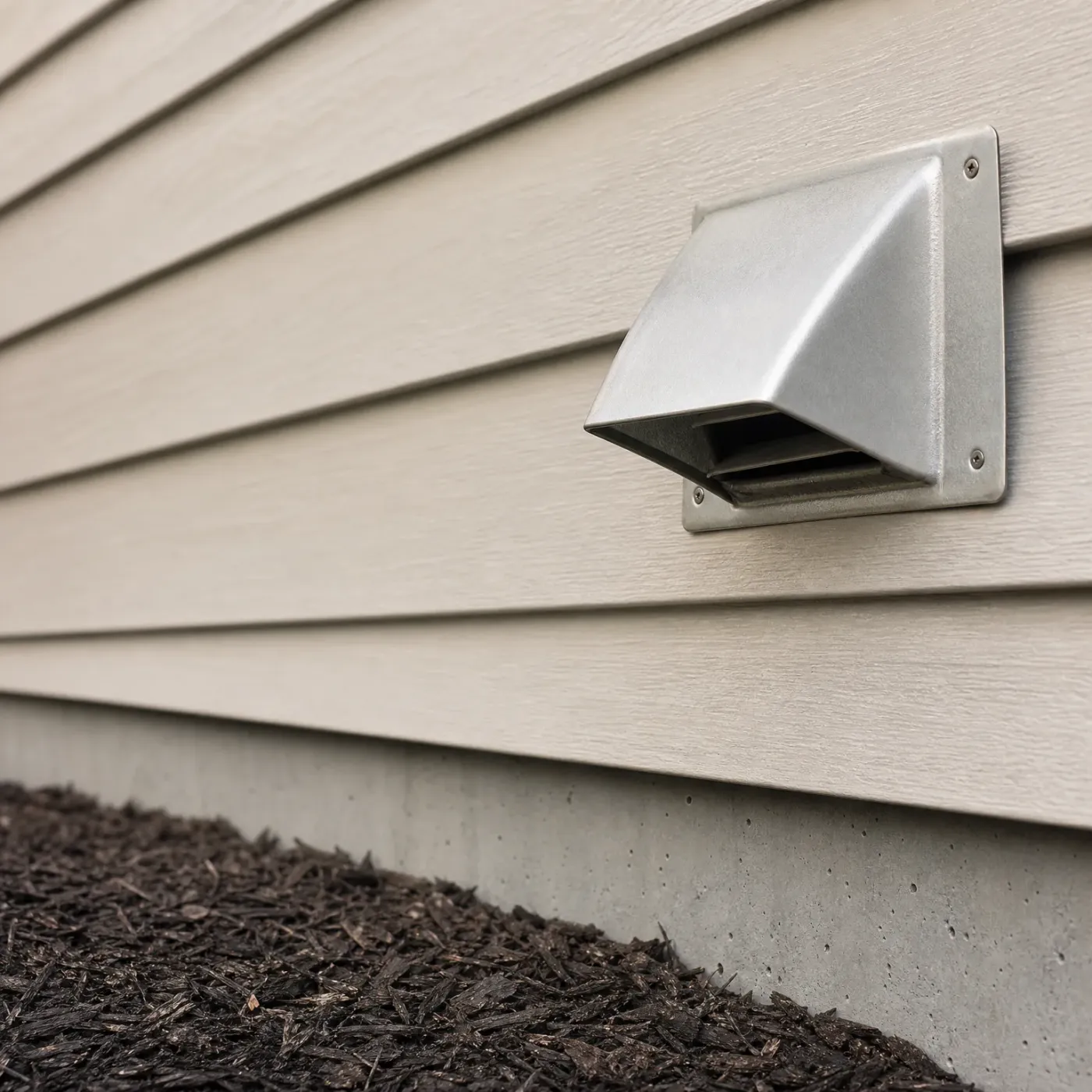
The flap hangs open and air pushes out steady while the dryer runs. Hold your hand near it and you feel a strong, warm push of air the whole cycle. This is what lets a hot dryer actually dry a load.
One request and the dryer vent cleaning stops waiting on you.
Let a pro reach outA dryer that runs hot but leaves clothes damp almost always means the air isn't moving. Heat alone doesn't dry clothes. The drum needs a steady flow of air to carry that moisture out through the vent, and if the vent is clogged with lint, the hot air just sits in the drum instead of pulling water out of your clothes. In Louisiana, the air coming in from outside is already heavy with moisture most of the year, so a vent that's even partly blocked has less room to push that extra humidity out. The dryer keeps heating because the thermostat still thinks it needs to, but the exhaust path can't keep up. A full cycle, sometimes two, and the clothes come out hot to the touch but still wet at the seams and waistbands. That's a clogged or crushed vent line, not a broken heating element.

The flap hangs open and air pushes out steady while the dryer runs. Hold your hand near it and you feel a strong, warm push of air the whole cycle. This is what lets a hot dryer actually dry a load.

Lint has built up around the opening and the flap barely lifts. Air that should be pushing out hard is just leaking around the edges. The dryer still gets hot, but the moisture has nowhere to go.
A load that comes out hot but heavy with moisture after a full cycle means the dryer is running longer than it should just to get halfway there. You might run it twice, then three times, before giving up and hanging things to finish in the muggy Louisiana air, where they won't dry fast either. Check the lint trap and it looks fine, but the vent behind the wall or out the roof is where the real buildup sits. A dryer working that hard against a blocked vent runs hotter than it was built to, and that heat has nowhere to go but back into the duct, the wall, and the lint packed inside it.

The trap only catches part of what comes off a load. The rest rides the airflow down the vent line, and over time it coats the inside of the duct. In a long run, or one with a few bends, that coating narrows the path air has to take. Louisiana's humid air already carries more moisture into the drum, so a vent that's already working harder has less room for error.

Cleaned out, a dryer vent lets air move through at full speed, start to finish. You can check this yourself outside at the vent hood while the dryer runs. If the flap barely lifts or the airflow feels weak, the line is restricted somewhere between the drum and the outside wall. A clear line is what lets a hot dryer actually push moisture out instead of just recirculating it.
You've run the same load twice now. The dryer sounds fine, it gets hot, you can feel the heat when you open the door, but the clothes come out heavy and damp anyway. It feels like the machine is broken, or maybe it's just old. You're trying to figure out if this is a dryer problem or something else before you decide what to do about it.
A dryer makes heat with an electric element, and that part rarely fails halfway. It's either hot or it isn't. What fails gradually is the path the air takes to leave the drum. The element heats the air, the drum tumbles the clothes through it, and a blower pushes that warm, wet air out through the vent to the outside. If the vent is packed with lint, the blower is pushing against a wall. The element keeps making heat because nothing tells it to stop, but that heat has nowhere to carry the moisture to. Here in Louisiana, where the air outside is already heavy with moisture most of the year, a vent that's even partly blocked loses whatever edge it had.


Skip calling around for someone who cleans dryer vents.
Once you send the form, finding a pro is off your list.
You only hire the pro if you want to.

It's almost nine and you're still in the laundry room. The same load of towels has been through twice now, and they came out hot both times, hot enough that you almost believed it. You unload them onto the top of the dryer anyway, and when you press a hand into the pile, it's damp all the way through, that heavy, muggy-season damp that doesn't want to let go. You think about the bath towels you need by morning. You could run it a third time. Instead you just stand there a second, feeling the warm, wet stack, and wonder what's actually wrong with a machine that gets this hot and still can't finish the job.
At 12.52 cents a kilowatt-hour, a dryer that has to run two or three times for one load of towels is burning through power on every extra cycle a clogged vent forces. Clearing the line so it dries in one pass is what keeps that cost from repeating load after load.
EIA-861 2025 statewide residential average
The heating element warms the air entering the drum.
The drum tumbles clothes through that heated air.
Wet air needs to exit through the vent duct.
Lint buildup narrows the duct and slows that exit.

The dryer isn't broken. The heat is there, the drum is turning, but the moisture has nowhere to go because the vent is choked with lint. That's the whole answer. Clearing that line is what gets a load dry in one pass instead of two or three.
You've already spent enough evenings on this, standing in the laundry room waiting on a load that won't finish. You don't need to spend the next few finding someone to clear the vent, calling a handful of contractors, explaining the same thing to each one, then sitting with quotes trying to guess who's worth it. Send the form once and that part of it is off your plate. Someone licensed for this gets in touch, and you're back to running one load, once, and getting on with your night.





Let someone else find the pro
Answer a few questions about the dryer vent cleaning and skip the search.