120 degrees and climbing
That's the air temperature a blocked vent can reach inside the duct. It's the moisture that can't escape, not the heat, that keeps a load from finishing.

A dryer that runs two or three cycles to finish a load is usually clogged, not broken. Lint builds up in the vent line and blocks the hot, wet air from getting outside, so the dryer just keeps recirculating damp air past clothes that are already dry on the surface. Louisiana's air works against you here. Summers are muggy, and a dryer venting into that kind of air has less pull getting moisture out than it would somewhere dry, so a vent that's already half blocked struggles even more. The dryer senses the load is still damp and keeps heating, which costs you time and runs the motor and heating element harder than they should have to work. If it's taking noticeably longer than it used to, or the outside of the dryer feels hot, or you smell something warm and dusty when it runs, the vent line is the place to check before you assume the machine itself is failing.


A dryer doesn't dry clothes by itself. It pushes hot air through the drum, through a duct, and out a hood on the outside wall, and that air carries the water with it. As long as that path is open, the water leaves the house. Once lint narrows it, the drum still turns and the heat still comes on, but the moist air has nowhere to go, so it backs up into the line and the load stays damp no matter how long the cycle runs. Louisiana's air is already heavy with its own moisture most of the year, so there's less pull getting the wet air out, and a duct that's half blocked slows a dryer down faster here than it would somewhere dry. Lint doesn't build up evenly along the way. It collects at bends and at the hood first, so the first few feet near the lint trap can look fine while the line is packed solid further out. A longer run or one with more bends holds more of it and holds it longer.


That's the air temperature a blocked vent can reach inside the duct. It's the moisture that can't escape, not the heat, that keeps a load from finishing.
Lint built up in the vent line is dry and packed tight, and it sits right where hot air from the dryer passes through every load.
Open the dryer door after a cycle and the room feels like a sauna, with the mirror or window fogged and the air thick with wet heat long after it should have cleared. The clothes come out hot but still damp at the seams and waistbands. You might catch a warm, musty smell near the dryer itself, lint that's gone stale sitting in a line that never fully empties. Outside, hold your hand near the vent hood while the dryer runs. If you feel little or no air moving, the line is blocked somewhere between the drum and the outside wall. Left alone, that trapped moisture doesn't just slow your laundry. It gives mold something to grow on, inside the duct and around the vent itself.

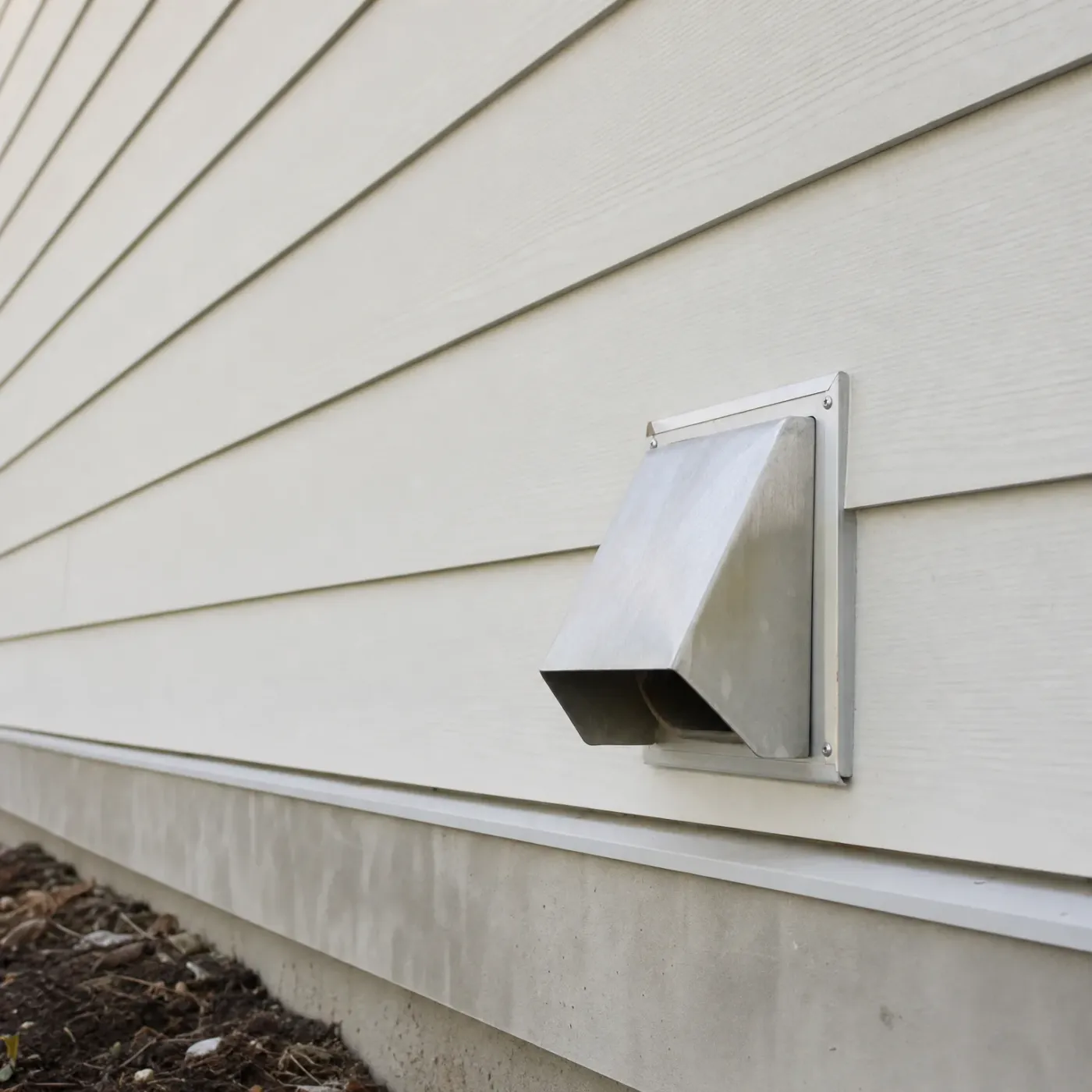
This is what a clean vent looks like from outside. The cover sits flush against the siding, the opening is clear, and the flap swings free. Air and moisture leave the house as fast as the dryer pushes them out.

Lint has caked over the screen here, and the mesh is dark with it. Air can't push past that buildup, so the dryer runs longer trying to force moisture through an opening that's already shut.




Your request stays with one local pro.
Describe your dryer vent job, and a local pro who handles it gets in touch.
There's no charge for the request.

Run three cycles to dry one load and that's three cycles of hot, wet air that never made it outside sitting in your vent line instead. In Louisiana, where the air outside is already heavy most of the year, your laundry room has nowhere to push that extra moisture. It settles into the walls around the duct, into the closet if that's where the dryer sits, into whatever is nearby long enough to absorb it. Electric dryers are what most homes here run, and power is cheap, so the bill from the extra cycles may not be what gets your attention. What gets your attention is the room never quite drying out between loads.
A vent that's been clogged a while isn't a job for a shop-vac and a free Saturday. It's a straight line of ductwork from your dryer to the outside wall, and knowing how much lint has packed into the bends versus the hood takes someone who deals with this equipment all season. A local contractor who's cleared vents through plenty of Louisiana summers can tell you what's actually blocking yours and clear it properly, and matching you with one means a single contractor reaching out, not a handful of companies working your phone.

At 12.52 cents a kilowatt-hour, running a dryer for two or three cycles instead of one isn't a huge jump on its own, but it adds up over every humid load all summer. A clogged vent is the fix, not a bigger dryer or a longer cycle setting.
EIA-861 2025 statewide residential average
A dryer vent with a short straight shot to the outside wall clears itself of most lint on its own, cycle after cycle, with barely any buildup to speak of.
A dryer vent that runs long, or turns corners to reach an outside wall, traps lint at every bend, and those are the vents that end up packed solid and need clearing out.


A slow dryer almost always comes down to one thing: the vent line can't get the wet air out of the house fast enough, so the drum keeps turning on clothes that should already be done. That's true whether your vent runs a short straight shot to the wall or winds through turns to get there. Once it's clear, the fix shows up right away. Hot air leaves in one pass, the hood flap swings free again, and the laundry room stops feeling like a sauna every time you run a load.
Getting there means someone who actually knows where lint packs in on a Louisiana vent line, because a long run and a run with corners clog differently, and a contractor who works on these systems all year has seen both plenty of times. That's who you're matched with here. Not a handful of companies bidding for the job and calling you one after another, but one licensed contractor local to your area, picked for your address and what your vent actually needs.
That match is the point of this page. The answer to why your dryer is taking so long is the vent, not the machine, and that's a straightforward problem to fix once someone is in there looking at the actual line instead of guessing from outside. You've got the full picture now. What's left is getting someone out to clear it, and that's one call, to one contractor, who already knows what they're walking into.





Your dryer vent cleaning request goes to one local pro.
You only hire the pro if you want to.