Dryer taking too long to dry in Slidell, LA

Get matched with a pro who works on dryer vents in St. Tammany Parish.

Get my match

Why is my dryer taking forever to dry clothes?

You load the dryer, run it once, and the clothes come out still damp. So you run it again, and maybe a third time, just to get a load dry that used to take one cycle. It's not your imagination, and it's not usually the dryer itself giving out. Before you call for a repair, it helps to know what actually causes this.

A clogged dryer vent is the most common cause

Lint builds up inside the vent line, not just the trap, and over time it blocks the path hot, wet air needs to escape through. The dryer still heats and still tumbles, so it doesn't seem broken. It's just working against a blocked line, and the air that should be carrying moisture outside has nowhere to go. With Slidell's summer humidity already working against a fast dry, a partially blocked vent makes the difference bigger here than it would somewhere dry. Runs of two or three cycles for one load, a dryer that's hot to the touch on the outside, or a laundry room that feels warmer and more humid than usual all point to the same thing: the vent needs to be cleared out.

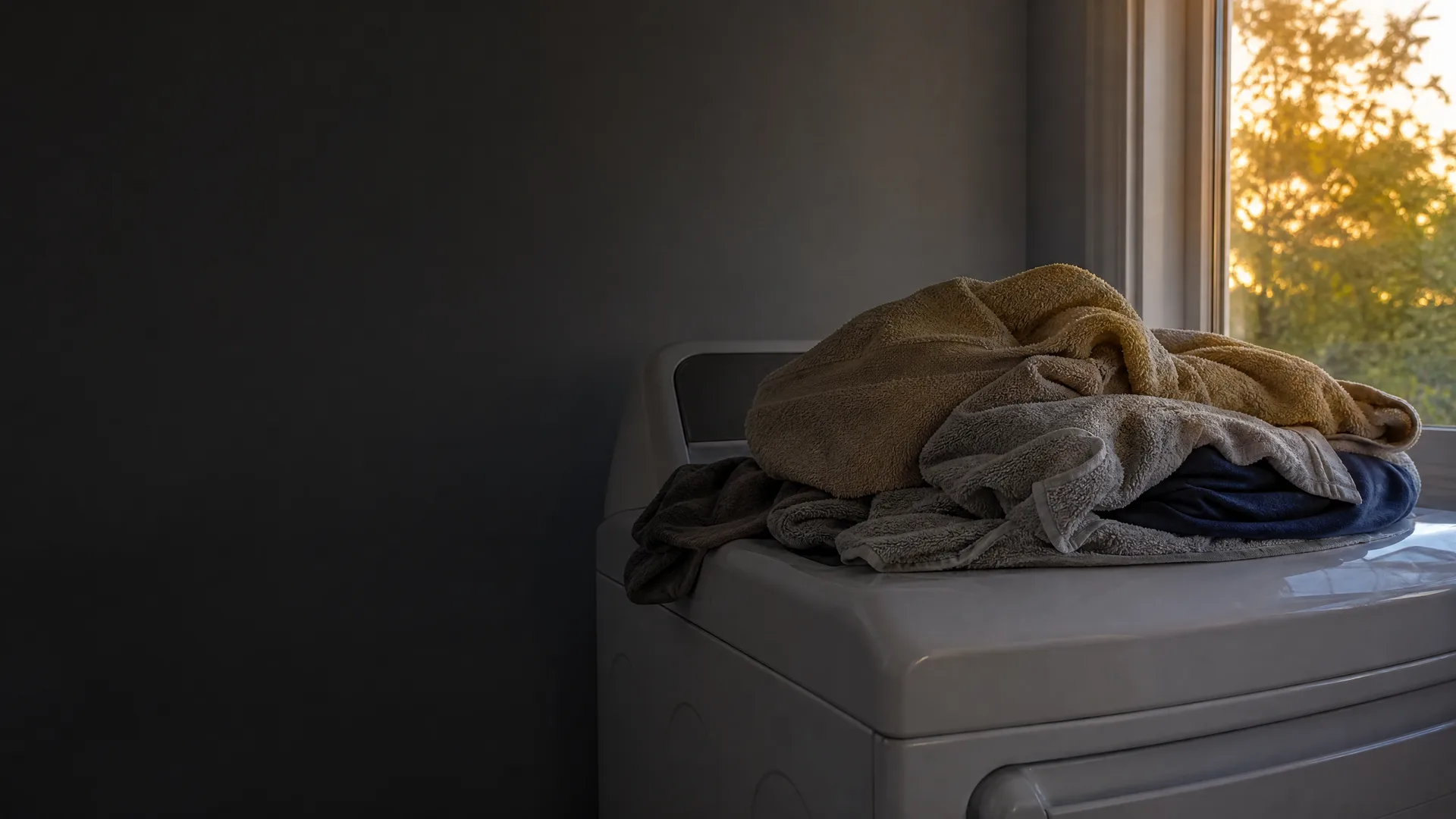
A pile of folded and crumpled towels in tan, gray, and navy rests on top of a white washer or dryer beside a window with backlit foliage outside, against a dark wall.

It's almost nine on a Tuesday and you're still in the laundry room. The second cycle finished twenty minutes ago and the towels on top of the dryer are still heavy and damp when you press a hand into them. Outside the window it's dark, and the air that came in when you cracked the door felt thicker than the air in the house. You start folding what's actually dry and leave the rest piled on the lid, telling yourself you'll run them again before bed. The dryer ticks as it cools. Tomorrow's work clothes are somewhere in that pile, and you're doing the math on how early you'd need to get up to run them once more.

Clogged Vent or Dryer Problem

Clean the vent

  • A lint-clogged vent is the most common reason a dryer runs two or three cycles instead of one.
  • Cleaning clears the full length of the duct, not just the lint trap you empty between loads.
  • It brings drying time back down and stops the dryer from running hotter than it should on every load.
  • A rigid metal vent with a few feet to run outside is usually a straightforward clean with the right equipment.
  • Flexible foil ducting and long runs with elbows take longer to clear and catch more lint along the way.
  • This fixes the problem if the vent is the cause, but it won't help if the heating element or thermostat has failed.

Call for repair

  • If the vent is already clear and drying is still slow, the problem is likely inside the dryer itself.
  • A failing heating element, a worn thermostat, or a bad timer can all leave clothes coming out damp.
  • A technician can test these parts directly instead of guessing which one is behind the long cycles.
  • Repair makes sense if the vent was cleaned recently and the slow drying started without any change in how you use the dryer.
  • Some of these parts fail gradually, so the dryer may still run and heat while taking longer each week to finish a load.
  • This route costs more upfront than a cleaning but addresses the dryer's internal parts rather than the vent.
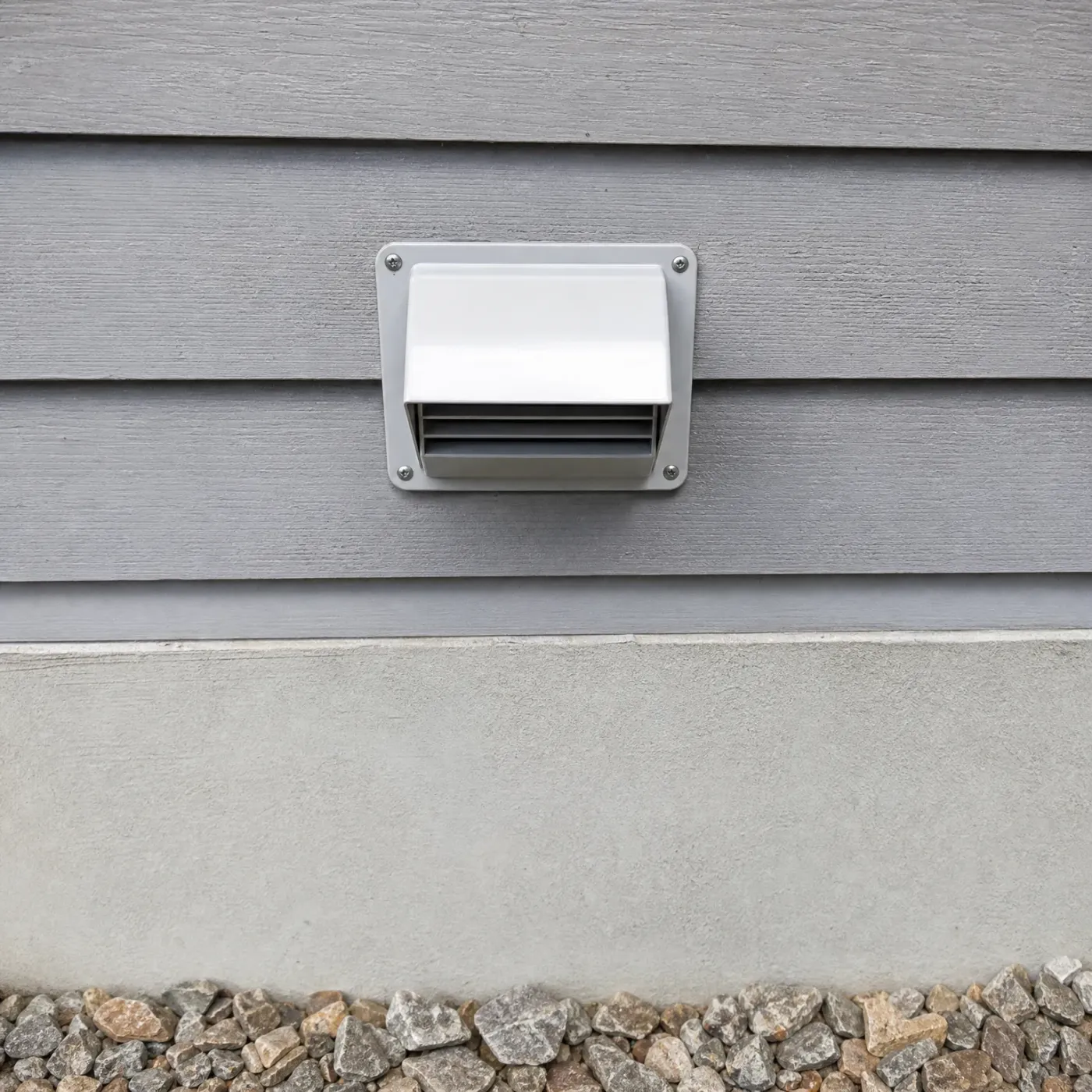
A white hooded louvered vent screwed to gray horizontal lap siding above a concrete foundation wall, with gravel along the ground.

Air moving freely

This is what a clear vent looks like. The louvers sit open and loose, and the flap moves with the air coming through it. A dryer venting like this finishes a load of towels in one cycle, because the hot, wet air is actually leaving the house.

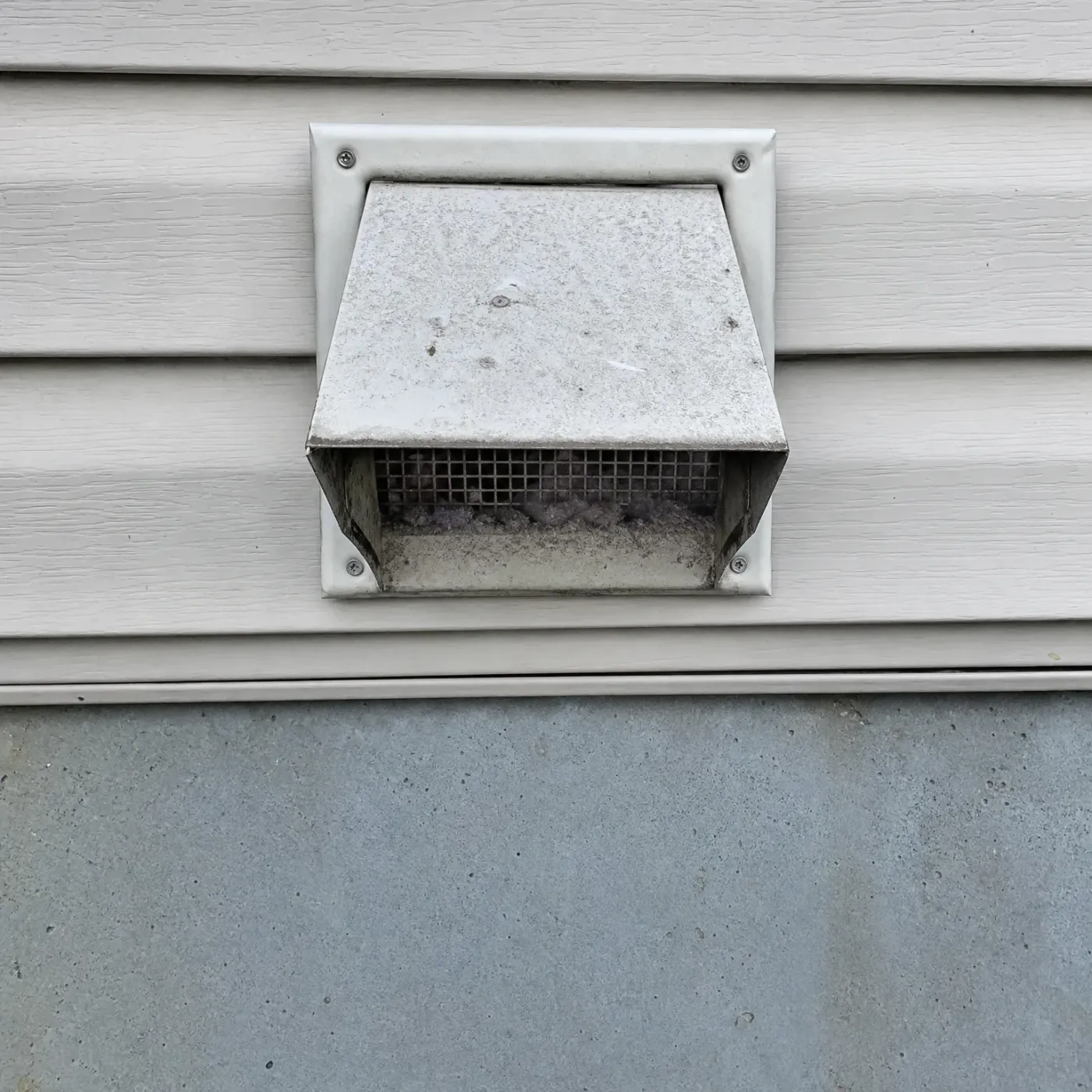
A metal dryer vent hood with a screened opening clogged by gray lint, mounted on light gray horizontal vinyl siding above a concrete foundation wall.

Lint choking the vent

This hood is caked in lint, front to back. Air that should be pushing outside is backing up into the duct instead, which is why the dryer runs twice as long and still leaves clothes warm and damp. A vent this clogged needs clearing out before it gets worse.

An older man with gray hair and a beard, wearing a dark jacket dusted with snow, stands smiling in a dimly lit hallway with lamps and a living room visible behind him.
A gray-haired, bearded man in a dark snow-dusted coat stands smiling in a dimly lit entry hall with a staircase, a lit table lamp, a framed picture, and a living room visible through a doorway.
An older man with white hair and a beard, wearing a dark snow-dusted coat and scarf, stands in a warmly lit interior hallway with a framed landscape picture, a table lamp and a potted plant behind him, and a snowy view through a window at left.
A gray-haired, bearded man in a dark coat dusted with snow stands smiling in a dimly lit room with a lamp, mirror, framed art, and a sofa in the background.

A dryer vent is a straight shot of duct, usually four inches round, running from the back of the machine out to a hood on the wall. Lint doesn't just sit in the trap you clean between loads. It settles along the inside walls of that duct, layer on layer, and each layer makes the path narrower. The heat and tumbling in the drum don't dry your clothes by themselves. It's the air pulling through that duct that carries the moisture out of the house. When that airflow is choked down, the wet air has nowhere to go, so it circulates back through the drum instead of leaving. The dryer's thermostat picks up on that trapped heat and ends the cycle early, before the load is dry, which is why you're running it twice. Sometimes the blockage isn't even inside the wall. Lint pushed out by the dryer builds up at the hood itself, where the flap and louvers are, and a dense enough mat out there can pin them shut just as effectively as a clogged duct.

How the vent actually fails

  • A dryer vent is just rigid or semi-rigid duct running from the back of the machine to a hood on the outside wall, usually four inches round.
  • Lint builds up in layers along the inside of that duct, and each layer narrows the path the hot air has to travel through.
  • The dryer's drum heats and tumbles the load, but it's the exhaust airflow pulling through the vent that actually carries the moisture out of the house.
  • Once that airflow drops, the moist air has nowhere to go, so it recirculates through the drum instead of leaving through the hood.
  • The thermostat inside the dryer senses that trapped heat and cuts the cycle short, long before the clothes are actually dry.
  • Lint also collects at the outside hood, where the flap and louvers can get pinned shut by a dense mat the dryer itself pushed out there.
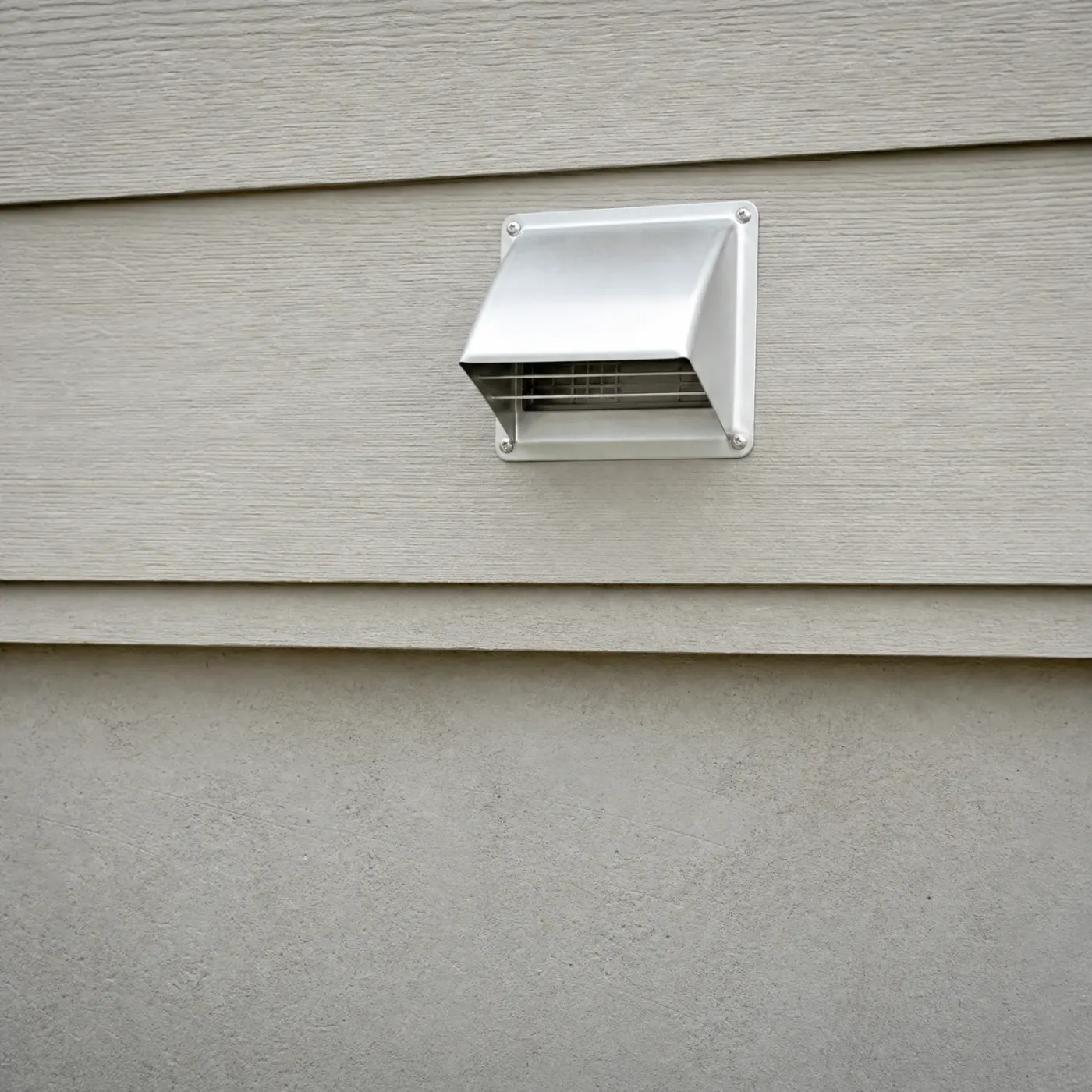
A white hooded dryer vent with a screened opening mounted on beige horizontal lap siding.
The louvers sit open and the screen behind them is clean, so air from the dryer pushes straight out with nothing to slow it down.
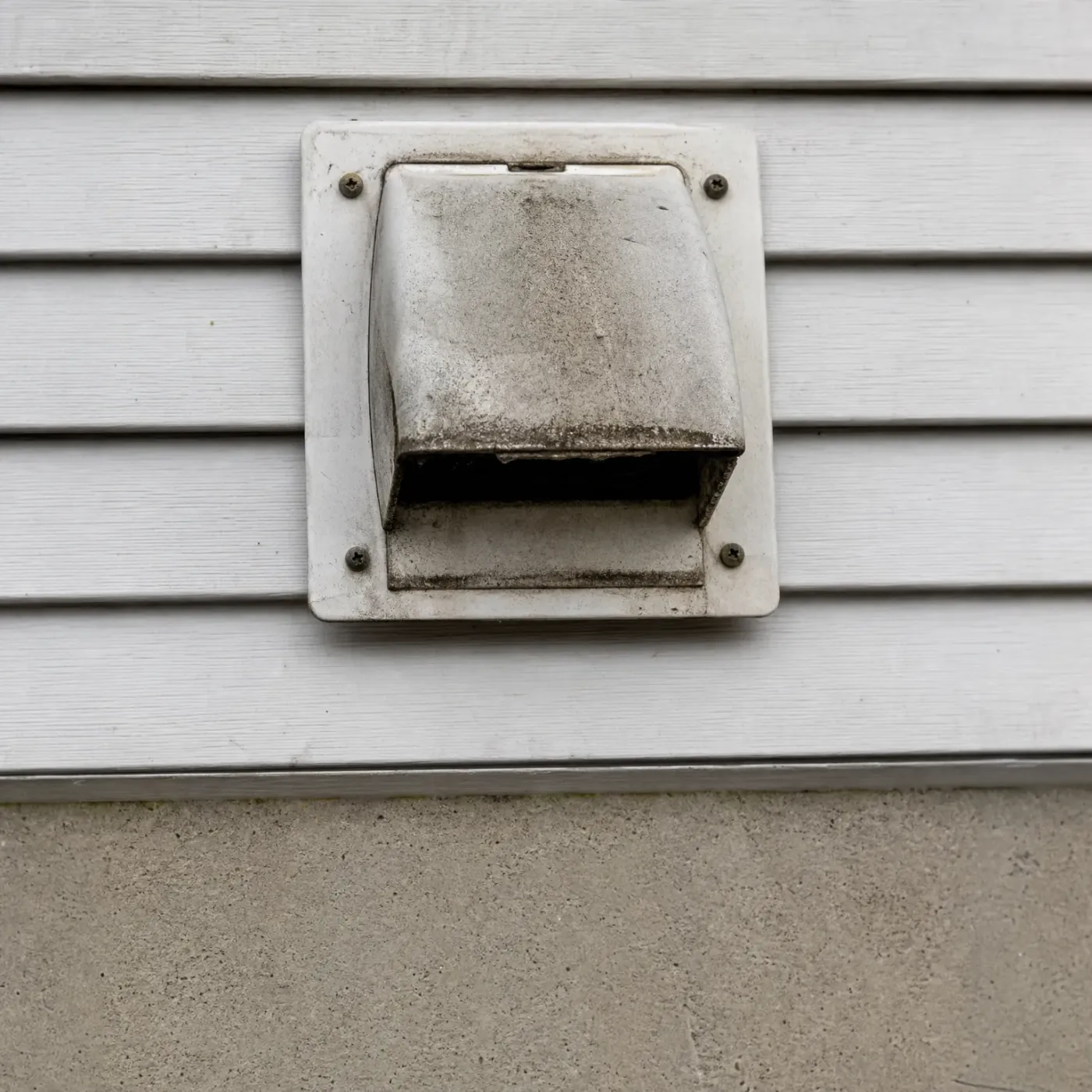
A dirt-streaked white plastic dryer vent hood screwed to light gray horizontal lap siding above a concrete foundation wall.
Dust has built up around the flap until it barely lifts, and air that should be leaving your house is backing up into the duct instead.

Why does lint build up in my vent so fast?

  • 2.57 people per household on average

    With 2.57 people in the average St. Tammany Parish household, most homes here are running a load most days, and every load sends more lint into the same stretch of duct.

  • Half the homes here were built by 1995

    Half the homes in the parish were built in 1995 or earlier, which means the vent run could be original. An older duct that's never been cleaned has decades of lint to account for.

  • Power here costs 12.80 cents per kilowatt-hour

    Power here runs 12.80 cents per kilowatt-hour, cheap enough that a dryer running two or three cycles to finish one load doesn't jump out at you on the bill the way it might elsewhere.

ACS 2020-2024 · EIA-861 2025

A metal dryer vent hood mounted on beige horizontal lap siding, with gray lint clogging its open flap, above a lighter textured foundation wall.
Before you get your dryer vent cleaning
A white hooded exterior dryer vent with a mesh screen, screwed to light gray horizontal lap siding above a concrete foundation.
After you get your dryer vent cleaning

Get matched with a dryer vent pro in St. Tammany Parish

After this form, you can stop searching for a dryer vent pro.

You're not committing to anything by asking.

A dryer that won't dry costs you in ways you can see and ways you can't. The electric bill goes up because the heating element is running two or three times as long to finish one load. Clothes come out of the dryer hot and still smelling faintly of damp fabric instead of clean, and towels in particular hold onto that smell because they never fully dry all the way through. The dryer itself wears out faster, since the motor and heating element are working harder and longer every single day than they were built to. Run it long enough in this state and you're looking at a repair bill or a replacement years before you should need one. There's also the heat. A dryer pushing hot, wet air back into the house instead of outside raises the temperature and humidity in the laundry room, and in a house already fighting Louisiana humidity most of the year, that's air you're paying to cool right back down.

A woman wrapped in a chunky knit blanket sits in an armchair with an open book on her lap, beside a lit table lamp and a window with frost and snow outside.
An older woman with short gray hair in a cream cable-knit turtleneck sweater smiles while looking to the side in a wooden kitchen, with a round loaf of bread on a board in the foreground and a lit candle by a dark window.
A white hooded exterior vent cover with a louvered underside, screwed to beige horizontal lap siding above a lighter stucco lower wall.

Vent clear

This is what a vent cap looks like when it's doing its job. The louvers hang loose and open, with nothing blocking the opening. Air from a full dryer load pushes out fast and takes the moisture with it, so a load of towels finishes in one cycle.

A beige plastic dryer vent hood mounted on horizontal vinyl siding, with clumps of gray lint protruding from the open flap.

Vent clogged

Lint has packed in behind the louvers until it's pushing out through the opening itself. Air from the dryer can't get past it, so the moisture it's carrying has nowhere to go but back into the duct. This is what sends a load into a second or third cycle.

2.57 people per household on average

At 2.57 people, most St. Tammany Parish households are doing laundry close to daily, towels, sheets, work clothes, all pushing lint through the same duct. A household that size can't just skip a cleaning and hope the vent keeps up.

ACS 2020-2024

A white plastic hooded dryer vent cover mounted with screws on beige horizontal lap siding, next to a plain pale wall surface.

Running the vent as it sits

A clogged vent doesn't stop working all at once. It keeps running, just worse each month, so the slide is easy to miss day to day. The dryer gets hotter inside because the air it's pushing out has nowhere to go fast enough. That heat wears on the heating element and the drum bearing, and it's why a dryer stuck like this for a couple of years tends to need a repair before an unclogged one would.

A metal louvered exterior vent hood screwed to a beige horizontal lap siding wall, with a blank light-colored surface filling the left half of the frame.

Getting the vent cleared

Once lint is out of the full run of duct, the dryer goes back to pushing hot air out as fast as it makes it. A load that was taking three cycles goes back to one, because the moisture is actually leaving the house instead of backing up into the duct and the drum. The heating element stops running longer than it has to, and the dryer stops working as hard to do the same job it used to do without strain.

A man with a duffel bag walks up a concrete path toward a white board-and-batten house where a woman stands in the open wooden front door, flanked by potted plants and black lanterns.

A dryer that dries in one cycle again

A dryer taking two or three cycles to finish a load almost always comes down to the vent. Clear that path and the hot, wet air has somewhere to go, and a load of towels goes back to finishing in one run instead of three.

From here, the next step is getting someone out to look at your vent and clean it, matched to your house and your situation. Send the form and that part stops being something you have to chase down yourself. Someone who works on vents in St. Tammany Parish will reach out, and you can get back to running the dryer once and trusting it.

A mug and a small round vase sit on a wooden windowsill beside sheer and heavier curtains, with blurred autumn trees seen through the rain-speckled window and a sofa with cushions and a throw in the foreground.
A single-story white stucco house with dark roof, stone-clad entry tower and three dark garage doors, lit from within at dusk, with a curved concrete driveway and dark mulch beds with boulders and bare young trees in the foreground under an orange and blue sunset sky.

Dryer Vent Cleaning

Get your dryer vent to the right pro

Duct and vent cleaningSt. Tammany Parish, LA
Step 1 of 3

What kind of equipment?

  • A beige upholstered armchair with a cushion and knit throw sits beside a double-hung window with a woven shade, next to a white fireplace mantel with a lit fire, a vase of greenery, and a round wooden table in the foreground.
    • Get matched with a St. Tammany Parish pro who cleans dryer vents.
    • Describe your dryer vent job, and a local pro who handles it gets in touch.
  • A shallow speckled beige ceramic bowl holding a leafy green branch sits on a wooden dresser beside a tall matte stoneware vase, with a window at left and a dark-framed picture at right.
    • Send it once and finding someone is no longer on you.
    • Send the form and finding a dryer vent cleaner is handled.
  • A ceramic table lamp with a pale tapered fabric shade sits on a rustic wooden table beside a wooden bowl, with a framed artwork on the beige wall and sunlight from a window at left.
    • Skip searching for someone who cleans dryer vents in St. Tammany Parish.
    • Skip searching for a dryer vent pro and answer a few questions instead.
  • A black box-shaped outdoor wall lantern with seeded glass panels and a lit filament bulb mounted on a light gray board-and-batten exterior wall, beside a dark-framed glass door, with green leafy shrubs in the foreground.
    • The pro who gets in touch is licensed in Louisiana and works in St. Tammany Parish.
    • A licensed pro who works in St. Tammany Parish gets your request.