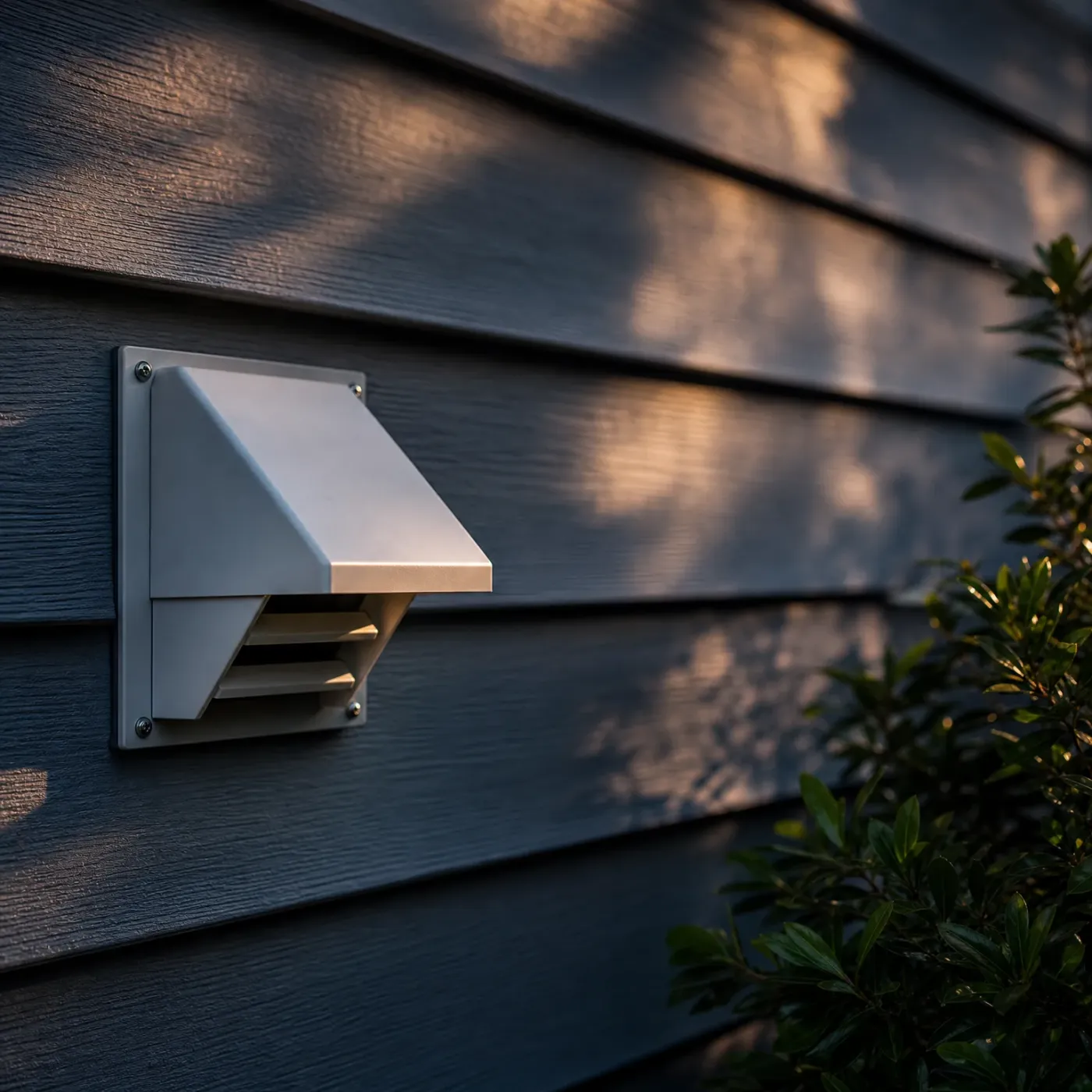
A white hooded louvered vent cover mounted on dark gray horizontal lap siding, with dappled late-day light and shadows across the wall and a leafy shrub at the right edge.

Done looking for a dryer vent pro

Signs of a clogged dryer vent in Baton Rouge, LA

A dryer that runs hot to the touch, clothes that take two cycles to dry, a burnt smell when it's running. In Baton Rouge's humidity, a clogged vent makes all of it worse and raises the risk of fire. Below are the signs to check and what they mean for your dryer. Send the form once and stop calling around for someone to look at it.

Hand it off

A clogged dryer vent shows up first in how the dryer behaves. Clothes come out hot but still damp, so you run the cycle again. The top of the dryer feels hot, or the room itself warms up while it runs. You might catch a burnt smell, or notice the vent hood outside barely moves air when you hold your hand near it, where it used to push out a strong, steady flow. Lint around the exterior vent flap is another sign, since a clear vent lets lint pass through with the air instead of collecting at the opening. In Baton Rouge, the air outside is already heavy with moisture most of the year, so a vent that can't push air out freely gives the dryer less room to work with. The drum has to run longer to do the same job, and the heat with nowhere to go builds up inside the machine.

A stainless steel hooded dryer vent with four corner screws mounted on white horizontal lap siding above a gray concrete foundation.

The flap moves, air gets out

Outside, the hood sits flush against the siding and the flap opens when the dryer runs. Walk out while a load is drying and hold your hand near it. You should feel a steady push of warm air and see the flap swing shut after.

A white hooded dryer vent mounted on light-colored lap siding above a concrete foundation, with lint clogging its opening.

The flap stays open, lint builds up

Here the flap hangs open even with the dryer off, and lint has packed in around the hood until it's furring the edges. Air isn't moving out with any force, which is why the dryer upstream is running hotter and taking longer.

A wooden table with a closed laptop, a ceramic mug of dark coffee, and a glass vase of eucalyptus stems beside a window, with a dark green kitchen cabinet, wooden counter, potted herb, cutting boards and bowl blurred in the background.

What a blocked vent means for your house

Lint doesn't stop at the vent. It builds up in the duct behind the wall, and a dryer pushing against that blockage runs longer and hotter than it was built to. In Baton Rouge, where the air outside is already thick with moisture half the year, that extra heat and moisture have nowhere good to go. You'll pay for it on your power bill before you ever see smoke, and the lint itself is the fuel if something sparks near the drum.

You don't need a parish directory or a stack of quotes to deal with it. Send the form once and the search for a contractor, the phone calls, explaining the same problem three different times, all of that goes to someone else. You get a contractor who cleans vents for a living, and your afternoon back.

A dark ceramic vase holding a leafy green branch sits on a round wooden table, with a blurred cushioned wooden armchair, woven basket, window and shelving with pottery in the background.

How many people are actually loading that dryer each week?

  • 2.47 people per household on average

    Households here run 2.47 people on average, so most dryers in the parish are working through loads for a family, not one or two people.

  • Half the homes here were built by 1984

    Half the homes in the parish were built in 1984 or earlier, which means a lot of the duct behind the wall is older than the dryer hooked to it.

  • Power here costs 12.50 cents per kilowatt-hour

    At 12.50 cents per kilowatt-hour, power here is cheap, but a dryer fighting a clogged vent still runs longer and pulls more than it should.

ACS 2020-2024 · EIA-861 2025

A pile of folded and rumpled towels in blue, gray, and cream sits atop a white dryer beside a window, against a dark wall.

It's almost nine on a Tuesday and you're still in the laundry room. The dryer has been through this load twice already. You open the door and the towels on top are warm but heavy, still damp at the fold, so you pull them out and leave them piled on the lid while you think about whether to run it a third time. The room feels warmer than it should, the way it gets in July even with the AC on. Somewhere under the hum you catch that faint scorched smell again. You've noticed it before and figured the dryer was just old. You stand there a minute, towels in hand, deciding whether to deal with it tonight or let the pile sit until morning.

It's off your list after this

Answer a few questions instead of calling shop after shop.

Sending the form costs nothing.

A dryer vent moves a lot of air in a short time. When lint narrows that path, the dryer has to force air through a smaller opening, and heat that should leave the house stays in the drum instead.

That trapped heat is what dries your towels slower and warms the laundry room, and it's also what collects as lint heats past the point it should ever reach inside a vent.

A bearded man in a blue T-shirt sits on a gray couch smiling while looking down at a laptop screen, with a houseplant and window in the blurred background.
A bearded man in a plaid flannel shirt stands indoors looking out a window at a snow-covered conifer, with a steaming dark mug on the windowsill and wooden cabinets behind him.

A dryer vent doesn't clog all at once, and it doesn't clog evenly. The lint trap catches most of what comes off your clothes, but the fine dust that slips past it has nowhere to go but the duct. It settles first at the bends, since most ducts turn at least once behind the dryer before they reach the wall, and lint builds at those elbows faster than it does in a straight run. A full-size duct needs to move around 200 cubic feet of air a minute to clear the drum properly, and once lint narrows that path, the dryer can't push that volume anymore. If yours runs on gas, the burner reads a heat sensor and cycles on and off to hold its temperature, so a narrowed duct means it's firing more often just to keep up. The duct material matters too. Rigid metal holds up better than the foil accordion style, which sags and traps lint in every ripple. And even a clear duct can still choke at the very end, where the vent hood flap sits.

Where the lint actually builds up

  • Lint traps only catch what sticks to them, and the finer dust that slips through builds up in the duct itself.
  • A full-size dryer duct pushes around 200 cubic feet of air a minute, and a narrowed duct can't move that volume.
  • The exhaust duct bends at least once behind most dryers, and lint collects at every elbow before it collects in the straight runs.
  • A gas dryer's burner shuts off on a heat sensor, so when airflow drops, the burner cycles on and off more often to reach the set temperature.
  • Rigid metal duct resists buildup better than the accordion-style foil duct, which sags and catches lint at every ripple.
  • The vent hood flap is the last point before open air, and lint that collects there chokes the duct even when the rest of it is clear.
A white plastic hooded dryer vent mounted on beige lap siding, with gray lint clogging its louvered opening and hanging below it.
Before you get your dryer vent cleaning
A white hooded exterior vent cover with a mesh screen mounted on gray lap siding above a concrete foundation.
After you get your dryer vent cleaning

Cleaning it yourself

You can pull the lint trap every load and vacuum out what you can reach from both ends of the duct. That gets the lint sitting right at the opening. It doesn't get what's packed into a bend halfway through the wall, or built up at the roof or wall cap where the duct ties into the hood. A shop vac and a brush bought at the hardware store reach maybe the first few feet. If your duct runs any real distance, or has more than one turn, most of it stays out of reach no matter how often you do this.

Having it cleaned

A full cleaning runs a brush the length of the duct, from the dryer to the hood outside, and clears what's sitting in the bends too. It also means someone checks the hood itself, the flap, the screws holding the duct together, whether the run was ever done right in the first place. That's the part a homeowner can't see from either end. If you've already noticed the dryer running hot or taking two cycles, that's past what trap-cleaning and a shop vac fix. At that point you're not deciding whether to clean it. You're deciding whether to keep doing it yourself or hand it to someone who can see the whole run.

2.47 people per household on average

A household of 2.47 people means that dryer is running most days, not once or twice a week. More loads push more lint through the duct, so a vent that's narrowing keeps getting tested before anyone notices the warning signs.

ACS 2020-2024

What the Signs Add Up To

  • A dryer that runs hot, takes two cycles, or smells like burning lint has a clogged vent until proven otherwise.
  • A healthy vent pushes a steady stream of warm air outside and the hood flap swings shut when the dryer stops.
  • Lint builds up in the duct behind the wall, not just in the trap, so cleaning the trap alone won't catch it.
  • In Baton Rouge's humidity, a blocked vent traps more heat in the drum and makes every one of these signs worse.
  • A narrowed duct can't move the air a full-size dryer vent is built to carry, which is what drives the slow drying and the heat.
  • Catching these signs early is the difference between a cleaning and a dryer that's been straining against a blockage for months.

Put it together and the picture is simple. A dryer that takes two cycles, runs hot, or puts a burnt smell in the air is telling you the vent is restricted somewhere between the drum and the hood outside. The hood itself will confirm it. Weak airflow or a flap that won't close means the duct behind your wall is narrower than it should be, usually from lint that built up past where the trap can reach. None of this gets better on its own. A dryer forcing air through a blocked duct runs hotter and longer every time you use it, and in Baton Rouge the thick outside air gives that trapped heat nowhere easy to go. The drum stays warmer, the clothes stay damper, and the dryer works harder to do less. Checking the signs takes a few minutes: feel the dryer top, check the hood while a load runs, notice if you're running cycles twice. If more than one of these shows up, the vent isn't just due for attention, it's already working against the dryer. Left alone, a narrowed duct doesn't stay the same width. It keeps collecting lint, and the dryer keeps straining against it until something gives, whether that's a dryer that stops heating right or a vent packed tight enough to matter. Catching it now, while it's still a handful of warning signs, is a different job than catching it after months of strain.

A smiling man in a green ribbed sweater stands behind a wooden table holding a ceramic mug of coffee in a kitchen with white subway tile, shelves of potted plants, and a bowl of fruit.
A smiling man with dark curly hair and a beard, wearing a dark green knit sweater, stands at a white marble kitchen counter with a dark blue mug, with open shelving, pendant lights and a houseplant behind him.
A smiling bearded man in a green henley shirt stands at a kitchen island with a gray mug, looking off to the side, with a dining area and shelves blurred behind him.
A smiling man in a navy long-sleeve shirt sits at a wooden table in a kitchen and dining area, with a ceramic mug, a potted plant, and a sliding glass door behind him.

Dryer Vent Cleaning

Stop chasing a dryer vent pro

Describe your dryer vent job once, to one pro.

A black-framed smartphone standing upright against a plain white background, its screen filled with solid green.
Duct and vent cleaningEast Baton Rouge Parish, LA
Step 1 of 3

What kind of equipment?